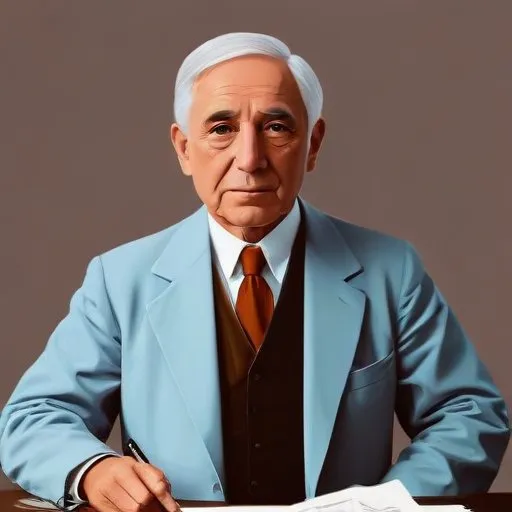
John Searle: The Philosopher Behind the Chinese Room Argument
A Maverick in Philosophy of Language and Mind
John Searle is an American philosopher renowned for his groundbreaking contributions to the philosophy of language, philosophy of mind, and social philosophy. He is perhaps best known for his iconic Chinese Room Argument, which has sparked intense debates on artificial intelligence and the nature of consciousness.
Early Life and Education
Born on July 31, 1932, Searle grew up in a family of intellectuals. His father, G.W. Searle, was an electrical engineer, while his mother, Hester Beck Searle, was a physician. Searle's education took him to the University of Wisconsin-Madison, where he became secretary of Students against
Joseph McCarthy, a testament to his early interest in social and political issues.
The Formative Years: Oxford and the Influence of Austin and Wittgenstein
Searle's academic career took off at the University of Oxford, where he earned his BA, MA, and DPhil degrees. During this period, he was heavily influenced by the works of J.L. Austin and
Ludwig Wittgenstein, whose ideas on language and philosophy of mind would shape Searle's future work. He began teaching at Berkeley in 1959, where he would spend most of his academic career.
Career Highlights and Major Works
Searle's academic career is marked by significant contributions to several fields:
- Speech Acts: Searle's work on speech acts, influenced by Austin, helped establish his reputation as a leading philosopher of language.
- Chinese Room Argument: This thought experiment, which argues that a machine cannot truly understand language, has become a cornerstone of debates on artificial intelligence and consciousness.
- Philosophy of Mind: Searle's work on the philosophy of mind has explored the nature of consciousness, intentionality, and the mind-body problem.
- Social Philosophy: Searle's contributions to social philosophy have centered on the concept of social constructs and the role of institutions in shaping our reality.
Awards and Honors
Searle's work has been recognized with numerous awards and honors, including:
- Jean Nicod Prize (2000)
- National Humanities Medal (2004)
- Mind & Brain Prize (2006)
- Election to the American Philosophical Society (2010)
Controversies and Public Perception
Searle has been involved in several controversies throughout his career, including his vocal opposition to the 1980 rent stabilization ordinance in Berkeley and his role in the 1964-65 Free Speech Movement. In 2019, his emeritus status was revoked due to violations of the university's sexual harassment policies.
Influence on Modern Society
Searle's work has had a profound impact on modern society, influencing fields beyond philosophy, such as:
- Artificial Intelligence: The Chinese Room Argument has sparked intense debates on the limits of AI and the nature of consciousness.
- Linguistics: Searle's work on speech acts has shaped our understanding of language and communication.
- Psychology: His contributions to the philosophy of mind have informed theories on consciousness and the mind-body problem.
Legacy and Historical Context
John Searle's legacy is that of a trailblazing philosopher who has pushed the boundaries of our understanding of language, mind, and society. As a prominent figure in the development of modern philosophy, Searle's work continues to inspire and challenge scholars, researchers, and thinkers across disciplines.
FAQ
What is John Searles philosophy on consciousness?
John Searles philosophy on consciousness focuses on the idea that consciousness is a product of biological processes in the brain. He argues that consciousness is a subjective experience that cannot be reduced to purely physical or functional explanations.
What is John Searles concept of social reality?
John Searles concept of social reality refers to the idea that social institutions, such as money, marriage, and government, are constructed through collective intentionality. He argues that these institutions are real, but only because we collectively agree to recognize them as such.
What is John Searles critique of artificial intelligence?
John Searles critique of artificial intelligence argues that machines, no matter how advanced, cannot truly think or be conscious. He claims that AI systems lack the biological basis of consciousness and are simply manipulating symbols according to rules.
What is John Searles view on free will?
John Searles view on free will holds that we have a degree of freedom in our choices, but our decisions are still influenced by our genetic makeup, environment, and cultural background. He argues that free will is compatible with a scientific understanding of the world.
What Awards has John Searle won?
John Searle has won several awards, including the Jean Nicod Prize, the National Humanities Medal, and the Kyoto Prize in Basic Sciences.