


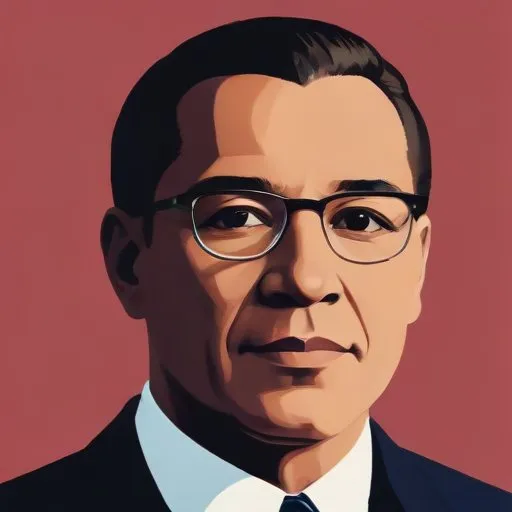
A pioneering educator and civil rights leader who fought for racial equality and access to education, leaving a lasting impact on the lives of many.
John Warren Davis, an American educator, college administrator, and civil rights leader, is best known for his remarkable tenure as the fifth and longest-serving president of West Virginia State University (WVSU) from 1919 to 1953. Under his leadership, WVSU emerged as one of the leading historically black colleges and universities (HBCUs) in the United States, boasting an impressive track record in academics and athletics.
Davis was born on February 11, 1888, in Milledgeville, Georgia. In 1903, he relocated to Atlanta to pursue high school education at Atlanta Baptist College, later known as Morehouse College. Working his way through high school and college, Davis graduated with a Bachelor of Arts degree in 1911. His time at Morehouse College was marked by significant associations with prominent figures such as John Hope, Mordecai Wyatt Johnson, and W. E. B. Du Bois.
Davis's academic pursuits continued at the University of Chicago, where he completed graduate studies in chemistry and physics from 1911 to 1913. He then served as a faculty member at Morehouse College, holding positions as registrar and professor of chemistry and physics. His involvement in the National Association for the Advancement of Colored People (NAACP) led to the establishment of one of Atlanta's first chapters.
Davis's tenure as the executive secretary of the Twelfth Street YMCA in Washington, D.C. (1917-1919) laid the foundation for his presidency at WVSU. During his 34-year presidency, Davis transformed WVSU into an institution of academic excellence, securing accreditation from the North Central Association of Colleges and Schools (NCA) in 1927. He also oversaw the establishment of the West Virginia Schools for the Colored Deaf and Blind and West Virginia's Extension Service for African Americans.
Davis's leadership was characterized by a deep commitment to education, civil rights, and community development. He believed in the transformative power of education, advocating for equal access to quality education for African Americans. Davis's vision for WVSU was to create an institution that would empower students to become leaders in their communities and beyond.
Davis's life was marked by significant personal milestones, including his graduation from Morehouse College and his presidency at WVSU. His leadership and commitment to education earned him recognition and respect from his peers and the wider community.
Davis's legacy extends far beyond his presidency at WVSU. His advocacy for civil rights, education, and community development has inspired generations of leaders, educators, and activists. WVSU continues to thrive, remaining a testament to Davis's unwavering commitment to education and social justice.
John Warren Davis's remarkable life and legacy serve as a testament to the power of vision, leadership, and dedication. His contributions to education, civil rights, and community development have left an indelible mark on American history, cementing his place as a pioneer in the struggle for social justice and equality.
Born in 1868
A pioneering figure in the struggle for racial equality, advocating for civil rights and social justice through groundbreaking research and powerful writings.
Born in 1908
A trailblazing lawyer and civil rights champion who broke racial barriers in the US justice system, serving as the first African American on the Supreme Court. He fought tirelessly for equality and justice, leaving a lasting impact on American history.
97 Years Old
A prominent leader in the civil rights movement, advocating for racial equality and social justice through nonviolent means, leaving a lasting impact on American history.
Born in 1913
Refused to give up her seat on a Montgomery, Alabama bus to a white person, sparking the Montgomery Bus Boycott, a pivotal event in the Civil Rights Movement.
Born in 1925
A prominent figure in the Civil Rights Movement, advocating for African American rights and self-defense, and a powerful orator who inspired a generation.
Born in 1856
A pioneering figure in African-American education, he founded the Tuskegee Institute and advocated for racial uplift through self-improvement and economic empowerment. His autobiography, "Up from Slavery," remains a classic of American literature.
Born in 1902
A renowned poet, novelist, and playwright who powerfully voiced the experiences and struggles of African Americans during the Harlem Renaissance, using jazz and blues rhythms to convey the spirit of his people.
Born in 1891
A celebrated author and anthropologist who explored African-American culture through novels, stories, and folklore, particularly in the rural South during the early 20th century.
