


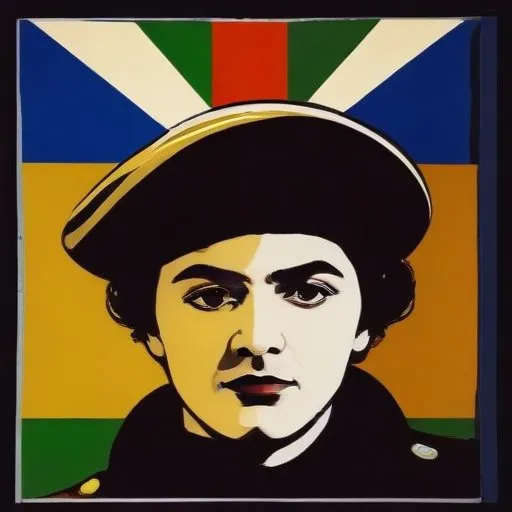
A Brazilian revolutionary and sailor who played a key role in the country's struggle for independence and is celebrated as a national hero. He's known for his bravery and strategic skills in naval battles.
Joo Cndido Felisberto is best known as the fearless leader of the 1910 Revolt of the Lash, a pivotal moment in Brazilian history that challenged the harsh conditions and corporal punishment faced by sailors in the Brazilian Navy. Born on June 24, 1880, in Encruzilhada do Sul, Rio Grande do Sul, Felisberto's life was marked by struggle and determination, shaping him into a champion of justice and equality.
Felisberto was born to a poor Afro-Brazilian family, with both his parents being former slaves. At the tender age of 13, he joined the Brazilian Navy in 1894, despite the harsh conditions and prejudice he faced as a black sailor. During his time in the Navy, Felisberto was exposed to the harsh realities of corporal punishment, which would later become a driving force behind his rebellion.
In September 1909, Felisberto traveled to Newcastle-upon-Tyne, England, as part of the crew of the newly commissioned dreadnought Minas Geraes. It was during this time that he experienced the better living conditions and increased freedoms of Newcastle, which starkly contrasted with the harsh realities of the Brazilian Navy. This experience sparked a sense of injustice in Felisberto, and he began to secretly meet with fellow sailors in Rio de Janeiro to plan a strategy to stop the corporal punishment.
The flogging of a sailor, against Navy regulations, in November 1910 became the catalyst for the Revolt of the Lash. Sailors, led by Felisberto, took control of two Brazilian battleships, Minas Geraes and So Paulo, as well as two other major warships. Their demands were simple yet profound: the abolition of torture as a form of punishment and improved living conditions in the Brazilian Navy.
Although the new Brazilian president, Hermes da Fonseca, promised the end of corporal punishment and approved an amnesty, the government later went back on this promise. Despite this setback, Felisberto's courageous stand had sparked a movement that would continue to inspire generations to come. His legacy is a testament to the power of determination and the fight for justice and equality.
The Revolt of the Lash marked a significant turning point in Brazilian history, highlighting the need for greater humanitarian standards in the Brazilian Navy. Felisberto's bravery and leadership inspired a movement that would continue to shape the country's social and political landscape for years to come.
Felisberto's story serves as a powerful reminder of the importance of standing up against injustice and fighting for human rights. His legacy continues to inspire and educate, ensuring that the sacrifices he made will never be forgotten.
Joo Cndido Felisberto's remarkable story is a testament to the human spirit's capacity for courage, resilience, and determination. As we reflect on his life and legacy, we are reminded of the ongoing struggle for justice and equality, and the role we can play in shaping a better future for all.
Born in 1841
A Brazilian lawyer and politician who served as the country's third president, known for his efforts to modernize and stabilize the young nation during a tumultuous period. He's remembered for his strong leadership and commitment to democracy.
Born in 1825
A 19th-century novelist who penned over 260 works, primarily romances and historical novels, offering vivid portrayals of Portuguese life and society. His writings are considered a cornerstone of Portuguese literature.
Born in 1847
The 6th President of Brazil, a key figure in the country's early 20th-century development, known for modernizing the nation's infrastructure and economy. He's also recognized for his role in establishing the country's Supreme Court.
