


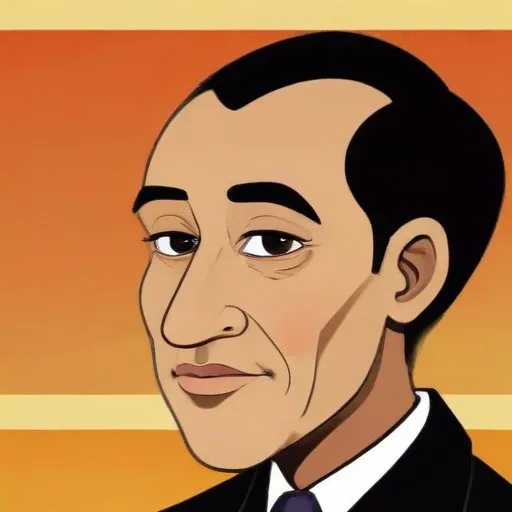
A Colombian lawyer and poet who wrote influential works that explored the Amazon rainforest and its indigenous people, and is considered one of the most important writers in Colombian literature.
Jos Eustasio Rivera is undoubtedly one of the most iconic literary figures in Colombian history, celebrated for his monumental work, The Vortex, a sweeping national epic that has captivated readers for generations.
Born on February 19, 1888, in Aguas Calientes, Colombia, Rivera's early life was marked by a strong desire for education and a thirst for adventure. Despite his family's modest means, he received a Catholic education, thanks to the support of relatives and his own perseverance.
Rivera's travels through the Colombian jungles, rivers, and mountains as a member of the Colombo-Venezuelan Border Commission in 1912 deeply influenced his writing. His experiences in Brazil, where he discovered the works of renowned Brazilian authors like Euclides da Cunha, further fueled his passion for storytelling.
The Vortex, Rivera's magnum opus, is an epic novel that masterfully weaves together themes of love, struggle, and national identity. Published in 1924, the novel has become a Colombian literary landmark, offering a poignant portrayal of the country's rural landscape and its people.
Rivera's work is characterized by a deep empathy for the human condition and a profound respect for the natural world. His writing often explores the complexities of human relationships, as well as the struggles and triumphs of the Colombian people.
Rivera's work has left an indelible mark on Colombian literature and culture. His writing has inspired generations of writers, thinkers, and artists, cementing his status as a cultural icon in Colombia.
In 1909, Rivera graduated as a teacher and later earned a law degree in 1917. He was appointed Legal Secretary of the Colombo-Venezuelan Border Commission in 1912, an experience that would later inform his writing.
Rivera's work has transcended the realm of literature, influencing Colombian music, art, and film. His legacy continues to inspire new generations of artists, musicians, and writers.
Rivera's contributions to Colombian literature have been recognized with numerous awards and honors, including the prestigious National Literature Prize.
Jos Eustasio Rivera's life and work are a testament to the power of creativity and perseverance. His writing continues to captivate readers, offering a window into Colombia's rich cultural heritage and its complex history.
Rivera's legacy extends far beyond his own work, inspiring a new generation of writers, thinkers, and artists to explore the complexities of the human experience and the beauty of the natural world.
Born in 1864
A Spanish philosopher and author who explored the human condition, faith, and the search for meaning in life, creating influential works that continue to resonate with readers today.
Born in 1867
A leading figure in the Spanish-American literary movement, Modernismo, known for his innovative and influential poetry that explored themes of identity, politics, and culture.
Born in 1853
A Cuban journalist, poet, and theorist who led the Cuban independence movement against Spanish rule and is revered as a national hero, known for his literary and philosophical works.
Born in 1889
A Chilean poet and educator who was the first Latin American to win the Nobel Prize in Literature, known for her passionate and introspective poetry that explores themes of love, nature, and social justice.
Born in 1904
A Chilean poet and diplomat who wrote passionate and evocative poetry that explored love, politics, and the human condition, and was awarded the Nobel Prize in Literature in 1971.
Born in 1914
A Mexican poet and diplomat who won the Nobel Prize in Literature in 1990 for his work that explores the intersection of poetry, philosophy, and politics. He's known for his lyrical and introspective style that explores the human condition.
90 Years Old
A Nobel Prize-winning writer and politician who explored the complexities of Peruvian society through his novels and essays, and later ran for president. His works often blended politics, history, and fiction.
