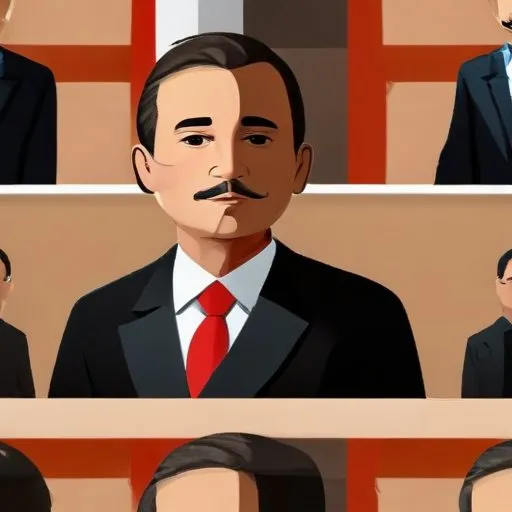
Jos Lpez Portillo: The Visionary President of Mexico
Jos Lpez Portillo, a renowned Mexican writer, lawyer, and politician, is best known for his tenure as the 58th president of Mexico from 1976 to 1982. During his presidency, he implemented significant reforms, invested heavily in the national oil industry, and navigated the country through a tumultuous economic crisis.
Early Life and Education
Born on June 16, 1920, in Mexico City, Lpez Portillo came from a family of intellectuals. His father, Jose Lpez Portillo y Weber, was a diplomat and a poet, while his mother, Refugio Pacheco y Mexía, was a writer. Lpez Portillo's early life was marked by a strong passion for literature and politics. He pursued higher education at the National University of Mexico, where he earned a law degree in 1946.
Rise to Power
Lpez Portillo's entry into politics began in the 1950s, when he joined the Institutional Revolutionary Party (PRI). He quickly rose through the ranks, holding various positions, including Undersecretary of the Interior and Secretary of the Treasury. In 1976, he became the PRI's presidential candidate and won the election unopposed, a feat unprecedented in modern Mexican history.
Presidential Reforms and Economic Policies
During his presidency, Lpez Portillo implemented several reforms aimed at increasing political participation and reducing government control. The 1977 electoral reform, for instance, allowed for greater representation of opposition parties in the Chamber of Deputies and provided amnesty to guerrilla fighters from the Dirty War. Economically, Lpez Portillo focused on investing in the national oil industry, which initially propelled growth but later led to a severe debt crisis when international oil prices fell in 1981.
Challenges and Controversies
Lpez Portillo's presidency was marred by allegations of corruption and nepotism. The debt crisis, coupled with widespread capital flight, led to Mexico declaring a sovereign default in 1982. In response, Lpez Portillo nationalized the banks three months before leaving office. The crisis resulted in Mexico holding the highest external debt in the world at the time.
Legacy and Impact
Despite the challenges faced during his presidency, Lpez Portillo's reforms paved the way for greater political openness in Mexico. His economic policies, although flawed, set the stage for future administrations to address the country's economic woes. Today, Lpez Portillo is remembered as a complex figure, whose presidency was marked by both vision and controversy.
Personal Life and Later Years
After leaving office, Lpez Portillo continued to write and publish works on politics and history. He passed away on February 17, 2004, at the age of 83. Throughout his life, Lpez Portillo remained committed to promoting Mexican culture and identity, earning him a lasting legacy in Mexican politics and literature.
Major Works and Publications
- "They Shall Be Known by Their Works" (1964) - a collection of essays on Mexican politics and history
- "The History of Mexico" (1974) - a comprehensive history of Mexico from the pre-Columbian era to the 20th century
- "The Mexican Economy: Challenges and Opportunities" (1985) - an analysis of Mexico's economic landscape during the 1980s
Quotes and Memorable Sayings
- "The future of Mexico depends on our ability to reconcile our past with our present."
- "A nation's strength lies not in its wealth, but in its people."
Awards and Honors
- Grand Cross of the Order of Isabella the Catholic (1977)
- Honorary Doctorate from the University of Guadalajara (1980)
FAQ
What were José López Portillos accomplishments as President of Mexico?
José López Portillo was the 31st President of Mexico, serving from 1976 to 1982. During his presidency, he implemented a number of significant reforms, including the nationalization of Mexicos oil industry and the introduction of a new constitution.
What was José López Portillos economic policy?
José López Portillos economic policy was centered around the idea of import substitution industrialization, which aimed to promote domestic industrial development and reduce Mexicos dependence on foreign capital.
How did José López Portillo address social and political issues?
José López Portillo took steps to address social and political issues, including the recognition of indigenous rights, the expansion of social welfare programs, and the establishment of a national human rights commission.
What were the challenges faced by José López Portillo during his presidency?
José López Portillo faced several challenges during his presidency, including an economic crisis, a decline in oil prices, and increased political opposition.
What is José López Portillos legacy in Mexican politics?
José López Portillos legacy in Mexican politics is complex and multifaceted. While he implemented a number of significant reforms, he also faced criticism for his authoritarianism and his handling of the economy.