


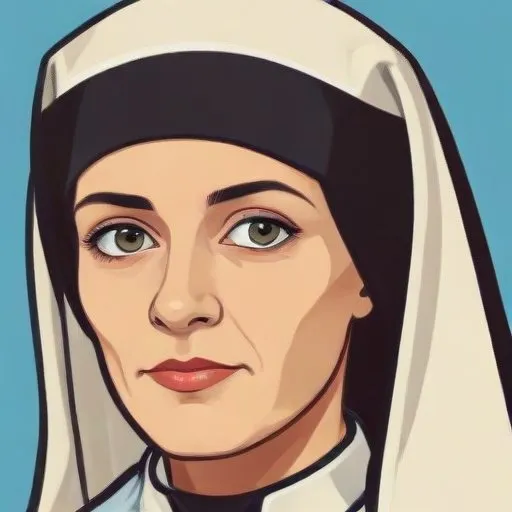
A Ukrainian Greek-Catholic nun who dedicated her life to serving the poor and marginalized, and is revered for her selfless devotion and charitable works.
Josaphata Hordashevska is revered as the cofoundress of the Sisters Servants of Mary Immaculate, a Ukrainian Greek-Catholic religious congregation dedicated to serving the poor and needy faithful of the church. This pioneering religious sister played a pivotal role in shaping the landscape of Eastern-rite Catholicism in the Austro-Hungarian Empire during the late 19th and early 20th centuries.
Born Michaelina Hordashevska on November 20, 1869, in Lviv, Ukraine (then part of the Austro-Hungarian Empire), Josaphata was raised in a devout Ukrainian Catholic family. Her early life was marked by a deep sense of spirituality, which led her to consider consecrating her life to God in a contemplative monastery of the Basilian nuns.
Under the spiritual guidance of Basilian monk Jeremiah Lomnytskyj, Josaphata took a private vow of chastity for one year, which she renewed twice. This experience laid the foundation for her future calling as a religious sister.
In 1892, Jeremiah Lomnytskyj, recognizing the need for active religious sisters to serve the social needs of the poor and needy faithful, approached Josaphata with a proposition. He asked her to be the foundress of a new congregation, which would follow an active life of service. Josaphata, after some hesitation, agreed to take on this challenge.
In June 1892, she was sent to the Polish Roman Catholic Felician Sisters to experience the life of community and learn about active consecrated life. Upon her return to Lviv, she took the religious habit of the new congregation on August 24, 1892, and received the name Josaphata, in honor of the Ukrainian Catholic martyr Josaphat Kuntsevych.
Josaphata became the first Superior of the Sisters Servants of Mary Immaculate, guiding a group of seven young women who had been recruited for the new institute. She dedicated her life to training and guiding these sisters, instilling in them the values of compassion, service, and devotion.
Throughout her life, Josaphata remained committed to her congregation, serving as a beacon of hope and inspiration to countless individuals. Her selfless dedication to the poor and needy earned her a reputation as a true servant of God.
Josaphata Hordashevska's contributions to Ukrainian Catholicism occurred during a period of significant cultural, social, and religious transformation in the Austro-Hungarian Empire. Her pioneering work in establishing the Sisters Servants of Mary Immaculate helped to pave the way for future generations of religious sisters and lay individuals committed to serving the church and its people.
Josaphata's legacy extends beyond her congregation, serving as a testament to the power of faith, perseverance, and selfless dedication. Her life's work continues to inspire individuals today, offering a powerful reminder of the impact one person can have on the world.
Born in 1903
A Ukrainian-Canadian bishop who stood up against Soviet persecution, ultimately sacrificing his life for his faith and people. He's a symbol of courage and devotion to one's beliefs.
Born in 1920
Leader of the Catholic Church from 1978 to 2005, known for helping to end communism in Poland and being a charismatic advocate for human rights and social justice.
Born in 1876
The leader of the Catholic Church from 1939 to 1958, known for his controversial role during World War II, particularly in regards to the Holocaust. He is also remembered for his encyclicals on social justice and liturgical reforms.
Born in 1417
A 15th-century pope who played a significant role in the fall of the Western Schism, ending the division in the Catholic Church. He's also known for his lavish spending and nepotism.
