


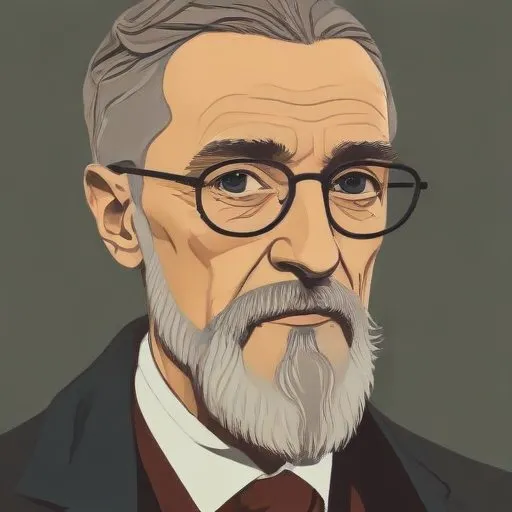
A Bohemian philologist and historian who studied and wrote about the Czech language, literature, and history, helping to establish a sense of national identity. His work laid the groundwork for modern Czech linguistics and literary criticism.
Josef Dobrovsk, a pioneering Czech philologist and historian, is renowned for his instrumental role in the Czech National Revival, a movement that sought to revive and promote the Czech language, literature, and culture in the 18th and 19th centuries. Alongside Josef Jungmann, Dobrovsk is celebrated as one of the most significant figures in this revival, leaving an indelible mark on the country's cultural and intellectual heritage.
Born on August 17, 1753, in Balassagyarmat, Kingdom of Hungary (now part of Slovakia), Dobrovsk was the son of Jakub Doubravsk, a soldier, and Magdalena Dobrovsk. His early education took place in a German school at Horovsk Tn, where he first encountered the Czech language. He later attended the Nmeck Brod gymnasium, where he became fluent in Czech, and subsequently studied philosophy at the University of Prague.
In 1769, Dobrovsk began his philosophical studies, and in 1772, he joined the Jesuit order in Brno, intending to become a Christian missionary in India. However, the suppression of the Jesuit order in 1773 led him to redirect his focus towards theology. After completing his studies, Dobrovsk served as a tutor to Count Nostitz and later held various positions, including vicerector and rector, at the general seminary in Hradisko (now Olomouc).
Dobrovsk's most notable achievements lie in his groundbreaking works on Slavic languages, historical research, and philological studies. During the 1780s, he wrote several seminal works, including Cyrill a Method, which explored the lives and missionary activities of Saints Cyril and Methodius, and Slavin, a comprehensive study of Slavic languages and literatures. His scholarship facilitated a deeper understanding of Czech language and literature, laying the foundation for future generations of scholars and intellectuals.
In 1792, the Bohemian Academy of Sciences commissioned Dobrovsk to embark on a journey to Stockholm, Turku, Saint Petersburg, and Moscow in search of manuscripts dispersed during the Thirty Years' War. This expedition not only enriched his knowledge but also enabled him to forge connections with fellow scholars and intellectuals. Upon his return, he accompanied Count Nostitz to Switzerland and Italy, further expanding his academic and cultural horizons.
Dobrovsk played a pivotal role in establishing the Royal Czech Society of Sciences (1784) and the National Museum (1818), institutions that would become cornerstones of Czech intellectual life. His tireless efforts to promote Czech language and culture helped shape a nation's identity, earning him a revered place in Czech history.
Dobrovsk's philosophical stance was deeply rooted in his commitment to Enlightenment values, such as reason, tolerance, and the pursuit of knowledge. He believed in the transformative power of education and the importance of cultural heritage in fostering national identity. His philosophical contributions continue to inspire scholars and intellectuals to this day.
Josef Dobrovsk's remarkable life and achievements serve as a testament to his unwavering dedication to promoting Czech language, literature, and culture. His legacy continues to inspire generations of scholars, intellectuals, and cultural enthusiasts, cementing his place as one of the most influential figures in Czech history.
Born in 1798
A Czech historian and politician who played a key role in the Czech National Revival, helping to establish a modern Czech identity and autonomy within the Habsburg Empire. He's also known for his extensive historical writings, particularly on Slavic history.
Born in 1834
A Czech journalist and poet who wrote influential works that explored the human condition, social issues, and patriotism, leaving a lasting impact on Czech literature.
