


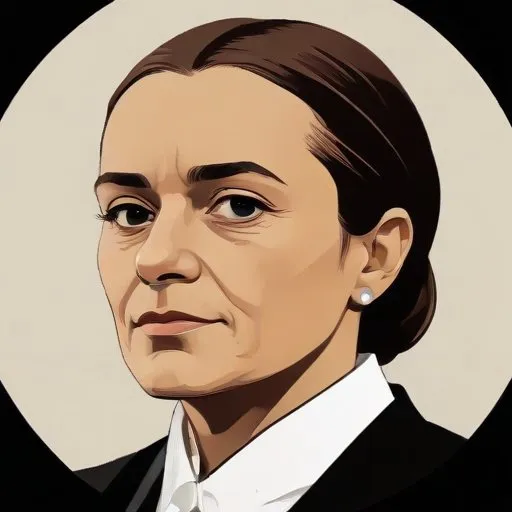
A Czech historian and politician who played a key role in the Czech National Revival, helping to establish a modern Czech identity and autonomy within the Habsburg Empire. He's also known for his extensive historical writings, particularly on Slavic history.
Frantiek Palack, a Czech historian and politician, is revered as the most influential figure of the Czech National Revival, earning him the revered title of "Father of the Nation". Born on June 14, 1798, in Hodslavice, a northeastern Moravian village, Palack's life was a testament to his unwavering dedication to preserving and promoting Czech history, culture, and identity.
Palack's ancestors were members of the Bohemian Brethren, a Protestant community that secretly maintained their faith during the period of religious persecution. His father, a schoolmaster, instilled in him a love for learning, which led Palack to attend the Evangelic Lutheran Lyceum in Bratislava, then part of Hungary. It was here that he developed a passion for Slavic languages, mastering 11 languages and familiarizing himself with several others.
In 1823, Palack settled in Prague, where he befriended Josef Dobrovsk, a philologist who shielded him from government hostility towards Slavic studies. This connection introduced him to Count Sternberg and his brother Francis, who shared his enthusiasm for Bohemian history. The Count's support led to the establishment of the Society of the Bohemian Museum, dedicated to collecting historical documents and reawakening national sentiment.
In 1825, Palack became the first editor of the Časopis Českého Musea, the Journal of the Bohemian Museum, which was initially published in both Czech and German. The Czech edition went on to become a beacon of national pride, kindling public interest in the Czech national movement.
Throughout his life, Palack dedicated himself to the preservation of Czech culture, history, and language. He worked tirelessly to promote national awareness, lectured extensively, and wrote numerous works on Bohemian history. His contributions earned him the respect and admiration of his people, cementing his status as the "Father of the Nation".
PALACK believed in the importance of national identity and the power of education in shaping a nation's future. He advocated for the preservation of the Czech language, culture, and history, and his work served as a catalyst for the Czech National Revival.
Frantiek Palack's legacy extends far beyond his lifetime. His contributions to the Czech National Revival have had a lasting impact on modern Czech society, shaping the nation's identity, culture, and educational system.
Frantiek Palack's life was a testament to his unwavering dedication to the Czech nation. His contributions, beliefs, and philosophies continue to shape the nation's identity, making him an iconic figure in Czech history.
Born in 1850
First President of Czechoslovakia, leading the country to independence from Austria-Hungary and establishing a democratic government. He's also known for his sociological works on suicide and nationalism.
Born in 1880
A Slovak astronomer, general, and politician who made significant contributions to the development of astronomy in Slovakia and served as a general in the Czechoslovak Legion during World War I. He's also known for being one of the founders of Czechoslovakia.
Born in 1884
A Czech academic and politician who served as the 2nd and 4th President of Czechoslovakia, playing a key role in the country's independence and democratic development. He's known for his efforts to maintain Czechoslovakia's sovereignty during World War II and the Cold War.
89 Years Old
A Czech poet, playwright, and politician who led the country's transition from communism to democracy, and is known for his advocacy of human rights and individual freedom.
Born in 1921
A Slovak politician who led a brief, failed attempt to reform communism in Czechoslovakia during the Prague Spring of 1968, known for his efforts to introduce democratic reforms.
Born in 1896
Leader of the Communist Party of Czechoslovakia who oversaw the country's transition to a socialist state and served as president from 1948 to 1953. He's known for his role in establishing a Soviet-backed government in Czechoslovakia.
