


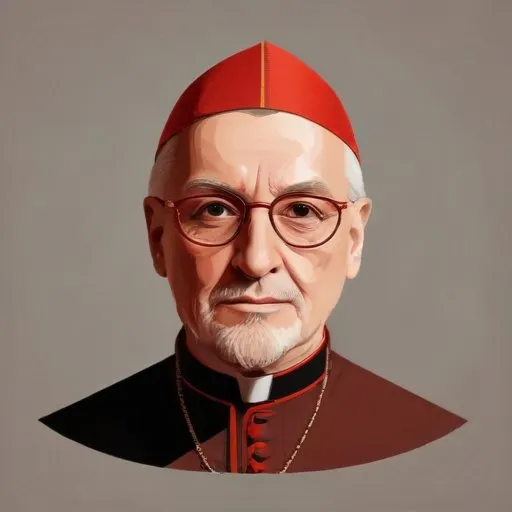
A German Catholic cardinal who played a crucial role in shaping the Catholic Church's stance on various issues during the Second Vatican Council, and was a key advisor to Pope John XXIII.
As a prominent figure in Catholic resistance to Nazism, Josef Frings' courageous stance against the oppressive regime earned him recognition as a champion of human rights and freedom. Elevated to the cardinalate in 1946 by Pope Pius XII, Frings' unwavering commitment to his faith and humanity made him a beacon of hope in a time of darkness.
Born on February 6, 1887, in Neuss, Germany, Josef Frings was the first of eight children to Heinrich, a weaving industrialist and manufacturer, and Maria nee Sels Frings. He was baptized on August 10, 1887, and went on to study Catholic theology in Munich, Innsbruck, Freiburg, and Bonn. On August 10, 1910, he received his ordination to the priesthood.
Frings' early postings as a chaplain in Cologne-Zollstock and pastor in Cologne-Fhlingen prepared him for his future role as a leader in the Catholic Church. He earned a doctorate in theology in Freiburg in 1916 and went on to work as a principal of an orphanage in Neuss from 1922 to 1924. His subsequent postings as pastor in Cologne-Braunsfeld and leader of the archiepiscopal seminary in Bensberg further solidified his reputation as a dedicated servant of the Church.
In a surprise move, Frings was named Archbishop of Cologne on May 1, 1942, a position he held until his resignation in 1969. His episcopal consecration, performed by Archbishop Cesare Orsenigo, the Apostolic Nuncio to Germany, was marked by defiance, as the National Socialist regime had banned the German media from covering the ceremony. Undeterred, the citizens of Cologne took matters into their own hands, publishing private advertisements to spread the news.
As Archbishop of Cologne, Frings became a vocal critic of the Nazi regime, speaking out against its oppressive policies and advocating for the rights of the persecuted. His courageous stance earned him recognition as a champion of human rights and freedom, and he remains an iconic figure in Catholic resistance to Nazism.
Josef Frings' legacy extends far beyond his role as Archbishop of Cologne. His unwavering commitment to his faith and humanity inspired generations of Catholics and non-Catholics alike, serving as a beacon of hope in a time of darkness. His elevation to the cardinalate in 1946 by Pope Pius XII cemented his status as a leading figure in the Catholic Church, and his legacy continues to inspire and motivate people around the world.
Born in 1881
Reformed the Catholic Church, introducing progressive reforms and ecumenical dialogue, and convened the Second Vatican Council.
Born in 1417
A 15th-century pope who played a significant role in the fall of the Western Schism, ending the division in the Catholic Church. He's also known for his lavish spending and nepotism.
Born in 1920
Leader of the Catholic Church from 1978 to 2005, known for helping to end communism in Poland and being a charismatic advocate for human rights and social justice.
Born in 1920
Leader of the Catholic Church from 1978 to 2005, known for helping to end communism in Poland and being a charismatic advocate for human rights and social justice.
99 Years Old
The first pope to resign in nearly 600 years, he's known for his conservative views and efforts to strengthen the Catholic Church's traditional teachings. He's also a prolific writer and theologian.
89 Years Old
The leader of the Catholic Church, known for his progressive stance on social issues and efforts to reform the Church, inspiring millions worldwide.
