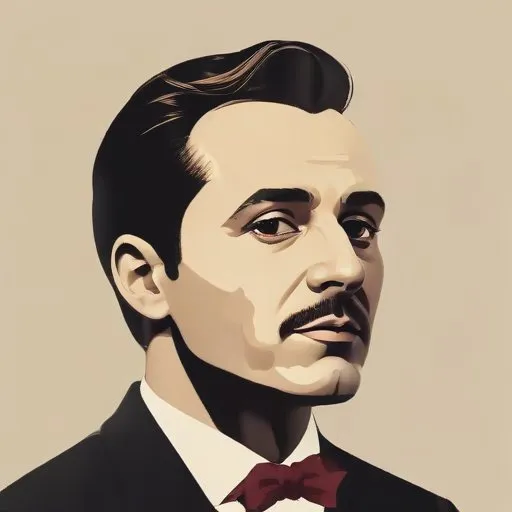
Josef Josephi: The Iconic Singer-Turned-Actor of the Austro-Hungarian Empire
A Tenor-Baritone Sensation of the Late 19th Century
Josef Josephi, born Josef Ichhuser, was a renowned Austrian Empire-born singer, actor, and tenor-baritone who captivated audiences with his powerful voice and captivating stage presence. Known for his iconic performances in operettas and comic operas, Josephi's career spanned over four decades, leaving an indelible mark on the world of opera and theater.
Early Life and Apprenticeship
Born on July 15, 1852, in Kraków, to a cloth merchant, Josephi graduated from high school in 1871 and began his acting apprenticeship. He made his debut in 1873 in Vienna, playing a small role as a soldier in
Friedrich Schiller's Fiesco. His early years saw him performing in various theaters, including Nagykanizsa, Chemnitz, and Wrocław, before joining the prestigious Ringtheater in Vienna in 1878.
Rise to Fame: The Operetta Era
It was during his time at the Ringtheater that Josephi discovered his true calling as a singer. His performances in operettas, such as
Johann Strauss II's Eine Nacht in Venedig and The Gypsy Baron, earned him widespread acclaim. He also sang in Vilm Blodek's comic one-act opera V studni (In the Well). Alongside Alexander Girardi, Karl Lindau, and Therese Biedermann, Josephi formed the Elitekorps, an elite group of Viennese operetta performers.
Career Highlights and Major Works
Some of Josephi's most notable roles include:
- Jan Janicki in Der Bettelstudent by Carl Millöcker (1882)
- Guido in Eine Nacht in Venedig by Johann Strauss II (1883)
- Conte Erminio in Gasparone by Carl Millöcker (1884)
- Botho von Wendt in Waldmeister by Johann Strauss II (1895)
Later Years and Legacy
In 1900, Josephi moved to Berlin, where he continued to perform and entertain audiences until his retirement on New Year's Eve, 1919. He passed away on January 8, 1920, and was buried at the Hietzing Cemetery in Vienna. Josephi's contributions to the world of opera and theater remain unparalleled, and his legacy continues to inspire generations of performers and music lovers alike.
Personal Milestones and Key Life Events
Throughout his life, Josephi was driven by his passion for music and performance. His dedication to his craft earned him recognition and admiration from his peers and audiences. Some notable milestones in his life include:
- 1873: Made his debut in Vienna as a soldier in Friedrich Schiller's Fiesco
- 1878: Joined the Ringtheater in Vienna
- 1880: Performed at the Carltheater
- 1883: Sang in Johann Strauss II's Eine Nacht in Venedig
- 1900: Moved to Berlin
- 1919: Retired from the stage on New Year's Eve
Influence on Modern Society
Josef Josephi's impact on modern society extends beyond the world of opera and theater. His contributions to the development of operetta as a genre paved the way for future generations of performers and composers. His legacy continues to inspire and entertain audiences today, making him an integral part of Austria's rich cultural heritage.
FAQ
What was Josef Josephis early life and career?
Josef Josephi was born in 1855 in Poland and began his singing career at a young age. He studied music in Italy and later became a renowned opera singer, performing in leading roles in Europe and the United States.
What were Josef Josephis most notable performances?
Josef Josephis most notable performances include his roles in Verdis La Traviata and Rigoletto, as well as his performances in Wagners Lohengrin and Tannhäuser.
What was Josef Josephis impact on the opera world?
Josef Josephis powerful voice and charismatic stage presence made him a leading figure in the opera world. He was particularly known for his performances in Verdis operas and was considered one of the greatest tenors of his time.
What is Josef Josephis legacy in music?
Josef Josephis legacy in music is significant, and he is still remembered as one of the greatest tenors of the late 19th and early 20th centuries. His performances are still celebrated for their beauty and power.
What is known about Josef Josephis personal life?
Little is known about Josef Josephis personal life, but it is known that he was married and had children. He died in 1920 at the age of 65.