


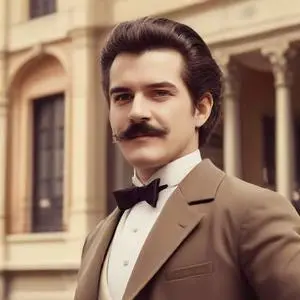
Austrian composer and educator renowned for his iconic waltzes, operettas, and orchestral works that evoke the grandeur and romance of 19th-century Vienna. His music remains a staple of classical repertoire and popular culture.
Johann Strauss II, also known as the Younger or the Son, is renowned for his captivating compositions of light music, particularly dance music and operettas, earning him the esteemed title of "The Waltz King." With over 500 waltzes, polkas, quadrilles, and other types of dance music to his credit, Strauss II's contributions to the world of music are truly unparalleled.
Born on October 25, 1825, in St. Ulrich near Vienna, Austria, Strauss II was the son of Johann Strauss I, a composer, and Maria Anna Streim. Despite his father's wish for him to pursue a career in banking, Strauss II was drawn to music from a young age. He secretly studied the violin with Franz Amon, the first violinist of his father's orchestra, and eventually went on to study music theory and composition with Josef Drechsler.
Strauss II's proficiency in composing dance music and operettas led to his immense popularity in Vienna during the 19th century. Some of his most celebrated works include:
In addition to his instrumental works, Strauss II also composed several operettas, including:
Strauss II's music has had a lasting impact on modern society, with his waltzes and operettas continuing to be performed and enjoyed by audiences around the world. His music has been featured in various films, television shows, and advertisements, introducing his works to new generations of music lovers.
Strauss II was married three times, first to Henriette Treffz, then to Angelika Dittrich, and finally to Adele Deutsch. He passed away on June 3, 1899, leaving behind a legacy of incomparable music that continues to enchant and inspire people to this day.
In conclusion, Johann Strauss II's remarkable talent, innovative compositions, and dedication to his craft have solidified his position as "The Waltz King." His music remains an integral part of our cultural heritage, a testament to the power of art to bring people together and transcend time.
As we continue to celebrate the life and works of Johann Strauss II, we are reminded of the enduring power of music to bring joy, comfort, and beauty to our lives.
Born in 1833
A renowned pianist and composer, he crafted complex, expressive works that blended traditional and innovative techniques, leaving an indelible mark on classical music.
Born in 1813
A revolutionary composer who transformed opera with his epic, mythological works, creating a new era of musical storytelling. His iconic operas, such as "Der Ring des Nibelungen," continue to captivate audiences worldwide.
Born in 1811
A virtuosic pianist and composer who revolutionized classical music with his technically demanding and emotionally expressive works, blending Hungarian folk influences with Romantic-era drama.
Born in 1813
A renowned composer of iconic operas like La Traviata and Aida, known for his masterful blending of drama and music. His works continue to captivate audiences worldwide.
Born in 1840
A renowned Russian composer and educator, he is best known for his iconic and beloved ballets, such as Swan Lake and The Nutcracker, which continue to enchant audiences worldwide.
Born in 1841
A Czech composer and academic who blended folk influences with classical music, creating iconic works like the "New World Symphony".
Born in 1797
A renowned composer of symphonies, operas, and chamber music, particularly famous for his emotional and expressive lieder (art songs) that showcased his mastery of melody and harmony.
Born in 1810
A renowned Romantic-era composer and influential music critic, known for his expressive and emotionally charged works, including symphonies, piano music, and art songs.
