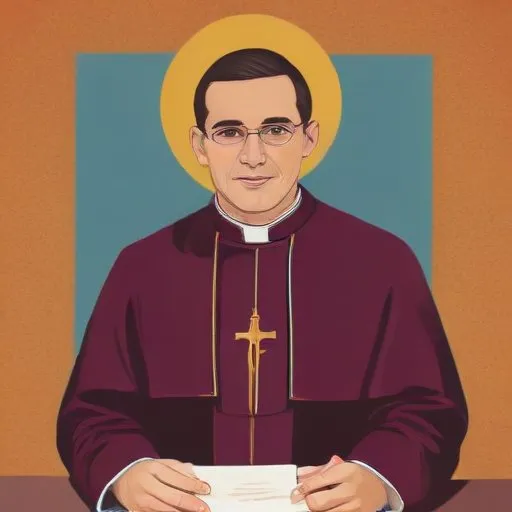
Josemaría Escrivá: The Founder of Opus Dei and Champion of Everyday Holiness
A Life Dedicated to the Universal Call to Holiness
Josemaría Escrivá is best known for founding Opus Dei, a Catholic organization that emphasizes the importance of living a holy life in one's ordinary daily activities. Through his works, Escrivá encouraged people to seek sanctity in their daily lives, challenging the traditional notion that holiness is only achievable through religious vocations.
Early Life and Education
Born on January 9, 1902, in Barbastro, Spain, Escrivá was the second of six children to José Escrivá and María de los Dolores Albas. After his family's textile business went bankrupt, they relocated to Logroño, where his father worked as a clerk. Escrivá's early life was marked by a strong Catholic upbringing, which instilled in him a deep sense of faith and devotion.
He pursued higher education, earning a doctorate in civil law from the Complutense University of Madrid and a doctorate in theology from the Lateran University in Rome. These academic achievements laid the foundation for his future work in the Catholic Church.
The Birth of Opus Dei
In 1928, Escrivá founded Opus Dei, an organization that sought to promote the idea of everyday holiness. He believed that ordinary people, not just priests and nuns, could achieve sanctity through their daily work and activities. This revolutionary concept challenged the traditional Catholic notion that only those in religious vocations could attain holiness.
Literary Contributions
Escrivá's most famous publication is
The Way, a spiritual guidebook that has been translated into 43 languages and sold millions of copies worldwide. This influential work has become a spiritual companion for many, offering practical advice on living a Christian life in today's world.
Canonization and Controversy
Escrivá's canonization in 2002 by
Pope John Paul II sparked controversy among some Catholics and the international press. Critics raised concerns about Opus Dei's alleged secrecy, authoritarianism, and Escrivá's perceived authoritarian leadership style. However, many Catholic leaders, including Popes John Paul II, Benedict XVI, and Francis, have endorsed Escrivá's teaching on the universal call to holiness and the role of the laity.
Legacy and Impact
Today, Opus Dei has over 90,000 members in more than 60 countries, making it one of the most influential Catholic organizations in the world. Escrivá's emphasis on everyday holiness has inspired countless people to seek sanctity in their daily lives, challenging the traditional notion that holiness is only accessible to a select few.
Despite the controversies surrounding his life and legacy, Escrivá remains a revered figure in the Catholic Church, celebrated for his tireless efforts to promote the universal call to holiness and his innovative approach to Christian living.
Quotes and Memorable Sayings
- " Sanctify your work. Sanctify yourself in your work. Sanctify others through your work."
- "The ordinary life is the way of sanctity for the great majority of Christians."
- "Your ordinary contact with God takes place where your fellow men, your yearnings, your work, and your affections are."
Personal Milestones and Key Life Events
- 1928: Founded Opus Dei
- 1947: Ordained as a priest
- 1950: Established the first Opus Dei center in Rome
- 1960s: Expanded Opus Dei to multiple countries
- 1975: Passed away on June 26th
- 2002: Canonized by Pope John Paul II
FAQ
What was Josemaría Escrivás role in the Catholic Church?
Josemaría Escrivá was a Catholic priest and the founder of Opus Dei, a personal prelature of the Catholic Church. He is revered as a saint by the Catholic Church and is known for his spiritual teachings and his emphasis on the importance of work and ordinary life as a path to holiness.
What were Josemaría Escrivás main spiritual teachings?
Josemaría Escrivás main spiritual teachings emphasized the importance of prayer, sacrifice, and self-denial as a means of growing closer to God. He also stressed the value of work and ordinary life as a way to serve God and live a life of virtue.
How did Josemaría Escrivás life experience shape his spiritual teachings?
Josemaría Escrivás life experience, including his early years in rural Spain, his priestly formation, and his experiences during the Spanish Civil War, shaped his spiritual teachings by giving him a deep understanding of the human condition and the importance of faith in everyday life.
What is the significance of Opus Dei in the Catholic Church?
Opus Dei is a significant presence in the Catholic Church, with a worldwide membership of over 90,000 people. It is known for its emphasis on spiritual formation, apostolate, and service to the Church and society.
What is Josemaría Escrivás legacy in Catholic spirituality?
Josemaría Escrivás legacy in Catholic spirituality is that of a saint who inspired a new way of understanding the universal call to holiness, emphasizing the importance of ordinary life and work as a means of growing closer to God. He is remembered as a spiritual guide and a champion of the laitys role in the Church.