


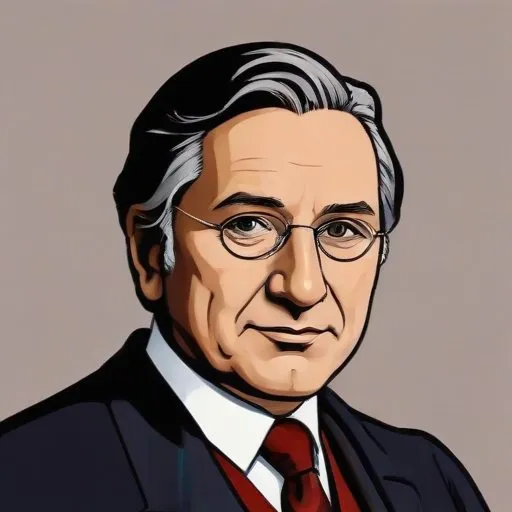
A Canadian lawyer and politician who served as the 5th Premier of Quebec, known for his role in shaping the province's early development and infrastructure. He played a key part in establishing Quebec's railway system and promoting economic growth.
Joseph-Adolphe Chapleau, a French-Canadian lawyer and politician, is best known for his prominent role in Quebec's political landscape, serving as the 5th Premier of Quebec, a federal Cabinet minister, and the 7th Lieutenant Governor of Quebec from 1892 to 1898. Throughout his illustrious career, Chapleau left an indelible mark on the country's history, navigating the complexities of Canadian politics with finesse and dedication.
Born on November 9, 1840, in Sainte-Thérèse, Quebec, Chapleau was raised in a family that valued education and public service. He pursued his passion for law, earning his degree from the Université de Montréal in 1863.
Chapleau's legal career took a dramatic turn when he defended Ambroise-Dydime Lepine against the charge of murdering Thomas Scott during the Red River Rebellion of 1869-1870. This high-profile case thrust him into the spotlight, showcasing his exceptional legal skills and paving the way for his entry into politics.
Chapleau's political career was not without controversy. He was heavily criticized for his role in the Red River Rebellion, particularly in the aftermath of Louis Riel's execution in 1885. Many Quebecers blamed Chapleau for Riel's death, accusing him of being complicit in the tragic event.
In 1874, Chapleau married Marie Louise, daughter of Lieutenant-Colonel Charles King of Sherbrooke. The couple's union was marked by love, respect, and a deep commitment to public service.
Joseph-Adolphe Chapleau's remarkable career serves as a testament to his unwavering dedication to Canadian politics and society. His contributions to the country's legal and political landscape continue to inspire future generations, cementing his place as one of Quebec's most beloved and respected leaders.
Chapleau's funeral monument can be found at the Notre-Dame-des-Neiges Cemetery in Montreal, a poignant tribute to a life well-lived and a legacy that endures.
Today, Chapleau's remarkable story stands as a beacon of hope, inspiring Canadians to strive for greatness, compassion, and dedication to the betterment of society.
92 Years Old
The 20th Prime Minister of Canada, serving from 1993 to 2003, known for his leadership during the Quebec sovereignty movement and his role in shaping Canada's national unity. He implemented policies like the Clarity Act and the National Child Benefit.
Born in 1919
The charismatic leader who championed Canadian unity and implemented progressive policies, known for his iconic style and influential legacy in shaping modern Canada.
Born in 1922
A charismatic leader who championed Quebec's independence and shaped the province's distinct identity through his passionate politics and journalism. He's revered for his role in Quebec's Quiet Revolution.
Born in 1915
The 20th Premier of Quebec, a Canadian lawyer and politician, is most known for his role in shaping Quebec's politics and economy during the 1960s. He played a key part in the province's Quiet Revolution, modernizing its society and government.
Born in 1890
The 16th Premier of Quebec was a dominant figure in Quebec politics from the 1930s to the 1950s, known for his authoritarian rule and promotion of Quebec nationalism. He implemented various social and economic reforms, shaping the province's identity and development.
Born in 1907
The 17th Premier of Quebec, a Canadian lawyer and politician, served from 1936 to 1939 and implemented significant reforms, including the creation of the Quebec Pension Plan. He played a crucial role in shaping Quebec's politics and economy.
Born in 1922
A renowned expert in Canadian politics and federalism, known for his insightful research and publications on the country's governance and institutional dynamics.
