


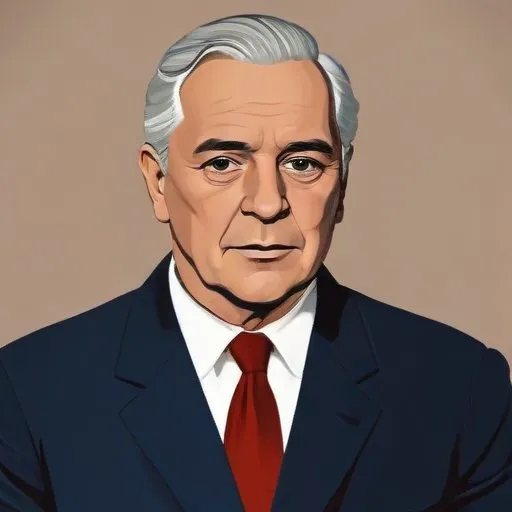
The 16th Premier of Quebec was a dominant figure in Quebec politics from the 1930s to the 1950s, known for his authoritarian rule and promotion of Quebec nationalism. He implemented various social and economic reforms, shaping the province's identity and development.
Maurice Duplessis, affectionately known as "Le Chef" or "The Boss," was a Canadian lawyer and politician who dominated Quebec's provincial politics for nearly two decades, serving as the 16th Premier of Quebec from 1936 to 1939 and again from 1944 to 1959. With a total of 18 years and 82 days in office, he remains the longest-serving premier in Quebec's history.
Born on April 20, 1890, in Trois-Rivières, Quebec, Duplessis was the son of Nérée Duplessis, a lawyer and Conservative member of the Legislative Assembly. Maurice studied law in Montreal and became a member of the Bar of Quebec in 1913. He then returned to his hometown, where he founded a successful legal consultancy. Duplessis' rhetorical skills and charisma soon propelled him into politics.
In 1927, Duplessis was elected as a Conservative MLA for the Trois-Rivières seat. His impressive oratory skills helped him become the leader of the Official Opposition in the Legislative Assembly in 1933. As opposition leader, he formed a coalition with Paul Gouin's Action libérale nationale (ALN), which they called the Union Nationale. Although they lost in 1935, they gained a majority the following year, and Duplessis took over the leadership, breaking nearly 40 years of uninterrupted rule by the Quebec Liberal Party.
Duplessis' premiership was marked by significant reforms and policies. During his first term, he introduced the universal minimum wage and old-age pensions to alleviate the hardships of the Great Depression. He also established the Quebec Hydroelectric Commission, which would become a cornerstone of the province's economic development.
Duplessis was a fervent Catholic, anticommunist, and antiunionist, holding conservative and nationalist views. He believed in the importance of preserving Quebec's distinct identity within Canada. His Union Nationale party's platform emphasized provincial autonomy, economic development, and social welfare.
Duplessis' legacy is complex and multifaceted. Critics have accused him of authoritarianism, corruption, and suppressing dissent. His government was also marred by scandals, including the Asbestos Strike and the Padlock Law. However, supporters praise his economic and social reforms, which improved the lives of many Quebecers.
Duplessis remained unmarried throughout his life, dedicating himself to his political career. He passed away on September 7, 1959, at the age of 69. His funeral procession, attended by thousands, was a testament to his enduring popularity and influence on Quebec politics.
"L'Union Nationale, c'est l'avenir du Québec" ("The Union Nationale is the future of Quebec") - Maurice Duplessis
Duplessis' premiership spanned a tumultuous period in Quebec's history, from the Great Depression to the post-war period. His legacy continues to be debated among historians and politicians, with some viewing him as a champion of Quebec's autonomy and others as a authoritarian leader who suppressed dissent.
Duplessis' leadership style and policies have been compared to those of other prominent Canadian politicians, such as Mackenzie King and Louis St. Laurent. While they shared some similarities, Duplessis' unique blend of conservative and nationalist ideals set him apart.
Duplessis' reforms and policies continue to shape Quebec's modern society. His legacy can be seen in the province's economic development, social welfare system, and distinct cultural identity.
Born in 1915
The 20th Premier of Quebec, a Canadian lawyer and politician, is most known for his role in shaping Quebec's politics and economy during the 1960s. He played a key part in the province's Quiet Revolution, modernizing its society and government.
Born in 1922
A charismatic leader who championed Quebec's independence and shaped the province's distinct identity through his passionate politics and journalism. He's revered for his role in Quebec's Quiet Revolution.
Born in 1912
A Canadian lawyer and politician who served as the 11th Premier of Quebec, known for modernizing the province's economy and education system. He led the Quiet Revolution, a period of significant social and political change in Quebec.
Born in 1919
The charismatic leader who championed Canadian unity and implemented progressive policies, known for his iconic style and influential legacy in shaping modern Canada.
Born in 1897
A Canadian leader who served as Prime Minister and won the Nobel Peace Prize for resolving the Suez Canal Crisis, known for his diplomatic efforts and peacekeeping initiatives.
Born in 1895
The 13th Prime Minister of Canada, a champion of individual rights and freedoms, introduced the Canadian Bill of Rights, a precursor to the Charter of Rights and Freedoms. He's also known for his anti-apartheid stance and leadership during the Suez Crisis.
Born in 1882
The 12th Prime Minister of Canada, a strong leader who played a crucial role in shaping the country's post-war economy and foreign policy, and is credited with establishing universal hospital insurance and old-age pensions.
