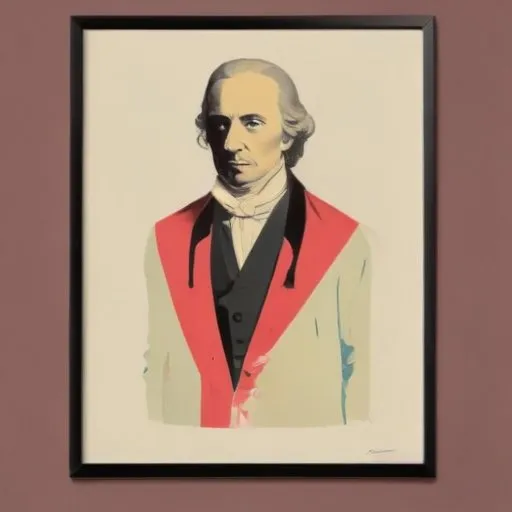
Joseph-Ignace Guillotin: The Physician Behind the Fateful Guillotine
A Pioneer in Humane Executions
Joseph-Ignace Guillotin, a French physician, politician, and freemason, is infamously known for proposing the use of a device to carry out executions in France, which ultimately became synonymous with his name. His advocacy for a less painful method of execution, although not the inventor of the guillotine, led to its widespread adoption during the French Revolution.
Early Life and Education
Born on May 28, 1738, in Saintes, France, Guillotin was the second son of Joseph-Alexandre Guillotin and Catherine Agatha Martin. Legend has it that his premature birth was triggered by his mother's distress upon hearing the screams of a man being tortured to death on the breaking wheel. Guillotin's early education was under the Jesuits in Bordeaux, where he earned a Master of Arts degree at the College of Aquitaine of the University of Bordeaux in December 1761. His impressive essay earned him an invitation to become a professor of literature at the Irish College in Bordeaux, which he eventually left to pursue medicine in Paris.
A Career Marked by Compassion and Controversy
In Paris, Guillotin became a renowned physician, concerned with issues of torture and death. By 1775, he proposed using criminals as subjects in medical experiments, recognizing the cruelty, but considering it preferable to capital punishment. This proposal sparked controversy and foreshadowed his later advocacy for the guillotine. In 1784, Guillotin was part of a commission investigating
Franz Mesmer's theory of animal magnetism, which many deemed offensive.
The Guillotine Proposal
On October 10, 1789, Guillotin proposed the use of a device to carry out executions, which eventually became known as the guillotine. Although he did not invent the device, his name became inextricably linked to it. The actual inventor of the prototype was Tobias Schmidt, working with Antoine Louis, the king's physician.
Philosophical Contributions and Beliefs
Guillotin's humanitarian approach to execution was grounded in his philosophical beliefs. He opposed the death penalty, advocating for the abolition of capital punishment. His proposal for the guillotine was driven by a desire to reduce suffering, rather than to promote punishment.
Personal Milestones and Key Life Events
- 1761: Earned a Master of Arts degree at the College of Aquitaine of the University of Bordeaux
- 1768: Gained a diploma from the faculty at Reims
- 1770: Earned a doctorate at the School of Medicine in Paris, becoming a Doctor-Regent
- 1775: Proposed using criminals as subjects in medical experiments
- 1784: Investigated Franz Mesmer's theory of animal magnetism
- 1789: Proposed the use of the guillotine for executions
Influence on Modern Society
The guillotine, although not invented by Guillotin, became an enduring symbol of the French Revolution and a testament to his humanitarian concerns. His advocacy for a more humane method of execution continues to influence modern discourse on capital punishment.
Legacy and Controversies
Guillotin's legacy is marked by both admiration and criticism. While he is recognized for his humanitarian approach, his association with the guillotine has led to controversy. Nevertheless, his contributions to the history of medicine, politics, and social reform remain significant.
Quotes and Memorable Sayings
- "I die of grief to see the cruelties that are committed in the name of justice." - Joseph-Ignace Guillotin
Historical Context and Legacy
Guillotin's life and work are intricately tied to the French Revolution and the Enlightenment era. His legacy serves as a testament to the complexities of human compassion, moral dilemma, and the pursuit of humanitarian progress.
FAQ
What was Joseph-Ignace Guillotins role in French medicine?
Joseph-Ignace Guillotin was a French physician and politician who played a significant role in the development of medicine and public health in France during the 18th century. He was a strong advocate for medical reform and improved healthcare for the poor.
What were Joseph-Ignace Guillotins contributions to the French Revolution?
Joseph-Ignace Guillotin was a prominent figure during the French Revolution, serving as a member of the National Assembly and advocating for social and political reform. He was a strong supporter of the Revolutions ideals of liberty, equality, and fraternity.
How did Joseph-Ignace Guillotins invention impact capital punishment?
Joseph-Ignace Guillotin is perhaps best known for his invention of the guillotine, a device designed to execute prisoners quickly and humanely. His invention was intended to reduce the suffering of those condemned to death, and it became a symbol of the French Revolutions commitment to humanitarian values.
What was Joseph-Ignace Guillotins relationship with other revolutionaries?
Joseph-Ignace Guillotin was part of a circle of prominent revolutionaries, including Maximilien Robespierre and Pierre Vergniaud. He collaborated and corresponded with these figures, contributing to the development of revolutionary ideals and policies.
What is Joseph-Ignace Guillotins legacy in French history?
Today, Joseph-Ignace Guillotin is remembered as a significant figure in French history, particularly for his role in the French Revolution and his invention of the guillotine. His contributions to medicine, politics, and social reform continue to be studied and celebrated by scholars and historians.