


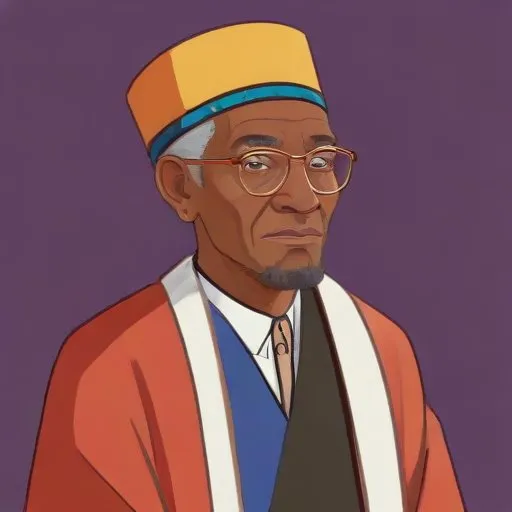
Joseph KiZerbo, a renowned Burkinabé historian, politician, and writer, is recognized as one of Africa's foremost thinkers. He is celebrated for his invaluable contributions to African historiography, his commitment to pan-Africanism, and his unwavering advocacy for independence and unity.
KiZerbo was born on June 21, 1922, in Toma, a small town in the province of Nayala, French Upper Volta (now Burkina Faso). He was the son of Alfred Diban KiZerbo, considered the first Burkinabé Christian, and Thrse Folo Ki. His father played a significant role in saving Toma from being razed to the ground during the Volta-Bani War in 1915.
KiZerbo's educational journey took him from the Catholic primary school in Toma to the preparatory seminaries in Pabr and Faladi, and finally to the Grand Séminaire Saint-Pierre Claver in Koumi. Although he initially pursued a path towards priesthood, he eventually dropped out and moved to Dakar, Senegal, where he worked as a teacher, journalist, and laborer.
In 1949, KiZerbo earned a scholarship to study in Paris, where he delved into history and law at the Sorbonne, and politics at Sciences Po. He became the first certified history and geography teacher from Upper Volta, and later went on to become a professor of African History at the University of Ouagadougou from 1972 to 1978.
KiZerbo's academic pursuits were complemented by his dedication to politics. He founded the Party for Democracy and Progress-Socialist Party and served as its chairman until 2005. He represented the party in the Burkina Faso parliament until his death in 2006.
KiZerbo was an ardent advocate for African independence and unity, and a vocal critic of Thomas Sankara's revolutionary government. His strong stances often led to controversies, and in 1983, he was forced into exile, only returning to Burkina Faso in 1992.
Joseph KiZerbo's legacy extends far beyond his academic and political achievements. He has inspired generations of Africans to reclaim their history, culture, and identity. His tireless advocacy for pan-Africanism and regional integration has left an indelible mark on the continent.
Today, KiZerbo's work continues to inspire scholars, policymakers, and social activists. His commitment to African independence and unity remains a beacon of hope for a continent still grappling with the vestiges of colonialism.
KiZerbo's contributions have had a profound impact on modern society. His work has:
As we reflect on KiZerbo's remarkable life and achievements, we are reminded of the power of dedication, perseverance, and intellectual curiosity. His legacy continues to inspire us to work towards a more united, equitable, and just Africa.
76 Years Old
A charismatic leader who led a revolution to transform Burkina Faso into a self-sufficient nation, promoting pan-Africanism and anti-imperialism. He's known for his radical reforms and empowering the poor.
Born in 1906
First president of Senegal and a renowned poet, known for promoting African culture and unity through his writings and political leadership.
Born in 1922
First President of Guinea, led country to independence from France in 1958, and implemented socialist policies. Known for his Pan-Africanism and anti-colonial stance.
Born in 1915
First President of Mali, leading the country to independence from France in 1960 and implementing socialist policies. Known for his efforts to modernize and unify the country.
