


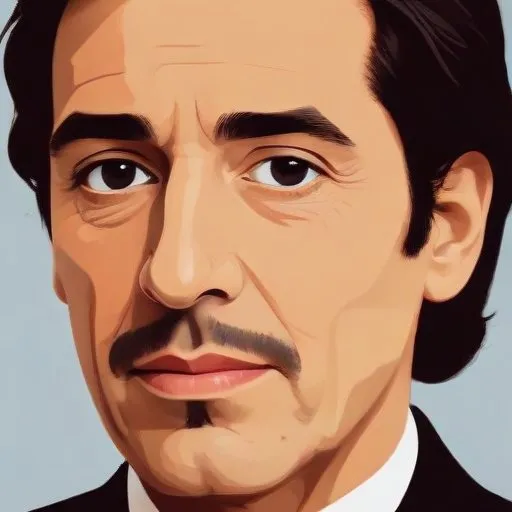
A renowned Spanish writer, playwright, and journalist, best known for his literary works that often explored themes of love, morality, and social commentary. His writing style blended wit, humor, and psychological insight.
Juan Ignacio Luca de Tena, the 2nd Marquis of Luca de Tena, was a multifaceted Spanish figure who made a lasting impact in the realms of politics, diplomacy, journalism, and literature. He is best known for his distinguished career as a politician, diplomat, and journalist, which spanned over four decades.
Luca de Tena's political career began in 1958 when he was elected as a Member of the Cortes, a position he held until 1964. During this period, he played a crucial role in shaping Spain's political landscape. He later served as the Ambassador of Spain to Chile from 1940 to 1944 and to Greece from 1961 to 1962, further solidifying his reputation as a skilled diplomat.
Beyond his political endeavors, Luca de Tena was a talented playwright and journalist. His literary contributions earned him a seat in the prestigious Real Academia Española, where he was elected to seat E in 1946. This accolade is a testament to his mastery of the Spanish language and his significant impact on the country's literary scene.
Luca de Tena's personal life was marked by his strong family ties. His son, Guillermo Luca de Tena, followed in his footsteps as a journalist, while his daughter, María Victoria Luca de Tena, married Nemesio Fernández-Cuesta, a prominent businessman and journalist. Through his family, Luca de Tena's legacy continues to influence Spanish society today.
Luca de Tena's exceptional service to Spain was recognized with numerous awards and decorations, including the:
These honors are a testament to Luca de Tena's unwavering dedication to his country and his remarkable achievements in the fields of politics, diplomacy, and literature.
Born in 1916
A Spanish writer and politician who won the Nobel Prize in Literature in 1989 for his innovative and influential literary style, which explored the human condition and Spanish culture.
Born in 1898
A Spanish poet and author, celebrated for his surreal and introspective works that explored the human condition, earning him the Nobel Prize in Literature in 1977.
Born in 1898
A renowned Spanish poet and philologist who made significant contributions to the study of Spanish literature, particularly in the field of Golden Age poetry. He's also known for his own poetry, which explores themes of love, death, and existential crisis.
Born in 1896
A leading figure in Spanish literature, known for blending traditional forms with modernist experimentation, and influential in shaping 20th-century Spanish poetry .
Born in 1909
A renowned Spanish poet of the 20th century, known for his lyrical and introspective style, exploring themes of love, death, and the human condition.
