


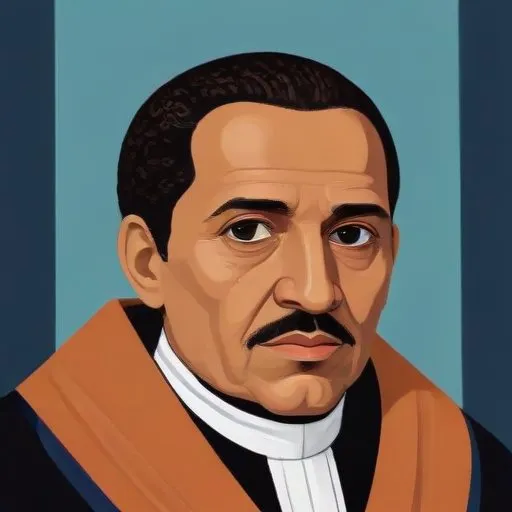
A founding father of the Dominican Republic, credited with leading the country's independence movement and shaping its national identity through his writings and ideas.
Juan Pablo Duarte, a name synonymous with independence, revolution, and national pride, is hailed as the Father of the Dominican Republic. This visionary leader, writer, and activist played a pivotal role in shaping the country's destiny, leading the charge against Haitian rule and paving the way for a sovereign Dominican state.
Born on January 26, 1813, into a middle-upper-class family, Duarte's thirst for knowledge and desire for improvement led him to Europe, where he nurtured his liberal ideals. These formative years would lay the groundwork for his later struggles to establish an independent Dominican state.
Upon his return, Duarte dedicated himself to teaching, improvising a school in his father's business, determined to instill his ideals of revolutionary enlightenment in the people of his era.
In 1843, Duarte participated in the Reformist Revolution against the dictatorship of Jean-Pierre Boyer of Haiti, which had occupied Santo Domingo for over 20 years. The following year, he helped found La Trinitaria, a secret society that played a crucial role in the Dominican revolt and eventual independence from Haitian rule.
The Board formed to designate the first ruler of the nation elected Duarte by a strong majority vote to preside over the nation. However, he declined the proposal, allowing Toms Bobadilla to take office instead.
Duarte's unwavering commitment to the cause of independence led him to finance the Dominican War of Independence, shouldering a significant financial burden that would eventually ruin him financially.
His disagreements with royalist and pro-annexation sectors in the nation, particularly with the wealthy caudillo and military strongman Pedro Santana, only strengthened his resolve to fight for a sovereign Dominican state.
Juan Pablo Duarte's vision, courage, and perseverance have left an indelible mark on Dominican history. He is revered as a folk hero and revolutionary visionary, and his legacy continues to inspire generations.
Today, his birthday, January 26, is celebrated as a national holiday in the Dominican Republic, a testament to the enduring impact of his life's work.
Juan Pablo Duarte's remarkable story serves as a beacon of hope and inspiration, reminding us of the power of courage, conviction, and perseverance in the pursuit of freedom and national identity.
Born in 1891
A ruthless dictator who ruled the Dominican Republic with an iron fist, known for his brutal suppression of opposition and human rights abuses.
Born in 1908
Chile's first democratically elected Marxist president, who implemented radical socialist reforms and nationalized key industries, but was overthrown in a CIA-backed coup.
99 Years Old
The Cuban revolutionary who led the country from 1959 to 2008, implementing socialist policies and defying US opposition, becoming an iconic figure in modern history.
Born in 1783
Led the Latin American wars of independence against Spanish rule, unifying several countries under the Gran Colombia republic. He's revered as a national hero and symbol of freedom.
71 Years Old
The charismatic leader who transformed Venezuela through socialist reforms and anti-imperialist rhetoric, leaving a lasting impact on the country's politics and economy.
