


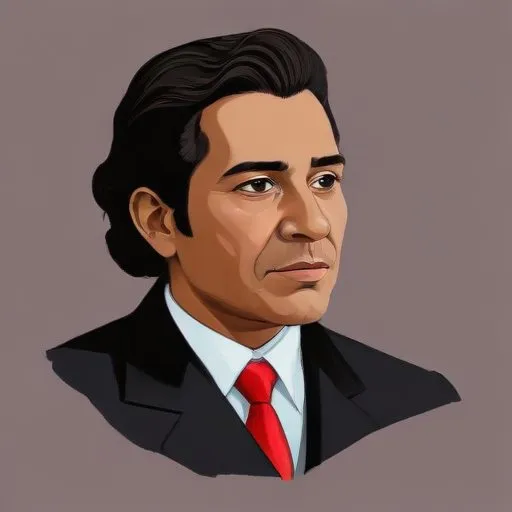
Ecuadorian author and diplomat who wrote influential essays and novels that critiqued politics and society, and served as a diplomat in Europe and the US. He's considered a national hero in Ecuador.
Juan Montalvo, a prominent Ecuadorian essayist and novelist, is widely recognized for his influential writings that boldly criticized authoritarian regimes and the Catholic Church. His most notable work,
Born on April 13, 1832, in Ambato, Ecuador, to José Marcos Montalvo and Josefa Fiallos, Juan Montalvo was destined for greatness. His family's history was marked by a strong entrepreneurial spirit, with his grandfather, José Santos Montalvo, immigrating from Andalusia to work as a cinchona bark gatherer across Panama, Venezuela, and Colombia. Juan's father, Marcos, was a traveling fabric seller who married Mara Jose Fiallos in Ambato, setting the stage for Juan's birth.
Montalvo's education was multifaceted, with studies in philosophy and law in Quito. This intellectual foundation would later inform his writings and shape his worldview.
In 1857, Montalvo embarked on a diplomatic career, serving in Italy and France until 1859. However, his liberal stance and anticlerical views soon put him at odds with the ruling elite. In 1860, an issue of his magazine, El Cosmopolita, viciously attacked President Gabriel García Moreno, resulting in Montalvo's exile to Colombia for seven years.
Montalvo's literary output was vast and varied, with notable works including Siete tratados (1882) and the posthumous Geometra Moral (1902). His essays and novels often tackled pressing social issues, earning him admiration from intellectuals such as Jorge Luis Borges and Miguel de Unamuno.
In addition to his influential writings, Montalvo also penned a sequel to Cervantes' Don Quixote de la Mancha, titled Captulos que se le olvidaron a Cervantes. This work showcases his mastery of language and creative storytelling.
Juan Montalvo's life was marked by personal and professional milestones, including his diplomatic career, literary achievements, and tumultuous relationships with authoritarian regimes.
In 1889, Montalvo passed away in Paris, where he was living in exile. His embalmed body was later transported to Ambato, where it is exhibited in a mausoleum in his hometown.
Montalvo's literary legacy extends far beyond his own lifetime. His critique of authoritarianism and the Catholic Church resonated with intellectuals and common people alike, inspiring future generations of writers and thinkers.
Through his works, Montalvo continues to inspire and educate, leaving an indelible mark on Ecuadorian literature and culture.
Born in 1889
A Chilean poet and educator who was the first Latin American to win the Nobel Prize in Literature, known for her passionate and introspective poetry that explores themes of love, nature, and social justice.
Born in 1904
A Chilean poet and diplomat who wrote passionate and evocative poetry that explored love, politics, and the human condition, and was awarded the Nobel Prize in Literature in 1971.
Born in 1914
A Mexican poet and diplomat who won the Nobel Prize in Literature in 1990 for his work that explores the intersection of poetry, philosophy, and politics. He's known for his lyrical and introspective style that explores the human condition.
90 Years Old
A Nobel Prize-winning writer and politician who explored the complexities of Peruvian society through his novels and essays, and later ran for president. His works often blended politics, history, and fiction.
99 Years Old
A Colombian journalist and author who crafted magical realism, a literary style that blends fantasy and reality, and won the Nobel Prize in Literature in 1982. His works are known for their vivid storytelling and exploration of human experience.
Born in 1914
A pioneering figure in magical realism, blending fantastical elements with everyday life in his novels and short stories, exploring the human condition and social commentary.
Born in 1899
A visionary writer who crafted intricate, philosophical tales that blurred reality and fantasy, influencing generations of authors and thinkers. 82
