


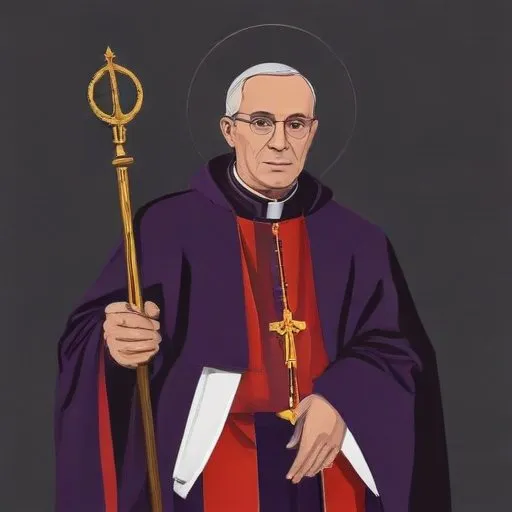
A 16th-century Spanish Roman Catholic archbishop who played a key role in the Spanish Inquisition and was a prominent figure in the Counter-Reformation. He's also known for his patronage of the arts and education.
Juan de Ribera, the illustrious Spanish cleric, is renowned for his multifaceted contributions to the realms of faith, governance, and education. As a prominent figure of the 16th and 17th centuries, Ribera left an indelible mark on Spain's rich cultural heritage, transcending boundaries of authority, wisdom, and compassion.
Born on March 20, 1532, in Seville, Spain, Juan de Ribera descended from a family of noble lineage. His father, Pedro Afán de Ribera, was the Viceroy of Naples and Duke of Alcalá, while his mother's untimely demise left him in the care of his father. Ribera's formative years were steeped in academic rigor, as he pursued higher studies at the University of Salamanca.
Ordained as a priest in 1557, Ribera's unwavering dedication to the Catholic Church led to a series of esteemed appointments. In 1562, Pope Pius IV consecrated him as the Bishop of Badajoz, where he devoted himself to catechizing Roman Catholics and countering Protestantism. This pivotal role paved the way for his eventual appointment as the Archbishop of Valencia in 1568, a position that cemented his influence in Spanish ecclesiastical circles.
Ribera's ascension to the role of Viceroy of Valencia in 1602, courtesy of King Philip III, solidified his dual authority as both the spiritual and temporal leader of the region. During this period, he founded the Museum of the Patriarch, an institution dedicated to the formation of priests in accordance with the Council of Trent's principles. This endeavor reflected his commitment to fostering a new generation of clergy, well-versed in the teachings of the Catholic Church.
One of the most contentious aspects of Ribera's tenure was his handling of the Morisco population in Valencia. These descendants of Muslim converts to Christianity had maintained their unique cultural identity, often practicing crypto-Islam in secret. Ribera, aligned with the prevailing sentiment of the Christian populace, viewed the Moriscos as heretics and traitors, leading to his role in convincing King Philip III to expel them from the region.
Juan de Ribera's remarkable life, marked by unwavering dedication to his faith, governance, and education, ultimately earned him the reverence of the Catholic Church. Beatified in 1796, he was canonized by Pope John XXIII in 1960, a testament to his enduring legacy as a champion of Spanish Catholicism.
"The Church is the mistress of the sciences, and it is she who has nourished them, and it is she who has made them flourish." - Juan de Ribera
Ribera's life and accomplishments serve as a testament to the complex tapestry of 16th and 17th century Spain. His multifaceted contributions have left an indelible mark on the nation's cultural, religious, and educational landscape. As a visionary leader, Ribera's commitment to the Catholic Church and his people continues to inspire generations, cementing his place as one of the most influential figures in Spanish history.
Born in 1476
A fierce defender of Catholic orthodoxy, he implemented strict reforms and established the Roman Inquisition to root out heresy. His papacy was marked by controversy and conflict.
Born in 1568
The 17th-century Catholic leader who reigned for 21 years, known for his strong stance against Galileo Galilei and his scientific discoveries, as well as his extensive patronage of the arts.
Born in 1611
Led the Catholic Church during a tumultuous period, reforming the Church's finances and combating corruption, while also opposing the French monarch's attempts to exert control over the Church.
Born in 1599
A 17th-century pope who commissioned grand architectural projects, including the colonnade of St. Peter's Square, and was a patron of the arts.
Born in 1611
Led the Catholic Church during a tumultuous period, reforming the Church's finances and combating corruption, while also opposing the French monarch's attempts to exert control over the Church.
Born in 1652
The 18th-century Pope who banned Freemasonry and reformed the Roman Curia, leaving a lasting impact on the Catholic Church's governance and relations with secret societies.
Born in 1650
A Dominican friar who played a key role in the Western Schism, issuing several bulls to assert his authority and legitimacy as the true pope. He's also known for his reforms and attempts to restore the church's discipline.
Born in 1652
The 18th-century Pope who banned Freemasonry and reformed the Roman Curia, leaving a lasting impact on the Catholic Church's governance and relations with secret societies.
