


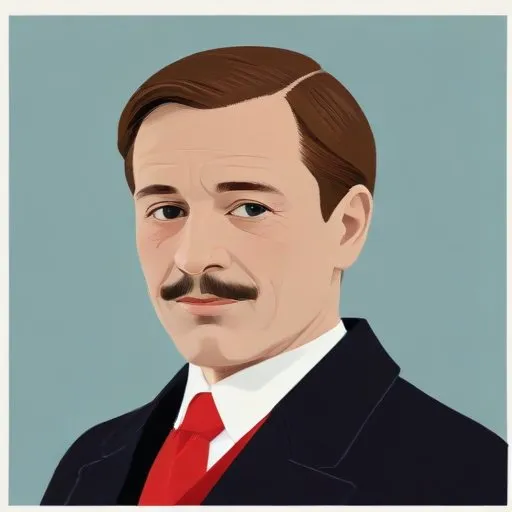
Austrian painter and illustrator renowned for his vibrant, Art Nouveau-inspired posters and advertisements, which beautifully blended elegance and wit.
Julius Klinger, a renowned Austrian artist, is celebrated for his pioneering work in commercial graphic art, typography, and illustration. He is particularly recognized for developing a new fashion of functional poster design that earned him international acclaim.
Born on May 22, 1876, in Dornbach, near Vienna, Klinger's artistic journey began at the Technologisches Gewerbemuseum in Vienna, where he honed his skills as a painter, draftsman, and illustrator.
In 1895, Klinger landed his first job at the Vienna fashion magazine Wiener Mode, where he met Koloman Moser, who would later become his teacher. Moser's recommendation led to Klinger's collaboration with the MeggendorferBlätter in Munich, marking the beginning of his illustrious career.
In 1897, Klinger relocated to Berlin, where he worked extensively as a commercial graphic artist until 1915. During this period, he developed his signature style, blending functionality with artistic flair, and partnered with the printing house Hollerbaum und Schmidt to create innovative poster designs.
Tragically, Klinger's life was marred by persecution during the Nazi era. As a Jew, he was targeted, and in 1942, he and his wife Emilie were deported to Minsk, a fate synonymous with certain death.
Despite the darkness of his later years, Klinger's artistic contributions continue to inspire and influence contemporary designers. His pioneering work in functional poster design has left an indelible mark on the world of commercial graphic art.
Klinger's emphasis on functionality and simplicity has had a lasting impact on modern design. His innovative approach to poster design has influenced generations of artists, shaping the way we communicate visually in the public sphere.
Through his work, Klinger has demonstrated that art and commerce can coexist seamlessly, paving the way for future designers to explore new frontiers in advertising and visual communication.
Born in 1862
Austrian Symbolist master of opulent, gold-leaf adorned paintings and illustrations that explored the human form, often with erotic undertones. His works are synonymous with Viennese Art Nouveau.
Born in 1890
Austrian soldier and painter who captured the intensity of human emotion through bold, expressive portraits and landscapes, often exploring themes of death, sexuality, and the human condition.
Born in 1886
Austrian-Swiss artist who pioneered Expressionism through vibrant, emotive paintings and plays that explored the human condition. His works often featured distorted forms and bold colors.
Born in 1853
A Symbolist painter celebrated for his vibrant, dreamlike landscapes and figures, often exploring themes of love, death, and the human condition.
Born in 1863
A Norwegian painter who created iconic, emotionally charged works that explored the human experience, including the famous piece "The Scream".
Born in 1880
A German soldier-turned-painter who pioneered Expressionism, capturing the emotional essence of animals and landscapes in vibrant, abstracted forms. His work continues to inspire artists and art lovers alike.
