


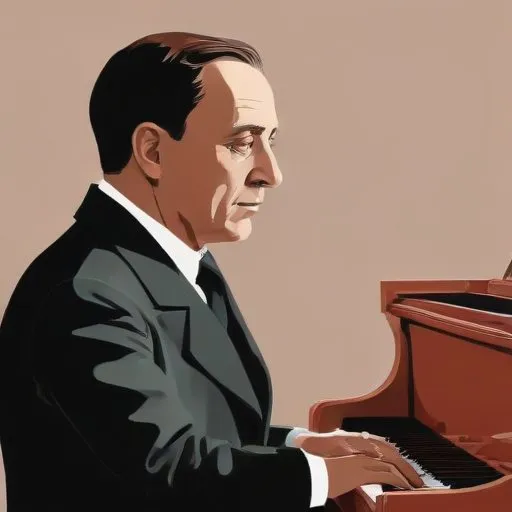
A German Romantic-era pianist and composer, known for his virtuosic and expressive piano sonatas, particularly his Sonata in B-flat minor, which is considered a pinnacle of Romantic piano music.
Julius Reubke is renowned for his monumental organ work, the Sonata on the 94th Psalm in C minor, considered one of the greatest pieces in the romantic repertoire. This German composer, pianist, and organist left an indelible mark on the music world, despite his tragically short life.
Born on March 23, 1834, in Hausneindorf, a small village in the Harz Mountains region, Julius Reubke was the eldest son of Adolf Reubke, an organ and piano builder. His early musical instruction began in Quedlinburg under Hermann Bnicke, followed by further education at the Berlin Conservatory, where he studied piano, composition, and organ with prominent musicians like Theodor Kullak, Adolf Bernhard Marx, and Julius Stern.
Reubke's encounter with the Neudeutsche Schule, a music movement led by Franz Liszt, had a profound impact on his compositional style. Liszt, impressed by Reubke's talent, took him under his wing, offering piano and composition lessons in Weimar from February 1856. This mentorship allowed Reubke to flourish, producing his two major works: the Piano Sonata in B-flat minor and the Sonata on the 94th Psalm in C minor.
The Sonata on the 94th Psalm, dedicated to Professor Carl Riedel, showcases Reubke's mastery of organ technique, harmonies, and thematic development. This work, along with his piano sonata, solidified his position as a prominent composer of his time. Reubke's music, characterized by its dramatic intensity and innovative use of harmony, has inspired generations of musicians and continues to be performed and admired today.
Reubke came from a musically inclined family; his brother Otto, also a pianist, organist, and composer, prepared the Sonata on the 94th Psalm for its first publication in August 1871. Otto went on to become a professor at the University of Halle and later directed the institution. Reubke's other siblings, Emil and Karl, worked with their father in the family business, while his sisters, Meta and Alma, also pursued musical interests.
Reubke's life and work are set against the backdrop of the Romantic era, a time of great change and innovation in music. His compositions, though few in number, demonstrate a deep understanding of the organ as an instrument and its capabilities. Reubke's legacy can be seen in the works of later organ composers, who drew inspiration from his trailblazing sonata.
"Reubke's music is a testament to the power of creative genius, which can leave an indelible mark on the world, even in a short lifetime."
Born in 1811
A virtuosic pianist and composer who revolutionized classical music with his technically demanding and emotionally expressive works, blending Hungarian folk influences with Romantic-era drama.
Born in 1810
A renowned Romantic-era composer and influential music critic, known for his expressive and emotionally charged works, including symphonies, piano music, and art songs.
Born in 1833
A renowned pianist and composer, he crafted complex, expressive works that blended traditional and innovative techniques, leaving an indelible mark on classical music.
Born in 1813
A revolutionary composer who transformed opera with his epic, mythological works, creating a new era of musical storytelling. His iconic operas, such as "Der Ring des Nibelungen," continue to captivate audiences worldwide.
Born in 1813
A renowned composer of iconic operas like La Traviata and Aida, known for his masterful blending of drama and music. His works continue to captivate audiences worldwide.
Born in 1809
A renowned 19th-century musician who masterfully blended classical and romantic styles, creating iconic works like the "Wedding March" and "Elijah" oratorio. His compositions continue to inspire and influence generations of artists.
Born in 1810
A Polish pianist and composer renowned for his delicate, expressive, and technically demanding piano music that evokes deep emotions and continues to inspire generations of musicians and music lovers. His nocturnes, waltzes, and preludes are staples of classical music.
Born in 1803
A French Romantic-era mastermind who composed iconic symphonies, operas, and orchestral works, revolutionizing classical music with his bold, expressive style.
