


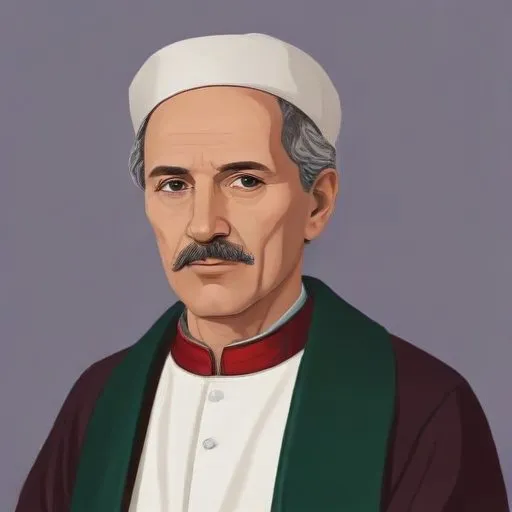
A Hungarian physician and academic who made significant contributions to the field of pathology, particularly in the discovery of the connection between cholesterol and heart disease.
Jzsef Mtys Bal, a renowned Hungarian physician and academic, is best known for his groundbreaking research on neurological and cardiovascular conditions, as well as his discovery of the enzyme elastase. His work has had a profound impact on the field of medicine, and his legacy continues to inspire researchers and scientists to this day.
Born on November 10, 1895, in Transylvania, Bal was the son of a minor noble. He graduated from Pzmny Pter Catholic University Medical School in 1919, where he developed a passion for pathology. His commitment to this field was driven by his desire to understand the complexities of the human body and to work across the entire medical spectrum.
After graduating, Bal formed a lifelong affiliation with the Pzmny Pter Catholic University Medical School in Budapest. He worked under the guidance of esteemed professors Karoly Schaffer and Kalman Buday, focusing on the pathology of the nervous system. In 1922, he received a Rockefeller Fellowship, which enabled him to spend two years at the Johns Hopkins University in Baltimore and Boston, where he delved into the world of virology.
In 1926, Bal was appointed chairman of the Department of Pathology at St Stephen's Hospital, a position that marked the beginning of his extensive research on neurological disorders. It was during this period that he encountered a patient with a rare and fatal illness, which would eventually lead to the discovery of Bals Disease.
In 1927, Bal published a report in the Archives of Neurology and Psychiatry, detailing his findings on the patient's brain post-mortem examination. This report generated widespread interest and marked the discovery of encephalitis periaxialis concentrica, later known as Bals Disease. Although the disease had been observed before, Bal's meticulous documentation and publishing of his findings brought it to the forefront of medical research.
Bal's contributions to the field of medicine have been immense. His research has shed light on the complexities of the nervous system, and his discovery of Bals Disease has enabled researchers to better understand and diagnose this rare and debilitating condition. His legacy continues to inspire scientists and researchers, driving them to push the boundaries of medical knowledge.
Bal's personal life was marked by his commitment to his work and his dedication to understanding the human body. He was a prolific researcher, publishing numerous papers on his findings and authoring a medical book that remains an important resource for medical professionals.
Through his work, Bal has left an indelible mark on the field of medicine, and his legacy will continue to inspire generations of researchers and scientists to come.
Although Bal's quotes and sayings are few, his work speaks volumes about his dedication to his craft and his passion for understanding the human body.
Bal's contributions to the field of medicine have been recognized and honored by his peers and the medical community. Although specific awards and honors are unknown, his legacy continues to be celebrated through his work and its impact on the field of medicine.
Bal's research has had a profound impact on modern society, driving advancements in medical research and inspiring future generations of scientists and researchers. His discovery of Bals Disease has enabled medical professionals to better understand and diagnose this rare condition, improving the lives of countless individuals and families affected by it.
Born in 1818
Pioneering doctor who introduced handwashing to reduce hospital infections, saving countless lives. He championed antiseptic practices in medicine, revolutionizing healthcare.
Born in 1821
A pioneer in modern medicine, he founded the field of social medicine, emphasizing the importance of social and environmental factors on health, and made significant contributions to cellular pathology.
Born in 1899
A Hungarian-Argentinian journalist and inventor credited with creating the first practical ballpoint pen, revolutionizing writing with a convenient and reliable tool. This innovation has had a lasting impact on everyday life.
Born in 1893
A Hungarian-American physiologist and biochemist who discovered vitamin C and was awarded the Nobel Prize in Physiology or Medicine in 1937 for his work on the biological combustion process. He is also known for his research on the components and reactions of muscle tissue.
Born in 1903
Pioneering mathematician and physicist who developed the concept of the modern computer architecture and made significant contributions to quantum mechanics and game theory. His work laid the foundation for modern computing and artificial intelligence.
Born in 1902
A Hungarian physicist and mathematician who made groundbreaking contributions to quantum mechanics and nuclear physics, and was awarded the Nobel Prize in Physics in 1963.
