


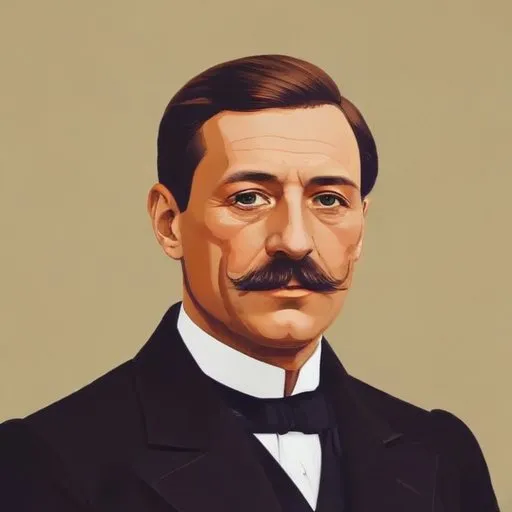
A German botanist who discovered and described numerous plant species, particularly in the families Apocynaceae and Euphorbiaceae. His work laid the foundation for future botanical research.
Karl August Otto Hoffmann was a renowned German botanist and high school teacher in Berlin, best known for his groundbreaking contributions to the field of Asteraceae, a diverse and widespread family of flowering plants.
Born on October 25, 1853, in Beeskow, Hoffmann pursued his passion for mathematics and natural history at the University of Berlin. He later pursued graduate studies at the University of Göttingen, laying the foundation for his future endeavors in botany.
In 1877, Hoffmann began teaching at the Friedrichswerdersches Gymnasium in Berlin, where he shared his knowledge with students while continuing his research in botany. His dedication to the field led him to process botanical specimens collected by Johann Maria Hildebrandt in Madagascar, alongside Georg Carl Wilhelm Vatke.
Hoffmann's most significant contribution lies in his investigation of the Asteraceae family, for which he is the binomial author of numerous species. He provided in-depth analyses of specimens collected by Auguste Chevalier in Africa and by Per Karl Hjalmar Dusén in Patagonia and Tierra del Fuego.
His work on Asteraceae also extended to the Madagascar collections of Christian Rutenberg and the botanical specimens collected by Friedrich Wilhelm Alexander von Mechow and Eduard Teusz in the interior of Angola.
Hoffmann collaborated with prominent botanists of his time, including Rudolf Schlechter, with whom he worked on the publication Sertum plantarum madagascariensium. His contributions to Engler and Prantl's Die Natürlichen Pflanzenfamilien involving Asteraceae spanned an impressive 806 genera.
In recognition of his contributions, the genus Hoffmanniella in the family Asteraceae was named after him by Rudolf Schlechter. More recently, in 2014, the plant genus Hoffmannanthus, also in the Asteraceae family, was named in his honor.
Hoffmann's impressive herbarium was donated to the Berlin Herbarium, ensuring the preservation of his life's work for future generations of botanists.
Karl August Otto Hoffmann passed away on September 11, 1909, following an operation for appendicitis. His dedication to his craft and his legacy in the field of botany continue to inspire and influence botanists to this day.
Through his tireless efforts, Hoffmann has left an indelible mark on our understanding of the Asteraceae family, paving the way for continued research and discovery in the field of botany.
Born in 1834
A German biologist, physician, and philosopher who coined the term "ecology" and made significant contributions to the field of evolutionary biology, including the recapitulation theory.
Born in 1828
Pioneering microbiologist who discovered the first bacterium, Bacillus subtilis, and laid the foundation for modern bacteriology. His work revolutionized the field of microbiology and paved the way for significant advances in medicine and agriculture.
