


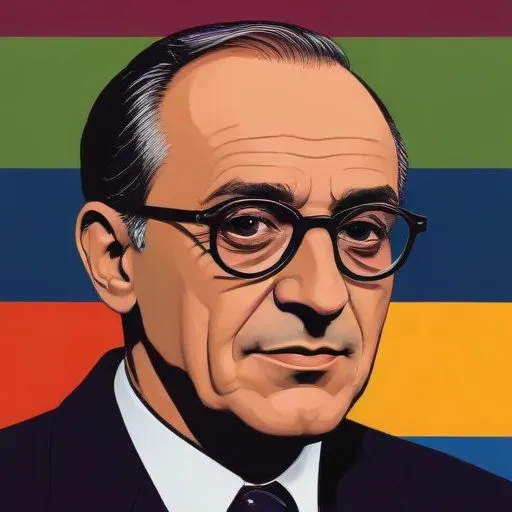
Pioneering microbiologist who discovered the first bacterium, Bacillus subtilis, and laid the foundation for modern bacteriology. His work revolutionized the field of microbiology and paved the way for significant advances in medicine and agriculture.
Ferdinand Cohn, a German biologist, is renowned for laying the foundation of modern bacteriology and microbiology. He is credited with revolutionizing the understanding of microorganisms, their growth, and their role in disease, cementing his place as one of the pioneers in the field.
Born on January 24, 1828, in the Jewish quarter of Breslau, Prussian Province of Silesia (modern-day Wrocław, Poland), Cohn was the elder brother of humorist and playwright Oskar Justinus Cohn and historian and jurist Max Conrat. Despite suffering from hearing impairment from a young age, he was considered a child prodigy, able to read at the age of two.
Cohn's exceptional academic abilities earned him a place at the Maria-Magdalenen-Gymnasium in 1835, and later, at the University of Breslau in 1842 or 1844. However, due to his Jewish background, he was refused admission to the University of Breslau's doctoral program. Undeterred, he continued his studies at the University of Berlin, where he obtained a Ph.D. in 1847 with a dissertation on the physiology of seeds.
Cohn's prolific writing career yielded over 150 papers, essays, and books. In the 1850s, he made significant contributions to the study of plant cells, focusing on their growth and division. His groundbreaking papers on the sexuality of Sphaeroplea annulina (1855) and Volvox globator (1855) showcased his expertise in plant physiology.
In the 1860s, Cohn continued to explore various aspects of plant physiology, eventually shifting his focus to bacteria in the 1870s. His work on bacteria led to the establishment of the use of sterile cultures, a method that remains a cornerstone of microbiology to this day.
Cohn's contributions to microbiology have had a profound impact on modern society. His discoveries paved the way for significant advances in fields such as medicine, agriculture, and environmental science. His work on the growth and division of microbial cells laid the foundation for the development of vaccines, antibiotics, and other life-saving treatments.
As a testament to his enduring legacy, Cohn is often referred to as the "Father of Modern Bacteriology." His dedication to his work and his passion for understanding the microscopic world have inspired generations of scientists, ensuring that his impact will continue to be felt for years to come.
Cohn's work may not have directly influenced popular culture, but his discoveries have had a ripple effect on the way we live our lives. From the antibiotics we use to treat infections to the vaccines that protect us from diseases, Cohn's contributions have improved the human experience.
In a world where microorganisms play a vital role in our daily lives, Cohn's pioneering work has ensured that we have a deeper understanding of these tiny but mighty organisms. As we continue to push the boundaries of scientific knowledge, Cohn's legacy serves as a reminder of the power of human curiosity and the importance of continued exploration.
Born in 1822
Developed vaccines for rabies and anthrax, and pioneered the germ theory of disease, revolutionizing our understanding of microbiology and disease prevention.
Born in 1843
A pioneering microbiologist and physician who discovered the bacteria that cause tuberculosis, cholera, and anthrax, revolutionizing the field of microbiology and saving countless lives.
Born in 1821
A pioneer in modern medicine, he founded the field of social medicine, emphasizing the importance of social and environmental factors on health, and made significant contributions to cellular pathology.
Born in 1803
Developed groundbreaking theories on organic chemistry and agriculture, revolutionizing farming practices and earning the title "Father of Fertilizers".
Born in 1810
Discovered the Schwann cells, a type of cell that provides support to neurons in the peripheral nervous system, and formulated the theory of cellular structure, which states that all living organisms are composed of cells.
Born in 1804
A German botanist who, along with Theodor Schwann, formulated the cell theory, which states that all living organisms are composed of cells and that cells are the basic units of life.
Born in 1852
A German chemist and academic who won the Nobel Prize for synthesizing amino acids and sugars, and establishing the structure of purines, revolutionizing the field of organic chemistry.
