


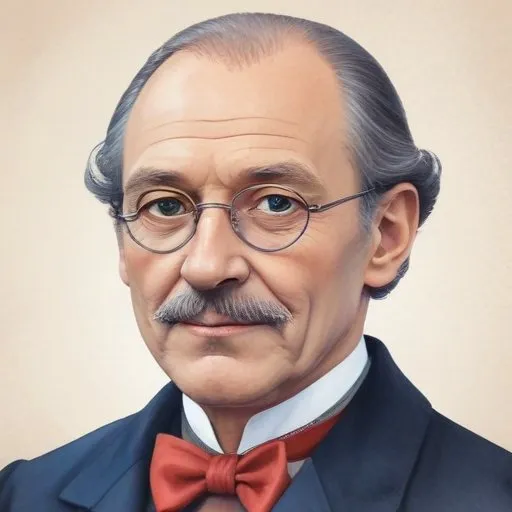
Developed groundbreaking research on lignin, a complex organic compound found in plant cell walls, and pioneered the field of wood chemistry. His work led to significant advancements in paper production and wood utilization.
Karl Freudenberg, a German chemist, left an indelible mark on the scientific community with his groundbreaking work on the absolute configurations of carbohydrates, terpenes, and steroids. His pioneering research in the early 20th century paved the way for a deeper understanding of these complex molecules and their structures.
Born on January 29, 1886, in Weinheim, Baden, Germany, Freudenberg came from a family with a rich history in business. His grandfather, Carl Johann Freudenberg, co-founded the Freudenberg Group in 1849. Freudenberg's academic pursuits took him to Bonn University in 1904 and later to the University of Berlin, where he studied under the renowned Emil Fischer from 1907 to 1910.
Freudenberg's academic career spanned multiple institutions, including the University of Freiburg, Heidelberg University, and Karlsruhe University. He became a professor at Heidelberg University in 1922 and later directed the Research Institute for the Chemistry of Wood and Polysaccharides, established specifically for him in the mid-1930s. He led the institute until 1969, dedicating over three decades to advancing the field of carbohydrate chemistry.
Freudenberg's most significant contribution was the determination of the absolute configurations of carbohydrates, terpenes, and steroids. His work on cellulose led to the publication of the first correct formula in 1928, followed by extensive research on the structure and biosynthesis of lignin and other polysaccharides.
Karl Freudenberg's work has had a lasting impact on the field of carbohydrate chemistry, inspiring generations of researchers and scientists. His dedication to advancing our understanding of these complex molecules has led to significant advancements in fields such as materials science, biochemistry, and pharmacology.
Freudenberg's legacy extends beyond his scientific contributions, as he played a crucial role in shaping the academic landscape of Germany during the 20th century. His establishment of the Research Institute for the Chemistry of Wood and Polysaccharides at Heidelberg University has fostered a culture of innovative research and collaboration, continuing to inspire scientists today.
Born in 1835
German chemist and Nobel laureate who synthesized barbituric acid and developed the theory of organic dyes, revolutionizing the textile industry. His work laid the foundation for modern dye chemistry.
Born in 1852
A German chemist and academic who won the Nobel Prize for synthesizing amino acids and sugars, and establishing the structure of purines, revolutionizing the field of organic chemistry.
Born in 1872
A German-Swiss chemist and academic who discovered the structure of chlorophyll, the green pigment in plants, and was awarded the Nobel Prize in Chemistry in 1915. His work laid the foundation for modern plant biochemistry.
Born in 1868
Developed a process to synthesize ammonia, revolutionizing agriculture and warfare, and was awarded the Nobel Prize in Chemistry in 1918.
Born in 1847
A German chemist and academic who pioneered the field of alicyclic compounds and was awarded the Nobel Prize in Chemistry in 1910 for his work on alkaloids. He discovered and characterized many new compounds, significantly advancing the field of organic chemistry.
Born in 1860
A pioneer in biochemistry, he discovered that yeast extracts can ferment sugar without living yeast cells, laying the foundation for modern industrial fermentation processes. His work revolutionized the production of beer, wine, and bread.
