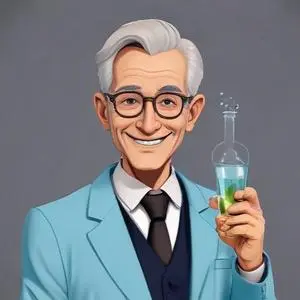
Eduard Buchner: The Fermentation Pioneer
Breaking Down the Barriers of Vitalism
Eduard Buchner, a German chemist and zymologist, revolutionized the understanding of fermentation, earning him the 1907 Nobel Prize in Chemistry. With his groundbreaking experiment, Buchner conclusively demonstrated that yeast cells were not necessary for fermentation, quashing the long-held theory of vitalism.
Early Life and Education
Born on May 20, 1860, in Munich, Germany, Buchner was the son of a physician and Doctor Extraordinary of Forensic Medicine. His older brother, Hans Ernst August Buchner, was a bacteriologist. Eduard's fascination with chemistry and botany led him to study with esteemed professors
Adolf von Baeyer and Carl Ngeli at the University of Munich. He earned his doctorate in 1888 under Theodor Curtius.
Academic Pursuits
Buchner's academic career took off in 1889 as an assistant lecturer in Adolf von Baeyer's organic laboratory at the University of Munich. He soon became a lecturer in 1891 and eventually moved to the University of Kiel in 1893, where he was appointed professor in 1895. His subsequent appointments included professorships at the University of Tübingen, Agricultural University of Berlin, and the University of Würzburg.
Awards and Honors
The pinnacle of Buchner's achievements was the Nobel Prize in Chemistry in 1907. This prestigious award recognized his pioneering work on fermentation, which proved that yeast cells were not essential for the process.
Major Works and Contributions
- Cell-Free Fermentation: Buchner's most significant contribution was the development of a cell-free extract of yeast cells that could ferment sugar. This breakthrough debunked the theory of vitalism and paved the way for further research in biochemistry.
- Zymology: Buchner's work on fermentation led to a deeper understanding of zymology, the study of fermentation in brewing. His research had a profound impact on the brewing industry, enabling the development of new brewing techniques and improving beer quality.
Legacy and Impact
Eduard Buchner's discoveries had far-reaching consequences, extending beyond the realm of chemistry and brewing. His work influenced various fields, including:
- Biochemistry: Buchner's fermentation research laid the groundwork for the development of modern biochemistry.
- Pharmaceuticals: His work on fermentation led to the discovery of new enzymes and their applications in the pharmaceutical industry.
- Food Industry: Buchner's research improved brewing techniques, resulting in better quality beer and paving the way for advancements in food technology.
Personal Life and Milestones
Buchner's personal life was marked by a series of academic milestones, including his appointment as Professor Extraordinary for Analytical and Pharmaceutical Chemistry at the University of Tübingen in 1896. His later years were spent at the University of Würzburg, where he continued to research and teach until his death on August 13, 1917.
Trivia and Fun Facts
- Buchner's older brother, Hans Ernst August Buchner, was a bacteriologist.
- He was appointed professor at the University of Kiel in 1895, just two years after completing his doctorate.
Eduard Buchner's groundbreaking research on fermentation not only earned him the Nobel Prize but also left an indelible mark on various scientific fields. His legacy continues to inspire new generations of scientists, brewers, and scholars.
FAQ
What is Eduard Buchners contribution to biochemistry?
Eduard Buchner was a German chemist and zymologist who made significant contributions to the field of biochemistry, including the discovery of cell-free fermentation and the development of the Buchner funnel.
What was Eduard Buchners research focus?
Eduard Buchners research focused on the biochemical processes of fermentation, yeast metabolism, and enzyme activity.
What was Eduard Buchners role in the discovery of enzymes?
Eduard Buchner played a key role in the discovery of enzymes and their importance in biochemical reactions, leading to a deeper understanding of the mechanisms of fermentation and metabolism.
What was Eduard Buchners Nobel Prize in Chemistry for?
Eduard Buchner was awarded the Nobel Prize in Chemistry in 1907 for his discovery of cell-free fermentation and his contributions to the field of biochemistry.
How is Eduard Buchner remembered in the history of biochemistry?
Eduard Buchner is remembered as a pioneering biochemist who made significant contributions to our understanding of fermentation, enzymes, and biochemical processes.