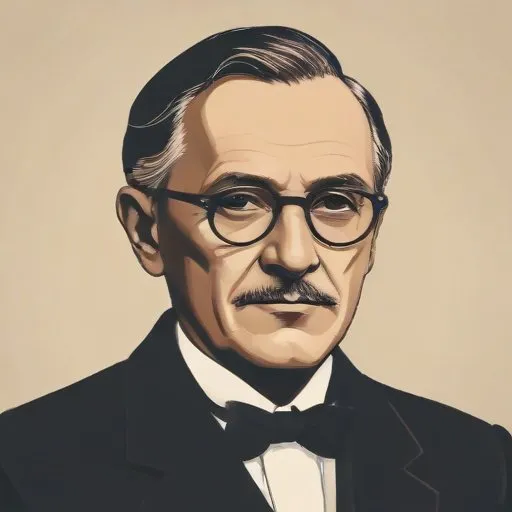
Ernst Otto Fischer: The Pioneering Chemist Behind Organometallic Chemistry
A Nobel Laureate's Legacy
Ernst Otto Fischer, a German chemist, revolutionized the field of organometallic chemistry, earning him the Nobel Prize in 1973. His groundbreaking work on the synthesis of organometallic compounds and the discovery of sandwich complexes paved the way for significant advancements in chemistry, materials science, and catalysis.
Early Life and Education
Born on November 10, 1918, in Solln, a borough of Munich, Fischer grew up in an academic family. His father, Karl T. Fischer, was a professor of physics at the Technical University of Munich (TUM). Fischer graduated from high school in 1937 and began his chemistry studies at TUM in 1941, during a period of study leave from his military service. After the war, he resumed his studies, graduating in 1949 and earning his Ph.D. in 1952 under the guidance of Professor Walter Hieber.
Research Career
Fischer's research focused on the organometallic chemistry of transition metals, particularly nickel, iron, and chromium. He challenged the existing structure of ferrocene, proposing a revised structure that was later confirmed. This work led to the discovery of nickelocene and cobaltocene, novel sandwich complexes. His research on the reaction of chromium(III) chloride with phenylmagnesium bromide resulted in the isolation of bisbenzenechromium, a pioneering achievement in the field of sandwich complexes.
Awards and Recognition
Fischer's contributions to chemistry earned him numerous awards and honors, including:
- Nobel Prize in Chemistry (1973)
- Alfred Stock Memorial Prize (1969)
- Great Cross of Merit with Star and Shoulder Ribbon of the Federal Republic of Germany (1981)
- Honorary doctorates from the University of Munich and the University of Stuttgart
Academic Career and Legacy
Fischer's academic career was marked by rapid advancement. He became a lecturer at TUM in 1955, a professor in 1957, and a C4 professor in 1959. In 1964, he took the Chair of Inorganic Chemistry at TUM, a position he held until his retirement in 1985. Fischer's legacy extends beyond his research; he mentored numerous students and colleagues, shaping the next generation of chemists.
Personal Life and Milestones
Fischer's personal life was marked by significant milestones, including his marriage to Anna Fichtenauer in 1954 and the birth of their two children, Wolfgang and Ruth.
Influence on Modern Chemistry
Fischer's work has had a profound impact on modern chemistry, influencing the development of:
- Organometallic chemistry and catalysis
- Materials science and nanotechnology
- Pharmaceutical research and development
His legacy continues to inspire new generations of chemists, solidifying his place as one of the most important chemists of the 20th century.
FAQ
What was Ernst Otto Fischers area of research?
Ernst Otto Fischer was a German chemist who made significant contributions to the field of organometallic chemistry, leading to the discovery of the Fischer-Tropsch process.
What was the significance of Ernst Otto Fischers Nobel Prize?
Ernst Otto Fischer was awarded the Nobel Prize in Chemistry in 1973 for his work on the chemistry of metal-carbon bonds, leading to major advances in catalysis and industrial processes.
Did Ernst Otto Fischer collaborate with other scientists?
Yes, Ernst Otto Fischer collaborated with several scientists, including Geoffrey Wilkinson, to develop new organometallic compounds and reactions.
What was Ernst Otto Fischers contribution to the field of catalysis?
Ernst Otto Fischers work on metal-carbon bonds and organometallic compounds led to significant advances in catalysis, with applications in industrial processes, fuel production, and environmental remediation.
Is Ernst Otto Fischers work still relevant today?
Yes, Ernst Otto Fischers work remains highly influential in the fields of organometallic chemistry and catalysis, with ongoing research and applications in fields such as renewable energy and sustainable materials.