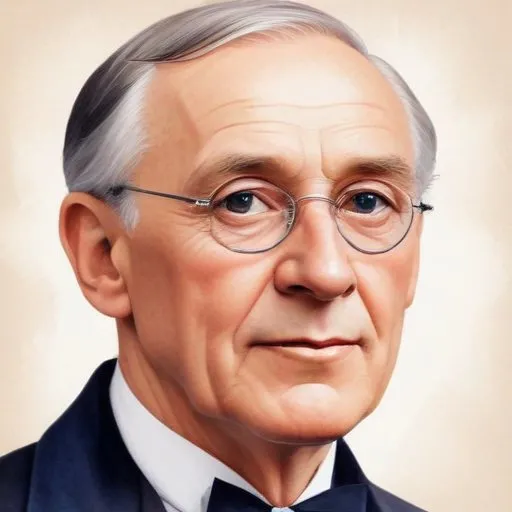
Heinrich Otto Wieland: A Pioneering German Chemist
A Legacy of Research and Discovery
Heinrich Otto Wieland, a renowned German chemist, is best known for his groundbreaking research on bile acids, which earned him the Nobel Prize in Chemistry in 1927. His work revolutionized the field of organic chemistry, paving the way for significant advancements in the understanding of biological processes.
Early Life and Education
Born on June 4, 1877, in Pforzheim, Germany, Wieland was fascinated by chemistry from a young age. He pursued his passion, earning his doctorate in 1901 from the University of Munich, where he studied under the guidance of Johannes Thiele.
Academic and Professional Career
Wieland's academic career spanned several institutions, including the University of Munich, the Technical University of Munich, and the University of Freiburg. He held various positions, including associate professor, director of the Organic Division of the State Laboratory in Munich, and professor of chemistry. In association with Boehringer Ingelheim, Wieland worked on synthetic alkaloids, such as morphine and strychnine, and made significant contributions to the field of organic chemistry.
War Efforts and Controversies
During World War I, Wieland worked at the Kaiser Wilhelm Institute for Physical Chemistry and Electrochemistry in Dahlem, where he was involved in weapons research, including the development of mustard gas. This period of his life has been the subject of some controversy, with some critics arguing that his involvement in weapons research was morally reprehensible.
Pioneering Research and Discoveries
Wieland's most notable contributions include the first synthesis of Adamsite, a chemical compound used in chemical warfare, and the isolation of alpha-amanitin, the principal active agent of the death cap mushroom (Amanita phalloides). His work on bile acids, however, remains his most significant achievement, as it opened up new avenues for research into biological processes.
Humanitarian Efforts
Despite the controversy surrounding his war efforts, Wieland demonstrated remarkable compassion during the Nazi regime. He protected Jewish students and colleagues, offering them a safe haven in his laboratory, where they could continue their work without fear of persecution.
Awards and Honors
Wieland's contributions to chemistry were recognized with the Nobel Prize in Chemistry in 1927. He was also awarded the Liebig Medal in 1933, a prestigious honor bestowed by the German Chemical Society.
Legacy and Impact
Heinrich Otto Wieland's legacy extends far beyond his own research and discoveries. His work paved the way for significant advancements in organic chemistry, biochemistry, and medicine. His humanitarian efforts during a tumultuous period in history serve as a testament to his character and commitment to protecting others.
Personal Milestones and Key Life Events
- 1877: Born on June 4th in Pforzheim, Germany
- 1901: Earned doctorate from the University of Munich
- 1904: Completed habilitation
- 1907: Became a consultant for Boehringer Ingelheim
- 1914: Became associate professor for special topics in organic chemistry
- 1917-1918: Worked at the Kaiser Wilhelm Institute for Physical Chemistry and Electrochemistry
- 1925: Succeeded Richard Willstätter as Chemistry Professor at the University of Munich
- 1927: Awarded the Nobel Prize in Chemistry
- 1941: Isolated alpha-amanitin, the principal active agent of the death cap mushroom
- 1957: Passed away on August 5th
Quotes and Memorable Sayings
"Ich bin nicht nachtragend, aber ich bin nachdenklich" ("I am not vindictive, but I am thoughtful") - Heinrich Otto Wieland
FAQ
What was Heinrich Otto Wielands Nobel Prize achievement?
Heinrich Otto Wieland was a German chemist and academic who was awarded the Nobel Prize in Chemistry in 1927 for his research on bile acids.
What was Heinrich Otto Wielands research focus?
Heinrich Otto Wielands research focus was on organic chemistry, particularly on the study of bile acids and their role in biological processes.
How did Heinrich Otto Wielands research contribute to medicine?
Heinrich Otto Wielands research contributed to medicine by providing new insights into the role of bile acids in biological processes, which led to the development of new treatments for various diseases.
What was Heinrich Otto Wielands academic career like?
Heinrich Otto Wieland had a distinguished academic career, holding professorships at several prestigious institutions and publishing numerous papers on his research.
What is Heinrich Otto Wielands legacy in chemistry?
Heinrich Otto Wielands legacy in chemistry lies in his groundbreaking research on bile acids and his contributions to the development of organic chemistry.