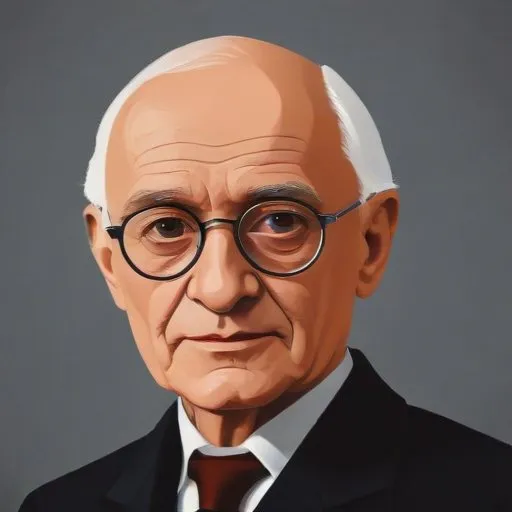
Otto Diels

Otto Diels

Otto Diels was born on January 23rd, 1876

Full Name: Otto Diels
Born: January 23, 1876
Died: March 7, 1954
Nationality: German
Profession: Chemist
Awards: Nobel Prize in Chemistry
Research Focus: Organic chemistry
Notable Work: Diels-Alder reaction

A German chemist and academic who discovered and developed the Diels-Alder reaction, a fundamental process in organic chemistry, earning him a Nobel Prize in 1950.

Timeline
1876
Birth in Hamburg
Otto Diels was born in Hamburg, German Empire (now Germany) to a German family.
1899
Ph.D. in Chemistry
Diels earned his Ph.D. in chemistry from the University of Berlin, where he later became a professor.
1928
Diels-Alder Reaction
Diels discovered the Diels-Alder reaction, a fundamental reaction in organic chemistry.
1929
Nobel Prize in Chemistry
Diels was awarded the Nobel Prize in Chemistry, along with Kurt Alder, for their discovery of the Diels-Alder reaction.
1954
Death in Kiel
Diels died in Kiel, Germany, leaving behind a legacy as a prominent German chemist and Nobel laureate.
Otto Diels

Otto Diels Quiz

What is the name of the reaction discovered and developed by Otto Diels?

Score: 0/5
FAQ
What is Otto Dielss most famous discovery?
Otto Dielss most famous discovery is the Diels-Alder reaction, a fundamental organic reaction that has had a profound impact on the development of modern organic chemistry.
How did Otto Dielss work influence the development of organic chemistry?
Otto Dielss work on the Diels-Alder reaction and his research on organic compounds laid the foundation for the development of modern organic chemistry, enabling the synthesis of complex molecules and advancing our understanding of chemical reactions.
What other contributions did Otto Diels make to chemistry?
Otto Diels made numerous other contributions to chemistry, including the development of new synthetic methods and the discovery of new compounds. He was also a pioneer in the field of physical organic chemistry.
What awards did Otto Diels receive for his work?
Otto Diels received numerous awards for his work, including the Nobel Prize in Chemistry in 1950, which he shared with Kurt Alder.
What is Otto Dielss legacy in the world of chemistry?
Otto Dielss legacy is one of profound influence and innovation. He is widely regarded as one of the most important organic chemists of the 20th century, and his work continues to shape the course of modern chemistry.

Related People:

Kurt Alder

Born in 1902

A German chemist and academic who discovered the Diels-Alder reaction, a fundamental process in organic chemistry, and was awarded the Nobel Prize in Chemistry in 1950.

Erich Hückel

Born in 1896

Hermann Staudinger

Born in 1881

Developed groundbreaking theories on polymers, revolutionizing the field of organic chemistry, and was awarded the Nobel Prize in Chemistry in 1953.

Hans Fischer

Born in 1881

Organic chemist and Nobel laureate who synthesized hemin and chlorophyll, leading to a deeper understanding of biological pigments. His work has far-reaching implications for fields like medicine and agriculture.

Richard Kuhn

Born in 1900

A Nobel Prize-winning biochemist who pioneered research on vitamins and discovered the chemical structure of vitamins B2 and B6, making significant contributions to our understanding of nutrition and health.

Eduard Buchner

Born in 1860

A pioneer in biochemistry, he discovered that yeast extracts can ferment sugar without living yeast cells, laying the foundation for modern industrial fermentation processes. His work revolutionized the production of beer, wine, and bread.

Fritz Haber

Born in 1868

Developed a process to synthesize ammonia, revolutionizing agriculture and warfare, and was awarded the Nobel Prize in Chemistry in 1918.