


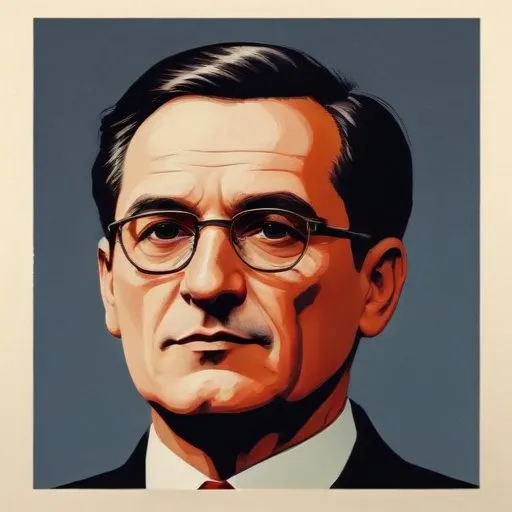
Co-founder of the Communist Party of Germany, a key figure in the Spartacist uprising, and a vocal critic of World War I. He was a pioneering socialist leader who fought for workers' rights and social justice.
Karl Liebknecht was a German socialist and antimilitarist who played a pivotal role in shaping the country's political landscape during the tumultuous years of World War I and the subsequent German Revolution. As a prominent figure in the Social Democratic Party of Germany (SPD), he was known for his unrelenting opposition to militarism and his unwavering commitment to the principles of socialism.
Born on August 13, 1871, in Leipzig, Germany, Liebknecht came from a family of intellectuals and socialists. His father, Wilhelm Liebknecht, was a prominent socialist and one of the founders of the SPD. Karl's early life was marked by a strong sense of social justice and a passion for politics, which led him to study law and politics at the University of Leipzig.
Liebknecht's political career began in 1900 when he joined the SPD. He quickly rose through the ranks, becoming a deputy in the Reichstag in 1912, where he represented the left-revolutionary wing of the party. His speeches and writings denounced militarism and imperialism, earning him the respect of his peers and the ire of his detractors.
In 1907, Liebknecht was imprisoned for writing an anti-militarist pamphlet, "Militarism and Anti-Militarism." His time in prison only strengthened his resolve, and upon his release, he continued to speak out against the war effort. In 1916, he was arrested again for participating in an anti-war demonstration. He was released under a general amnesty just three weeks before the end of World War I.
As the war drew to a close, Liebknecht played a key role in the November Revolution that swept across Germany. On November 9, 1918, he proclaimed Germany a Free Socialist Republic from the Berlin Palace. Two days later, he co-founded the Spartacist League with Rosa Luxemburg and other like-minded socialists. The League aimed to establish a socialist government in Germany, free from the shackles of capitalism and imperialism.
In December 1918, Liebknecht was one of the founders of the Communist Party of Germany (KPD). The party's platform called for the establishment of a socialist government and the abolition of capitalism. However, the party's radical stance was met with opposition from the German government, leading to the Spartacist uprising in January 1919. Liebknecht played a leading role in the uprising, which ultimately ended in his brutal murder.
Liebknecht's life was cut short on January 15, 1919, when he and Rosa Luxemburg were brutally murdered by members of the Guard Cavalry Rifle Division. Their deaths sparked widespread outrage and protests, cementing their status as martyrs for the socialist cause in Germany and beyond.
Liebknecht's philosophical contributions were deeply rooted in Marxist theory and anti-militarist ideals. He believed that militarism was a tool of the ruling class to maintain power and control over the working class. He advocated for a socialist revolution that would overthrow the capitalist system and establish a government of the people, by the people.
Liebknecht's life and legacy continue to inspire socialists and anti-militarists around the world. His unwavering commitment to his principles and his willingness to challenge the status quo have made him a icon of resistance against oppression.
Today, Liebknecht's ideas continue to influence socialist movements and inspire new generations of activists to fight for a more just and equal society.
Born in 1871
A pioneering Marxist theorist and activist who advocated for workers' rights and criticized capitalism, known for her radical ideas on revolution and democracy.
Born in 1870
Founder of the world's first socialist state, leading the Bolshevik Revolution and establishing the Soviet Union, known for his radical Marxist ideology and authoritarian rule.
Born in 1857
A pioneering Marxist theorist and women's rights activist who played a key role in shaping socialist and feminist movements in early 20th-century Europe.
Born in 1878
A German literary figure who wrote provocative plays and poetry that critiqued societal norms and authority, inspiring anarchist and anti-war movements.
Born in 1840
A leading figure in the German socialist movement, he co-founded the Social Democratic Party of Germany and advocated for workers' rights and women's equality. His writings and speeches helped shape modern socialist thought.
Born in 1876
The first President of the German Democratic Republic, a key figure in East Germany's post-war government, known for his role in shaping the country's socialist policies. He played a crucial part in the country's early years, helping to establish its government and economy.
