


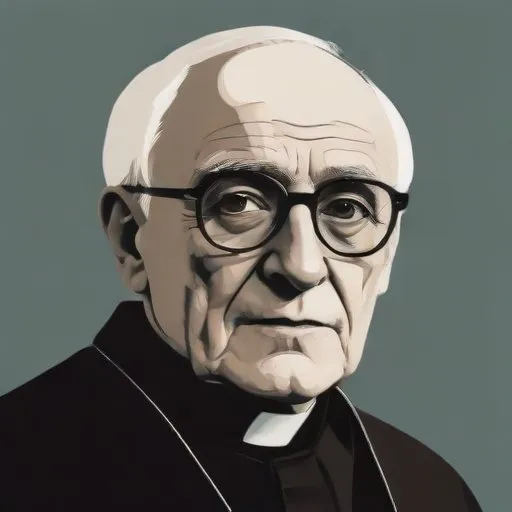
A German priest and theologian who sought to reconcile Catholicism with modern philosophy, exploring the intersection of faith and reason. His work greatly influenced 20th-century Catholic theology.
Karl Rahner, a German Jesuit priest and theologian, is renowned for his groundbreaking contributions to Catholic theology in the 20th century. Alongside prominent theologians such as Henri de Lubac, Hans Urs von Balthasar, and Yves Congar, Rahner played a pivotal role in shaping the Catholic Church's modern understanding of faith.
Born on March 5, 1904, in Freiburg, Grand Duchy of Baden, Rahner was the fourth of seven children to Karl and Luise Rahner. His father, a professor, and his mother, who had a profound religious personality, instilled in him a strong sense of Catholic values.
Rahner's theological contributions were instrumental in shaping the Catholic Church's modern understanding of faith. His work, which emphasized the importance of individual experience and the role of the Holy Spirit, had a profound impact on the Church.
Rahner's writings had a profound impact on Catholic theology, and his works continue to be studied and revered to this day.
Rahner's contributions to Catholic theology were recognized with numerous awards and honors.
Karl Rahner's legacy continues to shape Catholic theology to this day. His innovative approach to theology, which emphasized the importance of individual experience and the role of the Holy Spirit, has had a lasting impact on the Catholic Church.
Rahner's work serves as a testament to the power of faith and the importance of continually seeking to understand and deepen our relationship with God.
98 Years Old
A prominent Catholic theologian and prolific author, known for his progressive views on Christianity and criticism of the Catholic Church's authority. He wrote extensively on theology, ethics, and politics.
Born in 1491
Founded the Jesuit Order, a Catholic religious organization known for its missionary and educational work, and developed the Spiritual Exercises, a guide for spiritual growth and discernment.
Born in 1881
Reformed the Catholic Church, introducing progressive reforms and ecumenical dialogue, and convened the Second Vatican Council.
Born in 1417
A 15th-century pope who played a significant role in the fall of the Western Schism, ending the division in the Catholic Church. He's also known for his lavish spending and nepotism.
Born in 1884
A German Lutheran theologian and professor who demythologized the New Testament, seeking its deeper meaning beyond supernatural elements, and developed the concept of "existentialist theology".
Born in 1915
A Trappist monk and writer who explored spirituality and social justice through his poetry and essays, leaving a lasting impact on Christian mysticism and contemplative thought.
