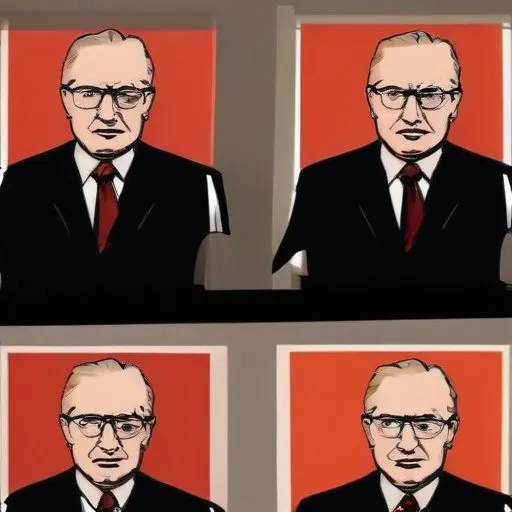
Kazimierz Marcinkiewicz: The Polish Conservative Politician
A Brief Overview
Kazimierz Marcinkiewicz is a Polish conservative politician who served as the Prime Minister of Poland from 31 October 2005 to 14 July 2006. He is best known for his leadership of the country during a tumultuous period in Polish politics, marked by significant changes in the country's political landscape.
Early Life and Education
Born on 20 December 1959 in Gorzów Wielkopolski, Marcinkiewicz graduated in 1984 from the Faculty of Mathematics, Physics, and Chemistry at Wrocław University, where he studied physics. He also completed a postgraduate course in Administration at
Adam Mickiewicz University in Poznań.
Early Career and Solidarity Movement
Marcinkiewicz began his career as an elementary school teacher and later became a headmaster in his hometown of Gorzów Wielkopolski. In the 1980s, he was an active member of the Solidarity movement, an anti-communist trade union that played a significant role in Poland's transition to democracy. During this period, he also edited underground press materials, further solidifying his opposition to the communist regime.
Rise to Prominence
In 1992, Marcinkiewicz became a State Secretary (deputy minister) in the Ministry of National Education. He later served as the cabinet chief for Prime Minister
Jerzy Buzek from 1999 to 2000. These positions laid the groundwork for his eventual rise to Prime Minister in 2005.
Prime Minister of Poland
Following the victory of the Law and Justice party in the September 2005 Polish parliamentary elections, Jarosław Kaczyński, the party leader, declined the post of Prime Minister to avoid damaging his twin brother Lech Kaczyński's chances in the October presidential election. Instead, Marcinkiewicz, a relatively unknown figure at the time, took the reins as Prime Minister, leading a coalition government formed by Jarosław Kaczyński.
Public Perception and EU Membership
Despite being a political cipher initially, Marcinkiewicz quickly gained popularity and became the most trusted and popular politician in Poland during his tenure. He strongly supported Polish membership in the European Union, although he expressed reservations about certain integrationist ideas, such as the European Constitution.
Legacy and Impact
Marcinkiewicz's time as Prime Minister was marked by significant changes in Poland's political landscape, including the country's movement towards greater integration with the European Union. While his tenure was relatively short-lived, he left an indelible mark on Polish politics and remains a respected figure in the country's conservative movement.
Personal Milestones
- Born on 20 December 1959 in Gorzów Wielkopolski, Poland
- Graduated from Wrocław University in 1984
- Completed postgraduate course in Administration at Adam Mickiewicz University in Poznań
- Served as State Secretary (deputy minister) in the Ministry of National Education from 1992
- Became cabinet chief for Prime Minister Jerzy Buzek from 1999 to 2000
- Appointed Prime Minister of Poland on 31 October 2005
Controversies and Public Perception
Marcinkiewicz's tenure as Prime Minister was not without controversy. Critics accused him of being overly influenced by Jarosław Kaczyński, who remained a powerful figure behind the scenes. Despite this, Marcinkiewicz maintained a high level of public approval, with many viewing him as a capable and trustworthy leader.
Comparative Analysis with Contemporaries
In comparison to his contemporaries, Marcinkiewicz's relatively short tenure as Prime Minister sets him apart. However, his commitment to conservative values and his support for Polish membership in the European Union align him with other prominent Polish politicians of the time, including Jarosław and Lech Kaczyński.
FAQ
What is Kazimierz Marcinkiewiczs role in Polish politics?
Kazimierz Marcinkiewicz is a Polish politician who served as the 12th Prime Minister of Poland from 2005 to 2006.
What is Kazimierz Marcinkiewiczs background in physics?
Kazimierz Marcinkiewicz is a trained physicist, having earned a degree in physics from the University of Warsaw.
How has Kazimierz Marcinkiewicz contributed to Polish-European relations?
Kazimierz Marcinkiewicz has played a key role in strengthening Polands relations with the European Union, having served as Polands chief negotiator for EU accession.
What is Kazimierz Marcinkiewiczs stance on economic policy?
Kazimierz Marcinkiewicz advocates for free-market economic policies, having implemented reforms aimed at increasing economic growth and competitiveness during his tenure as Prime Minister.
What is Kazimierz Marcinkiewiczs current role in politics?
Kazimierz Marcinkiewicz remains involved in Polish politics, serving as a member of the European Parliament and advocating for pro-European policies.