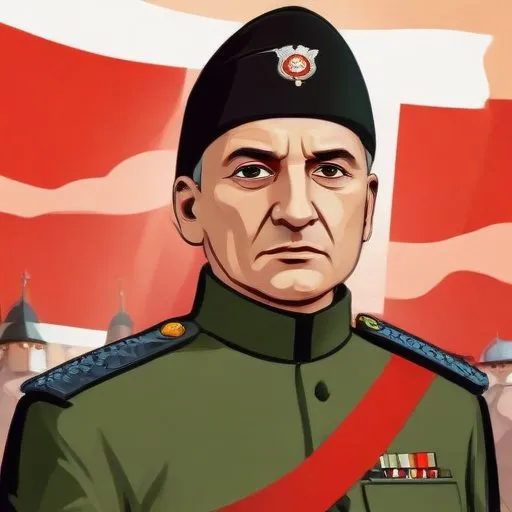
Kazimierz Sabbat: The Unwavering Leader of Poland in Exile
The Presidency and Prime Ministership of a Lifetime
Kazimierz Sabbat is remembered as the President of Poland in Exile from 1986 until his death in 1989, and previously served as the Prime Minister of the Polish government in exile from 1976. Through his unwavering dedication and leadership, Sabbat played a crucial role in maintaining the Polish government in exile and supporting the opposition movement in Poland during a tumultuous period in the country's history.
Early Life and Education
Born on February 27, 1913, in Bieliny Kapitulne, Poland, Sabbat completed his secondary education in Mielec and went on to study law at the University of Warsaw. His early life was marked by a strong sense of civic duty, exemplified by his involvement in the Scouting movement, which would remain a significant part of his life even in exile.
World War II and the Road to Exile
Sabbat's life took a dramatic turn during World War II. After a brief stint in the Polish Navy, he joined the Motorized Brigade of Stanisław Maczek and was wounded during the Polish retreat in 1939. He managed to escape to Great Britain, where he served as an officer responsible for youth in the British General Staff. After the war, Sabbat settled in England and started his own successful business.
A Life of Public Service
Sabbat's dedication to public service continued in exile. He worked voluntarily for the Scouting Organization and the Association of Polish Veterans, eventually becoming the executive of the National Union's Treasury Division. In 1976, he took on the role of Prime Minister of the Polish government in exile, working tirelessly to unite the various migr circles and support the opposition movement in Poland.
- During his tenure, Sabbat established strong links with the opposition movement in Poland, providing moral and material support through various Funds.
- He worked closely with the National Union, overseeing the Treasury Division and ensuring the continued operation of the government in exile.
The Presidency and Legacy
In 1986, Sabbat succeeded Edward Raczyski as the President of Poland in Exile, a position he held until his death in 1989. His presidency was marked by a continued commitment to the Polish people and the struggle for freedom and democracy.
Sabbat's legacy extends far beyond his presidency. He remains an important figure in Polish history, remembered for his bravery, leadership, and unwavering dedication to his country and its people.
A Coincidental yet Poignant Ending
On July 19, 1989, Kazimierz Sabbat passed away in London, aged 76. On the same day,
Wojciech Jaruzelski was elected as the first President of Poland since the 1950s, marking a significant turning point in Poland's history. Sabbat's designated successor,
Ryszard Kaczorowski, took office in exile and would eventually hand over power to President-elect Lech Wałęsa in 1990, bringing an end to the Polish government in exile.
FAQ
What is Kazimierz Sabbats role in Polish history?
Kazimierz Sabbat was a prominent figure in Polish history, serving as the President of Poland in exile from 1986 to 1989, and playing a key role in the countrys struggle for independence during World War II.
What is Kazimierz Sabbats military career?
Kazimierz Sabbat had a distinguished military career, serving as a soldier in the Polish Army during World War II and rising to the rank of General.
What is Kazimierz Sabbats relationship with the Polish government in exile?
Kazimierz Sabbat was a key figure in the Polish government in exile, serving as the Minister of War and later as President of Poland in exile.
What is Kazimierz Sabbats legacy in Poland?
Kazimierz Sabbats legacy in Poland is that of a hero and a statesman, who fought for his countrys independence and freedom throughout his life.
What awards did Kazimierz Sabbat win for his service?
Kazimierz Sabbat was awarded the Virtuti Militari, Polands highest military honor, for his bravery during World War II.