


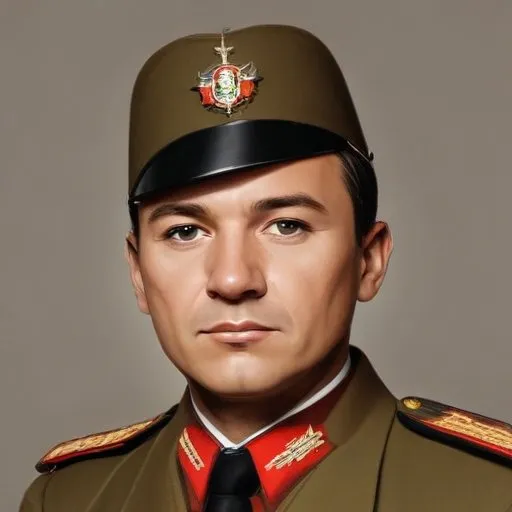
The last president-in-exile of Poland, leading the government from 1989 to 1990, and a symbol of Polish resistance against communism. He played a crucial role in Poland's transition to democracy.
Ryszard Kaczorowski is remembered as the last President of Poland in exile, serving from 1989 to 1990, and playing a crucial role in Poland's transition from Soviet-dominated government to democracy. During his presidency, he paved the way for the country's first democratic elections since World War II, ultimately leading to the election of Lech Wałęsa as the first democratically elected President of Poland.
Ryszard Kaczorowski was born on November 26, 1919, in Białystok, Poland, to Wacław Kaczorowski and Jadwiga née Sawicka. His early life was marked by the tumultuous period of the Polish-Soviet War, during which his hometown was briefly occupied by Soviet forces.
Kaczorowski completed his education at a school of commerce and became a Scouting instructor for the Polish Scouting Association. Following the Invasion of Poland in 1939, he secretly recreated the scouting movement, which was banned by the Soviet authorities, and became a head of the Białystok banner of the Szare Szeregi.
In 1940, Kaczorowski was arrested by the NKVD and sentenced to death, which was later commuted to 10 years in a concentration camp. During his imprisonment, he continued to secretly coordinate the activities of the Szare Szeregi, earning him the respect and admiration of his peers.
Kaczorowski's presidency marked a significant turning point in Poland's history, as he played a vital role in the country's transition to democracy. He resigned as President of Poland in exile in 1990, following Poland's regaining of independence from the Soviet sphere of influence and the election of Lech Wałęsa as the first democratically elected President of Poland since World War II.
Throughout his presidency, Kaczorowski remained committed to the principles of democracy and human rights, earning him international recognition and respect. He was appointed Knight Commander of the Order of St. Michael and St. George (KCMG) in 1994, and was posthumously awarded the Order of the White Eagle, Poland's highest national honor.
Ryszard Kaczorowski's life was cut short on April 10, 2010, when he died in a plane crash near Smolensk, Russia, along with President Lech Kaczyński and other senior government officials. This tragic event marked a dark day in Polish history, but Kaczorowski's legacy continues to inspire future generations.
Kaczorowski's commitment to democracy and human rights was reflected in his presidency and his later life. He believed in the importance of promoting democratic values and protecting individual freedoms, ideals that continue to shape Poland's political landscape today.
Ryszard Kaczorowski's presidency and legacy have had a lasting impact on Poland's transition to democracy and its integration into the European community. His commitment to democratic values and human rights continues to inspire future generations, making him an important figure in modern Polish history.
83 Years Old
A Polish electrician-turned-politician who played a key role in the country's transition from communism to democracy, and was awarded the Nobel Peace Prize for his efforts. He's a symbol of resistance against oppression and a champion of workers' rights.
