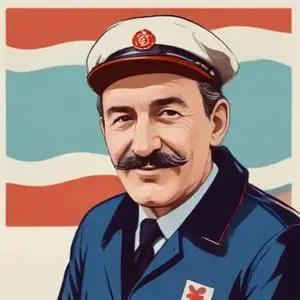
Lech Wasa: The Champion of Polish Democracy
The Man Behind the Movement
Lech Wasa is renowned as the Polish statesman who led the country's transition from communism to democracy, earning him the Nobel Peace Prize in 1983. As the leader of the Solidarity movement, he championed workers' rights and spearheaded the struggle against the Soviet-backed government, paving the way for Poland's first free elections since 1926.
The Early Years
Born on September 29, 1943, in Popowo, Poland, Wasa grew up in a devout Catholic family. His early life was marked by a strong sense of social justice, which would later drive his activism. After completing his vocational training, Wasa worked as an electrician at the Lenin Shipyard in Gdansk, where he became involved in trade union activities.
The Rise of Solidarity
In August 1980, Wasa's leadership played a crucial role in the Gdansk Agreement, which granted workers the right to strike and form independent trade unions. This landmark agreement marked the beginning of the Solidarity movement, which would go on to become a powerful force in Poland's struggle for democracy. As the co-founder of Solidarity, Wasa's charisma and determination inspired millions of workers to join the movement, swelling its ranks to over 10 million members.
Persecution and Prison
Wasa's activism came at a great personal cost. He was arrested several times, fired from his job, and placed under surveillance. Despite the risks, he continued to advocate for workers' rights, earning him the nickname "the conscience of Poland." In 1981, he was arrested again and detained for 11 months before being released.
Round Table Talks and Democratic Breakthrough
In 1989, Wasa led the Solidarity delegation in the Round Table Talks, which paved the way for semi-free elections and the eventual collapse of communism in Poland. This breakthrough led to the country's first democratic government in over 50 years, with Wasa serving as president from 1990 to 1995.
Legacy and Honors
Wasa's contributions to Polish democracy have been recognized globally. He has received over 40 honorary degrees, including from Harvard University and Columbia University, and has been awarded numerous prizes, including the Nobel Peace Prize. He was named
Time Magazine's Person of the Year in 1981 and one of the 100 most important people of the 20th century in 1999.
The Lech Wasa Institute
In 1995, Wasa established the Lech Wasa Institute, a think tank dedicated to promoting democracy, human rights, and social justice. The institute provides a platform for policymakers, academics, and activists to discuss and address pressing social issues.
A Life of Activism
Throughout his life, Lech Wasa has remained committed to his principles, inspiring generations of Poles to fight for their rights and freedoms. His unwavering dedication to democracy and social justice has earned him a revered place in Polish history and a lasting impact on the world.
-
Time Magazine's Person of the Year (1981)
-
Nobel Peace Prize (1983)
-
One of the 100 most important people of the 20th century (Time Magazine, 1999)
-
Over 40 honorary degrees from universities worldwide
Quotes
-
"The future belongs to those who believe in the beauty of their dreams."
-
"We must learn to live together as brothers or perish together as fools."
Lech Wasa's remarkable journey from shipyard electrician to Nobel laureate serves as a testament to the power of courage, conviction, and determination. His legacy continues to inspire generations to strive for a better, more just world.
FAQ
What are Lech Wałęsas most notable achievements as a politician?
Lech Wałęsa is a Polish electrician and politician, known for his key role in the Solidarity movement and his later service as President of Poland from 1990 to 1995.
How did Lech Wałęsa become involved in politics?
Lech Wałęsa began his career as an electrician and trade unionist, later becoming the leader of the Solidarity movement and a prominent figure in Polish politics.
What are Lech Wałęsas views on democracy and human rights?
Lech Wałęsa has been a strong advocate for democracy, human rights, and workers rights, playing a key role in Polands transition from communism to democracy.
What is Lech Wałęsas legacy in Poland and beyond?
Lech Wałęsa is widely regarded as a hero of Polish democracy and a symbol of resistance to authoritarianism, earning the Nobel Peace Prize in 1983.
How does Lech Wałęsa continue to impact global politics?
Lech Wałęsa remains an influential figure in international politics, continuing to advocate for democracy, human rights, and social justice around the world.