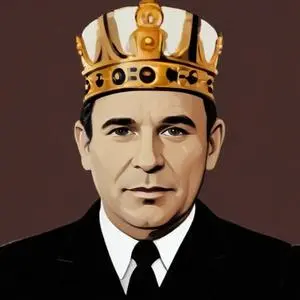
King Vidor: The Visionary Director of American Cinema
A Pioneer of Socially Conscious Filmmaking
King Vidor was a renowned American film director, producer, and screenwriter, acclaimed for his vivid, humane, and sympathetic depiction of contemporary social issues. With a 67-year filmmaking career spanning the silent and sound eras, Vidor successfully traversed multiple genres, pushing the limits of filmmaking conventions to create some of the most iconic films in American cinema.
The Silent Era: A New Kind of Storytelling
Vidor's most acclaimed film of the silent era,
The Big Parade (1925), showcased his unique ability to craft emotional, engaging stories that resonated with audiences. This World War I drama was a critical and commercial success, cementing Vidor's reputation as a master of cinematic storytelling.
The Golden Age of Sound: Experimentation and Innovation
The 1940s and early 1950s are often considered Vidor's most fruitful period, with films like
Northwest Passage (1940),
Comrade X (1940),
An American Romance (1944), and
(1946) demonstrating his innovative approach to filmmaking. These movies not only showcased Vidor's technical expertise but also explored the complex relationships between individuals and the American landscape.
A Director's Director: Collaborations and Accolades
Vidor was known for his ability to elicit outstanding performances from his actors, earning many of them Academy Award nominations and wins. His collaborations with stars like Wallace Beery, Robert Donat, Barbara Stanwyck, Jennifer Jones, Anne Shirley, and Lillian Gish are still celebrated today. The Academy of Motion Picture Arts and Sciences honored Vidor with five Best Director nominations and an Honorary Academy Award in 1979 for his contributions to cinematic art.
Legacy and Influence
King Vidor's impact on American cinema is immeasurable. His commitment to socially conscious storytelling and innovative filmmaking techniques has inspired generations of directors. As a testament to his enduring legacy, Vidor won eight national and international film awards during his career, including the Screen Directors Guild Lifetime Achievement Award in 1957.
A Life of Creativity and Contribution
- Born on February 8, 1894, in Galveston, Texas, Vidor came from a well-to-do family.
- He began his career in film as a screenwriter and later transitioned to directing.
- Vidor was a member of the jury at the 12th Berlin International Film Festival in 1962 and the 6th Moscow International Film Festival in 1969.
Quotations and Insights
"The picture that will win is the one that will most nearly represent the life of the people who will be seeing it."
Vidor's philosophy on filmmaking emphasized the importance of connecting with audiences and tackling real-world issues, making him a pioneer of socially conscious cinema.
Awards and Honors
- Honorary Academy Award (1979)
- Screen Directors Guild Lifetime Achievement Award (1957)
- Eight national and international film awards
A Lasting Impact
King Vidor's remarkable career and contributions to American cinema continue to inspire filmmakers and audiences alike. His legacy serves as a testament to the power of storytelling and the importance of exploring the human condition through film.
FAQ
What was King Vidors most famous film?
King Vidors most famous film is The Crowd, a 1928 silent film that is considered a classic of American cinema.
What was King Vidors early life like?
King Vidor was born on February 23, 1894, in Galveston, Texas, and grew up in a family of modest means, with his father working as a lumber salesman.
What was King Vidors role in the development of film technology?
King Vidor was an early adopter of sound technology and was one of the first directors to use synchronized sound in his films.
Did King Vidor have any notable awards or nominations?
Yes, King Vidor was nominated for five Academy Awards and won one for Best Director for his film The Citadel in 1939.
What was King Vidors later life like?
King Vidor continued to work in film until the 1960s, producing and directing several films, including War and Peace in 1956.