


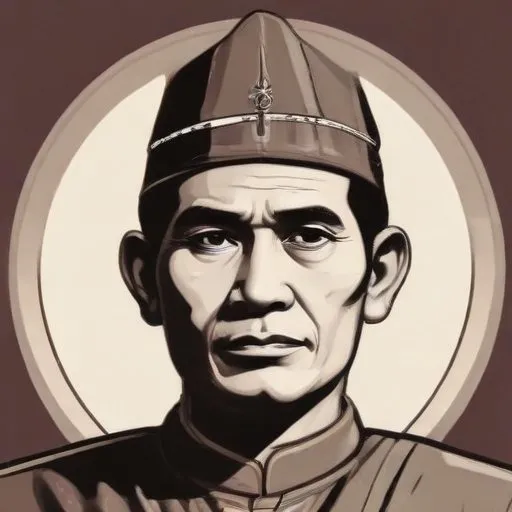
A powerful king who unified Burma and expanded its borders, known for his military conquests and patronage of Buddhism.
Kyansittha, pronounced as "ts" and also spelt as Kyanzittha or HtiHlaing Min, is renowned as one of the greatest Burmese monarchs of all time. He ruled the Pagan dynasty of Burma (now Myanmar) from 1084 to 1112, leaving an indelible mark on the country's social, economic, and cultural fabric.
Before ascending to the throne, Kyansittha was a skilled and triumphant general who led several successful military campaigns under his father, King Anawrahta. These campaigns laid the foundation for the Pagan Empire. However, his personal life was marred by controversy, and he was exiled twice in the 1070s and 1080s due to his affair with Queen Manisanda.
In 1084, Kyansittha seized the opportunity to claim the throne after suppressing a major Mon rebellion that resulted in the death of King Saw Lu. During his 28-year reign, he continued the reforms initiated by his father, fostering a period of unprecedented peace and prosperity. Pagan emerged as an internationally recognized power, and the Burmese language and culture flourished.
Kyansittha was a great admirer of Mon culture and pursued a conciliatory policy towards the Mon people of the south. He continued to patronize Mon language and culture at his court, leading to a synthesis of Burman, Mon, Pyu, and Buddhist practices that defined the Burmese cultural tradition. The Burmese script began to be used alongside Pyu, Mon, and Pali, marking a significant milestone in the country's linguistic and cultural evolution.
Kyansittha's reign was marked by large-scale temple building, with the completion of Anawrahta's Shwezigon Pagoda and the construction of his crowning achievement, the majestic Ananda Temple. Pagan emerged as a major center of Buddhist learning, and Theravada Buddhism continued to gain popularity, although other religious practices persisted.
Kyansittha's Pagan dynasty was recognized as a sovereign kingdom by the Chinese Song Dynasty and the Indian Chola dynasty, solidifying its position as a major power in Southeast Asia alongside the Khmer Empire. His life stories and exploits have been immortalized in Burmese literature, theater, and cinema, ensuring his legacy as one of the most celebrated monarchs in Burmese history.
Kyansittha's vision and leadership have had a profound and lasting impact on Burmese society. His reforms and cultural patronage paved the way for a golden era of Burmese culture, architecture, and learning. His legacy continues to inspire generations, and his name remains synonymous with wisdom, statesmanship, and vision.
Kyansittha's remarkable life and achievements serve as a testament to his unwavering dedication to his people and his vision for a unified and prosperous Burma. His legacy continues to inspire and influence Myanmar's cultural, religious, and political landscape to this day.
Born in 1734
Leader who reunified Siam after a period of division and established Thonburi as the new capital, known for his military campaigns and efforts to modernize the country.
Born in 1737
Founded the Chakri dynasty, which still reigns in Thailand today, and unified the country after a period of turmoil, establishing a strong and stable government.
Born in 1737
Founded the Chakri dynasty, which still reigns in Thailand today, and unified the country after a period of turmoil, establishing a strong and stable government.
Born in 1737
Founded the Chakri dynasty, which still reigns in Thailand today, and unified the country after a period of turmoil, establishing a strong and stable government.
