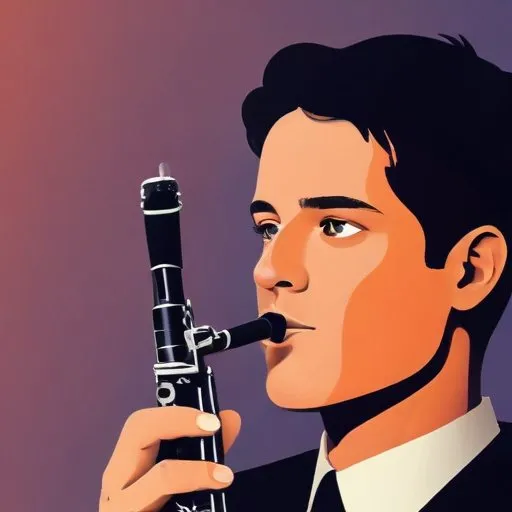
Larry Shields: The Clarinet Maestro of Dixieland Jazz
Pioneering the Sound of Early Jazz
Larry Shields is renowned for being a founding member of the Original Dixieland Jazz Band, the first jazz band to record commercially. His clarinet virtuosity and innovative playing style not only propelled the band to national prominence but also influenced generations of jazz musicians to come.
A New Orleans Upbringing
Born on September 13, 1893, in Uptown New Orleans, Shields grew up in a musical Irish-American family. His brothers Harry, Pat, and Eddie were all professional musicians, and the family's musical inclinations rubbed off on Larry from an early age. At 14, he began playing the clarinet, eventually joining
Papa Jack Laine's bands and honing his skills alongside other influential New Orleans musicians.
The Move to Chicago and the Birth of Dixieland Jazz
In 1915, Shields made the bold move to Chicago, where he joined Bert Kelly's band and later Tom Brown's band. This marked the beginning of his journey towards becoming a pioneer of Dixieland jazz. In November 1916, he became an integral part of the Original Dixieland Jass Band (ODJB), which would go on to make history by recording the first jazz phonograph records in 1917.
A Legacy of Influence
Shields' playing style, showcased through his work with the ODJB, had a profound impact on later jazz clarinetists. His influence can be seen in the playing of legendary musicians like
Benny Goodman, and even inspired
Dink Johnson to take up the clarinet. The ODJB's classic compositions, such as "Clarinet Marmalade" (co-written with Henry Ragas), "At the Jazz Band Ball," "Ostrich Walk," and more, remain timeless jazz standards to this day.
A Life of Performance and Travel
After leaving the ODJB in 1921, Shields continued to perform and tour with various bands in New York City, including a brief stint with
Paul Whiteman. He later moved to Los Angeles, leading his own band and making appearances in Hollywood films. The 1930s saw him return to Chicago, where he rejoined the reformed ODJB. Shields' later years took him back to New Orleans and eventually California, where he passed away on November 21, 1953.
Personal Milestones and Key Life Events
- September 13, 1893: Born in Uptown New Orleans
- 1915: Moved to Chicago and joined Bert Kelly's band
- 1916: Joined the Original Dixieland Jass Band (ODJB)
- 1917: Recorded the first jazz phonograph records with the ODJB
- 1921: Left the ODJB and performed with various bands in New York City
- 1930s: Returned to Chicago and rejoined the reformed ODJB
- November 21, 1953: Passed away in Los Angeles
A Lasting Impact on Jazz
Larry Shields' remarkable journey as a clarinetist, composer, and performer has left an indelible mark on the world of jazz. His groundbreaking work with the Original Dixieland Jazz Band paved the way for future generations of musicians, ensuring that his legacy continues to swing to the rhythms of time.
FAQ
What was Larry Shieldss contribution to jazz music?
Larry Shields was an American clarinet player who made a significant contribution to jazz music. He was a member of the Original Dixieland Jazz Band, one of the first jazz bands in the United States.
What was Larry Shieldss role in the development of jazz clarinet?
Larry Shields was one of the first jazz clarinetists, and he played a crucial role in the development of the instrument in jazz music. He was known for his distinctive playing style, which blended traditional and experimental techniques.
How did Larry Shieldss music reflect his personal style?
Larry Shieldss music reflected his personal style, which was characterized by a sense of freedom and experimentation. He was a true original, and his music continues to inspire jazz musicians today.
What was Larry Shieldss legacy in the world of jazz?
Larry Shieldss legacy in the world of jazz is that of a pioneer. He was one of the first jazz musicians, and his music continues to influence generations of jazz musicians.
How has Larry Shieldss work been recognized?
Larry Shieldss work has been recognized through various awards and honors. He was inducted into the Jazz Hall of Fame in 1981.