


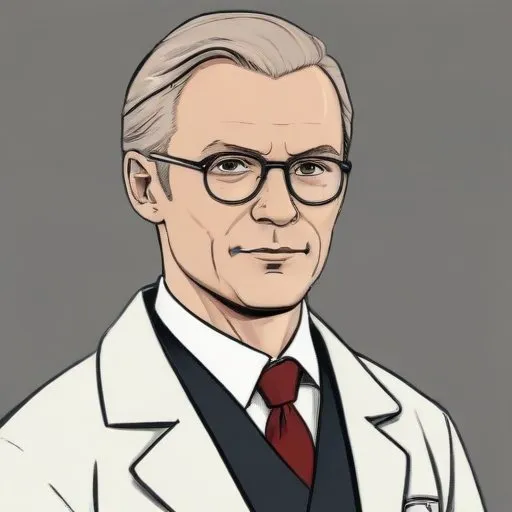
A pioneer in medical education, he introduced problem-based learning to Sweden, revolutionizing the way medical students learn and think. His innovative approach has had a lasting impact on medical education.
Lars Roberg, a renowned Swedish physician and natural science researcher, is best known for his significant contributions to the fields of anatomy and medicine. As a professor at Uppsala University, he played a crucial role in shaping the minds of future generations, including the celebrated Carl Linnaeus and Peter Artedi.
Born on January 4, 1664, in Stockholm, Sweden, Lars Roberg was the son of the royal apothecary Daniel Roberg. At a young age, he demonstrated a keen interest in learning and matriculated at Uppsala University in 1675. Four years later, he embarked on a long foreign journey to Germany, France, and England, where he furthered his studies at the universities of Wittenberg and Leiden.
Roberg's academic pursuits culminated in the completion of his doctorate in medicine at Leiden in 1693. He returned to Uppsala University, where he became a professor of anatomy and practical medicine in 1697, a position he held until 1740. During his tenure, he founded the Nosocomium academicum, a clinic dedicated to providing practical education to medical students. This pioneering initiative would later merge with the Uppsala University Hospital.
Roberg's influence extended beyond his research and academic accomplishments. He played a significant role in shaping the careers of two of Sweden's most prominent natural scientists: Carl Linnaeus and Peter Artedi. Under his guidance, these esteemed students went on to make groundbreaking contributions to the fields of taxonomy and ichthyology.
In recognition of his outstanding contributions to science, Roberg was elected as one of the founding members of the Royal Swedish Academy of Sciences in 1739. Today, he is remembered as a trailblazer in the fields of medicine and natural science, leaving an indelible mark on the scientific community.
Lars Roberg passed away on May 21, 1742, in Uppsala, Sweden. Throughout his life, he remained dedicated to his work, leaving behind a legacy that continues to inspire future generations of scientists and researchers.
Born in 1707
Developed the system of binomial nomenclature, which is still used today to classify and name living organisms. This system has had a profound impact on the fields of biology, ecology, and conservation.
Born in 1716
A Swedish-Finnish botanist and explorer who traveled to North America in the 1740s to study its natural history, documenting new species and providing valuable insights into the region's flora and fauna.
Born in 1748
A Swedish physician and activist who traveled with Captain James Cook on his second voyage, documenting indigenous cultures and advocating for abolition of slavery.
Born in 1688
A 17th-century polymath who made significant contributions to astronomy, philosophy, and theology, and is most known for his mystical writings on the nature of God and the afterlife.
