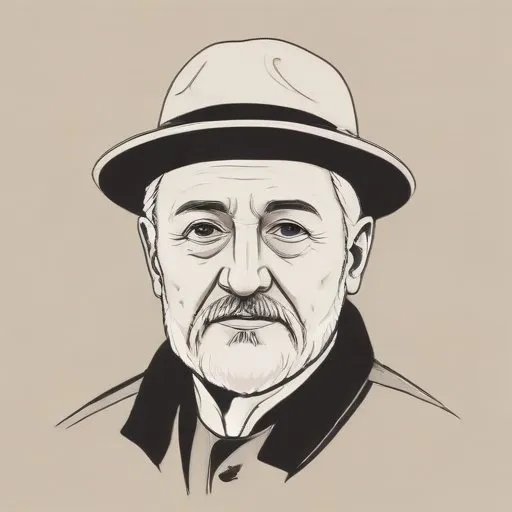
Pehr Kalm: The Swedish Explorer Who Unveiled the Wonders of North America
A Pioneer in Botany and Agriculture
Pehr Kalm, also known as Peter Kalm, is renowned for being one of the most important apostles of
Carl Linnaeus, the father of taxonomy. His groundbreaking journey to the North American colonies in 1747 led to the discovery of numerous seeds and plants that were instrumental in shaping the course of agriculture.
Early Life and Education
Kalm was born on March 6, 1716, in Ångermanland, Sweden, to Gabriel Kalm and Katarina Ross. After his father's untimely death, his mother returned to Nrpes in Ostrobothnia, where Kalm's father had been a Lutheran minister. He pursued his education at the Royal Academy of Turku from 1735 and later at the University of Uppsala, where he became one of the first students of Carl Linnaeus.
Scientific Contributions
Kalm's most notable achievement is the first scientific description of Niagara Falls, written by a trained scientist.
He is also credited with publishing the first scientific paper on the North American 17-year periodical cicada, Magicicada septendecim.
During his travels, Kalm collected and documented numerous plant species, which he later used to educate European farmers about the possibilities of cultivating new crops.
Travels in North America
In 1747, the Royal Swedish Academy of Sciences commissioned Kalm to travel to the North American colonies to collect seeds and plants that could be useful to agriculture. His journey took him to the regions that are now Pennsylvania, New York, and New Jersey. During his travels, he kept a detailed journal, which was later translated into numerous European languages and remains in print to this day.
Awards and Honors
Kalm's contributions to the field of botany and agriculture earned him the respect of his peers. He was appointed docent of natural history and economics at the Royal Academy of Turku in 1746 and later became a professor of economics in 1747.
Legacy
Pehr Kalm's groundbreaking work in North America not only expanded the understanding of the natural world but also paved the way for future generations of botanists and agricultural economists. His account of his travels remains a valuable resource for historians and scholars, offering a unique glimpse into the early history of European exploration in North America.
Personal Milestones
Kalm's personal life was marked by significant milestones, including the loss of his father at a young age and his later appointment as superintendent of an experimental plantation owned by his patron, Baron Sten Karl Bielke. These experiences likely shaped his curiosity and drive to explore the natural world.
Philosophical Contributions and Beliefs
Kalm's work was deeply rooted in the Enlightenment values of curiosity, discovery, and the pursuit of knowledge. His contributions to the field of botany and agriculture reflect his commitment to improving the human condition through scientific inquiry and exploration.
FAQ
What was Pehr Kalms role in the Swedish-Finnish scientific community?
Pehr Kalm was a Swedish-Finnish botanist and explorer who played a significant role in the Swedish-Finnish scientific community during the 18th century. He is known for his groundbreaking work on botany and his exploration of North America.
What is Pehr Kalms most famous work?
Pehr Kalms most famous work is Travels into North America (1753), a comprehensive account of his travels and scientific observations in North America. This work provides valuable insights into the natural history and indigenous cultures of the region.
How did Pehr Kalms work reflect the cultural values of the Enlightenment?
Pehr Kalms work reflects the cultural values of the Enlightenment, emphasizing the importance of reason, scientific inquiry, and curiosity. His use of empirical observation and his emphasis on the importance of data collection are characteristic of the Enlightenment scientific style.
What was Pehr Kalms relationship with other scientists?
Pehr Kalm was a close associate of many prominent scientists, including Carl Linnaeus and Anders Celsius. He was a key figure in the Swedish-Finnish scientific community and played a significant role in shaping the development of scientific inquiry in the region.
How did Pehr Kalms legacy influence later scientists?
Pehr Kalms legacy had a significant impact on later scientists, including Alexander von Humboldt and Charles Darwin. His emphasis on empirical observation, scientific inquiry, and curiosity helped shape the development of scientific inquiry in the 19th century.