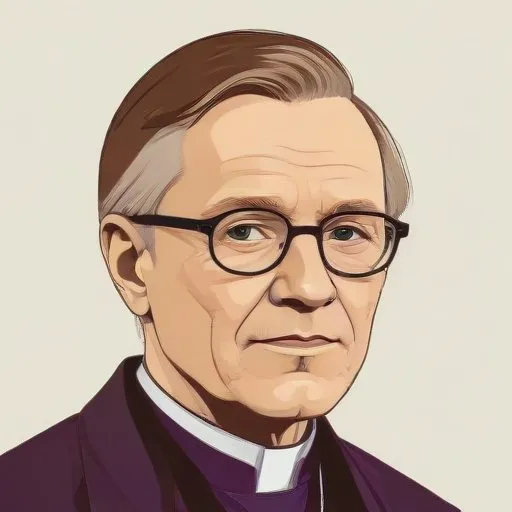
The Champion of Liberty: Anders Chydenius, the Nordic Luminary
Anders Chydenius, a Swedish-Finnish Lutheran priest, philosopher, and statesman, is revered as the leading classical liberal of Nordic history. He is best known for his tireless advocacy of economic liberalism, freedom of religion, freedom of speech, and migration, earning him a prominent place in the annals of Nordic intellectual history.
A Life Devoted to Enlightenment
Born on February 26, 1729, in Sotkamo, Finland (then part of Sweden), Chydenius was deeply influenced by his studies under
Pehr Kalm at the Royal Academy of Åbo. This intellectual foundation laid the groundwork for his future work as a priest, philosopher, and statesman.
The Pursuit of Liberty and Justice
Chydenius's election as an ecclesiastic member of the Swedish Riksdag of the Estates in 1765-1766 marked the beginning of his crusade against mercantilism and interventionism. He championed Sweden's first Freedom of the Press Act, considered one of the most liberal in the world at the time, alongside those of Great Britain and the Seven United Provinces.
Confronting the Hat Party
Chydenius's unwavering opposition to the Hat party's extreme interventionist policies led to his coerced retirement in 1766. However, following Gustav III's coup d'état in 1772, Chydenius briefly returned to prominence, working to increase civil liberties and economic freedom as part of Gustav's doctrine of enlightened despotism.
Philosophical Contributions
Chydenius was an early pioneer of economic liberalism, penning a pamphlet on the "invisible hand" a decade before the publication of
Adam Smith's
The Wealth of Nations. He is considered one of the first comprehensive philosophers of liberalism, advocating for the principles of individual freedom, limited government intervention, and free markets.
Legacy and Impact
Chydenius's legacy extends beyond his native Nordic region, influencing thinkers and policymakers across Europe. His unwavering commitment to liberty, justice, and economic freedom continues to inspire generations of philosophers, economists, and politicians.
Key Life Events
- 1729: Born in Sotkamo, Finland (then part of Sweden)
- 1765-1766: Elected as an ecclesiastic member of the Swedish Riksdag of the Estates
- 1766: Coerced into retirement due to criticism of the Cap administration's radical deregulation policies
- 1772: Returned to prominence following Gustav III's coup d'état
- 1803: Died at age 73 in Ostrobothnia, Finland
Quotes and Memorable Sayings
It is not the business of the state to make men virtuous, but to secure the liberty of the citizens.
This quote encapsulates Chydenius's commitment to limited government intervention and individual freedom, highlighting his enduring influence on libertarian and classical liberal thought.
Comparative Analysis with Contemporaries
Chydenius's philosophical and economic contributions place him alongside influential thinkers of the Enlightenment, such as Adam Smith,
Immanuel Kant, and
Jean-Jacques Rousseau. His unique blend of Lutheran theology and classical liberal ideology sets him apart as a pioneering figure in Nordic intellectual history.
By exploring the life and legacy of Anders Chydenius, we gain insight into the evolution of liberal thought and the ongoing struggle for individual freedom and economic liberty. His untiring advocacy for these principles continues to inspire and educate generations of thinkers and policymakers.
FAQ
What were Anders Chydeniuss contributions to the field of economics?
Anders Chydenius was a Finnish economist, philosopher, and Lutheran priest, making significant contributions to the field of economics, particularly in the areas of trade and commerce.
How did Anders Chydeniuss economic ideas influence the development of capitalism?
Anders Chydeniuss economic ideas had a lasting impact on the development of capitalism, advocating for free trade and laissez-faire principles that would shape modern economic thought.
What is Anders Chydeniuss most famous economic work?
Anders Chydeniuss most famous economic work is his Den nationale winningen, a treatise on economics that outlines his theories on trade, commerce, and national wealth.
How did Anders Chydeniuss ecclesiastical career influence his economic thought?
Anders Chydeniuss ecclesiastical career had a significant impact on his economic thought, informing his views on morality, justice, and the role of the state in economic life.
What was Anders Chydeniuss role in the development of Finnish economics?
Anders Chydenius played a key role in the development of Finnish economics, establishing himself as one of the countrys most prominent economists and thinkers.