


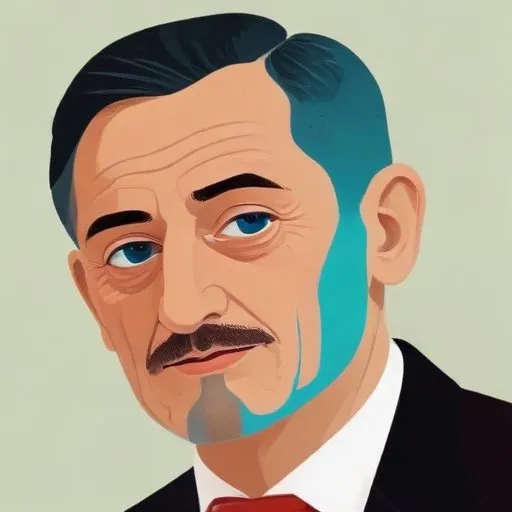
A pioneering musicologist and song collector who traveled the American South, documenting and preserving African-American folk songs and blues music, helping to shape the genre.
Lawrence Gellert is renowned for his monumental collection of field-recorded African-American blues and spirituals, as well as his groundbreaking documentation of black protest traditions in the Southern United States during the 1920s and 1930s. This Hungarian-born music collector's work provides a window into the rich cultural heritage of African-Americans, shedding light on the experiences, struggles, and triumphs of a marginalized community.
Born László Grünbaum on September 14, 1898, in Budapest, Hungary, Gellert immigrated to the United States at the age of seven and grew up in New York City. His family, ethnically Jewish but culturally diverse, had a profound impact on his life. His mother, Katica Schwartz, was a devout Christian, while his father, Bráhm Grünbaum, was a skilled craftsman and tailor. Gellert's family had fled Hungary to avoid military conscription, and his brothers, Hugo and Ernest, would later play significant roles in shaping his life.
Gellert's education was marked by discontinuity, and he dropped out of high school after a brief attendance. However, he found work on a newspaper during the 1920s, an experience that would later influence his music collecting endeavors. Gellert's health issues, including lung and rib infections, led him to seek advice from doctors, who recommended a change of scenery. This prompted him to embark on a journey through the American South, where he would collect and document the rich musical heritage of African-Americans.
Gellert's pioneering work in collecting and documenting African-American blues and spirituals resulted in a vast archive of field recordings. These recordings, made during the 1920s and 1930s, captured the raw essence of African-American music, showcasing the struggles, hopes, and fears of a marginalized community. Gellert's documentation of black protest traditions in the South provided a powerful testimony to the resilience and creativity of African-Americans in the face of oppression.
Gellert's contributions to the preservation and promotion of African-American music and culture are immeasurable. His work has inspired generations of musicians, researchers, and scholars, including notable figures such as Alan Lomax and John Lomax. Gellert's collection of field recordings and documents is now housed at the Library of Congress, ensuring that his legacy continues to inspire and educate future generations.
Gellert's work was driven by a deep respect for the cultural heritage of African-Americans and a commitment to preserving their stories. He recognized the significance of music as a powerful tool for social change and a means of expression for marginalized communities. Through his documentation and collection of African-American music, Gellert sought to amplify the voices of those who had been silenced or marginalized.
Gellert's contributions to the preservation of African-American music and culture have had a profound impact on modern society. His work has inspired generations of musicians, scholars, and activists, shaping our understanding of African-American history and culture. Gellert's legacy serves as a testament to the power of music as a force for social change and a means of empowerment for marginalized communities.
Born in 1881
A Hungarian musical genius who merged folk melodies with modernist techniques, creating a unique sound that transformed classical music.
Born in 1882
A Hungarian composer, conductor, and musicologist who developed a unique style blending folk and classical music, and is renowned for his contributions to music education and ethnomusicology.
Born in 1811
A virtuosic pianist and composer who revolutionized classical music with his technically demanding and emotionally expressive works, blending Hungarian folk influences with Romantic-era drama.
Born in 1877
A Hungarian musical triple threat, renowned for his virtuosic piano performances, innovative compositions, and masterful conducting, leaving an indelible mark on classical music.
Born in 1923
A visionary composer and educator who pushed the boundaries of classical music with his avant-garde and innovative works, blending dissonance and harmony in unique ways.
Born in 1926
A Hungarian composer and academic renowned for his innovative and expressive musical compositions that blended modernism with traditional folk elements. His works often featured complex rhythms and dissonant harmonies.
72 Years Old
A renowned pianist and conductor, celebrated for his poetic and nuanced performances of classical music, particularly the works of Bach, Mozart, and Beethoven.
