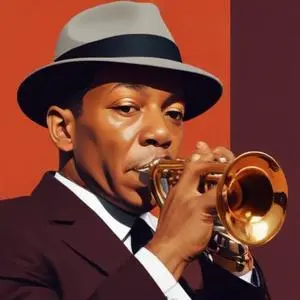
The Trumpet Titan: Lee Morgan's Enduring Legacy
A Crossover Sensation
Lee Morgan was a jazz trumpeter and composer who left an indelible mark on the music world. He is perhaps best known for his iconic composition "The Sidewinder," which became a surprise crossover hit on the pop and R&B charts in 1964.
Early Life and Influences
Born on July 10, 1938, in Philadelphia, Pennsylvania, Morgan was the youngest of four children. His early interest in the vibraphone eventually gave way to a passion for the trumpet, which was sparked by a gift from his sister Ernestine on his 13th birthday. Morgan's primary stylistic influence was
Clifford Brown, with whom he took lessons as a teenager.
Rise to Prominence
Morgan's prodigious talent earned him a spot in
Dizzy Gillespie's Big Band at just 18 years old. He remained with Gillespie for a year and a half before joining
Art Blakey's Jazz Messengers in 1956. This association with Blakey proved to be a pivotal moment in Morgan's career, as it led to his first recording contract with Blue Note Records.
Blue Note Era
Morgan's Blue Note years (1956-1972) were marked by incredible productivity and creativity. He recorded 25 albums as a leader for the label, often alternating between conventional hard bop sessions and more experimental post-bop and avant-garde efforts. This period saw the release of some of Morgan's most celebrated works, including "The Sidewinder," "The Rumproller," and "Search for the New Land."
Career Highlights and Collaborations
Throughout his career, Morgan collaborated with some of the biggest names in jazz, including
John Coltrane,
Hank Mobley, and
Wayne Shorter. He also led his own quartet, featuring musicians such as Philly
Joe Jones, Bob Cranshaw, and Harold Mabern.
Philosophical Contributions and Beliefs
Morgan's music was characterized by its sense of community and cooperation. He believed that jazz was a collective endeavor, and that the best music emerged from a spirit of collaboration and mutual respect.
Awards and Honors
Morgan's contributions to jazz were recognized with numerous awards and accolades, including a Grammy nomination for "The Sidewinder" and a place in the DownBeat Jazz Hall of Fame.
Personal Milestones and Key Life Events
Tragically, Morgan's life was cut short on February 19, 1972, when he was shot and killed by his common-law wife, Helen Moore, at Slugs' Saloon in New York City. Morgan's death was a devastating loss to the jazz community, but his legacy continues to inspire and influence new generations of musicians and fans.
Influence on Modern Society
Lee Morgan's music has had a profound impact on modern society, transcending genres and generations. His soulful, introspective playing style has influenced everyone from
Wynton Marsalis to hip-hop artists like A Tribe Called Quest.
Legacy and Historical Context
Morgan's legacy is a testament to the power of jazz to bring people together and transcend boundaries. He will always be remembered as one of the greatest trumpeters in jazz history, a true master of his craft.
Trivia and Fun Facts
- Morgan's first instrument was the vibraphone, which he played until switching to trumpet at 13.
- He was one of the youngest musicians to ever record with Dizzy Gillespie's Big Band.
- Morgan's iconic album "The Sidewinder" was originally intended as a filler track.
Conclusion
Lee Morgan's life and legacy serve as a powerful reminder of the transformative power of music. Through his contributions to jazz, he continues to inspire and uplift us, leaving behind a body of work that will be cherished for generations to come.
FAQ
What was Lee Morgans role in jazz music?
Lee Morgan was an American trumpet player and composer who was a key figure in the development of modern jazz, known for his technical virtuosity and lyrical playing style.
How did Lee Morgan contribute to the evolution of jazz?
Throughout his career, Lee Morgan worked with numerous jazz legends, including Dizzy Gillespie, John Coltrane, and Art Blakey, helping to shape the sound of modern jazz.
What were some of Lee Morgans most notable albums?
Lee Morgans notable albums include The Sidewinder, Search for the New Land, and Cornbread, which are considered jazz classics.
How did Lee Morgans playing style evolve over time?
Lee Morgans playing style evolved from a early bebop influence to a more introspective and melodic approach, characterized by his warm and expressive tone.
What is Lee Morgans legacy in jazz music?
Lee Morgans legacy in jazz music is marked by his technical mastery, lyrical playing style, and contributions to the evolution of modern jazz, influencing generations of jazz musicians.