


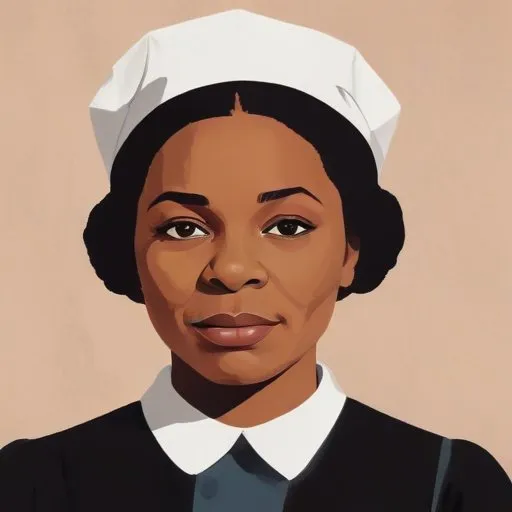
An African-American maid wrongly convicted and executed for capital murder, later cleared of all charges posthumously, symbolizing racial injustice in the American South. Her story serves as a powerful reminder of the need for reform in the criminal justice system.
Lena Baker, an African American maid, is infamously known for being the only woman in Georgia to be executed by electrocution in 1945. Her tragic fate was sealed when she was convicted of capital murder of a white man, Ernest Knight, in a highly publicized trial that highlighted the racial tensions and injustices of the time.
Born on June 8, 1900, to a family of sharecroppers in Cuthbert, Georgia, Lena Baker's early life was marked by hardship and toil. She was one of four siblings, and her family's relocation to the county seat during her childhood led to her working as a farm laborer from a young age. The struggles of her early life laid the foundation for her later struggles as a maid and ultimately, her tragic fate.
In 1944, Lena Baker began working for Ernest Knight, an older white man who had broken his leg. What started as a seemingly innocuous job soon turned into a nightmare when Knight began to sexually assault and imprison Lena for days at a time. The situation escalated when Knight's son and townspeople, disapproving of their relationship, threatened Lena, culminating in a confrontation that ended in tragedy.
The trial of Lena Baker was a spectacle that drew widespread attention, with the prosecution painting her as a cold-blooded killer. Despite her claims of self-defense, the all-white jury delivered a guilty verdict, and she was sentenced to death. The state of Georgia carried out her execution by electrocution on March 5, 1945, amidst a climate of racial tension and oppression.
In 2005, sixty years after her execution, the state of Georgia granted Lena Baker a full and unconditional pardon. This long-overdue acknowledgment of her innocence was a testament to the growing awareness of the racial injustices of the past. A biography published in 2001 and the feature film "The Lena Baker Story" (2008) further solidified her place in history as a symbol of resistance against racism and oppression.
Lena Baker's life was marked by tragedy, but her legacy serves as a beacon of hope for a more just and equitable society. Her story continues to inspire and educate people about the importance of standing up against oppression and fighting for justice.
Though her life was cut short, Lena Baker's spirit lives on, and her story serves as a powerful reminder of the need for continued efforts towards racial equality and justice.
97 Years Old
A prominent leader in the civil rights movement, advocating for racial equality and social justice through nonviolent means, leaving a lasting impact on American history.
Born in 1913
Refused to give up her seat on a Montgomery, Alabama bus to a white person, sparking the Montgomery Bus Boycott, a pivotal event in the Civil Rights Movement.
85 Years Old
A 14-year-old boy brutally murdered in Mississippi in 1955 for allegedly whistling at a white woman, sparking widespread outrage and contributing to the Civil Rights Movement. His tragic death remains a powerful symbol of racial injustice.
Born in 1925
A civil rights leader who fought for racial equality and social justice, assassinated in 1963, sparking widespread outrage and fueling the Civil Rights Movement.
Born in 1925
A prominent figure in the Civil Rights Movement, advocating for African American rights and self-defense, and a powerful orator who inspired a generation.
Born in 1880
Led a powerful miners' union, fighting for workers' rights and fair wages, and was a key figure in shaping America's labor movement. Known for his charismatic leadership and militant tactics.
Born in 1908
A trailblazing lawyer and civil rights champion who broke racial barriers in the US justice system, serving as the first African American on the Supreme Court. He fought tirelessly for equality and justice, leaving a lasting impact on American history.
Born in 1926
A prominent leader in the American Civil Rights Movement, he worked closely with Martin Luther King Jr. to advocate for racial equality and social justice through nonviolent means.
