


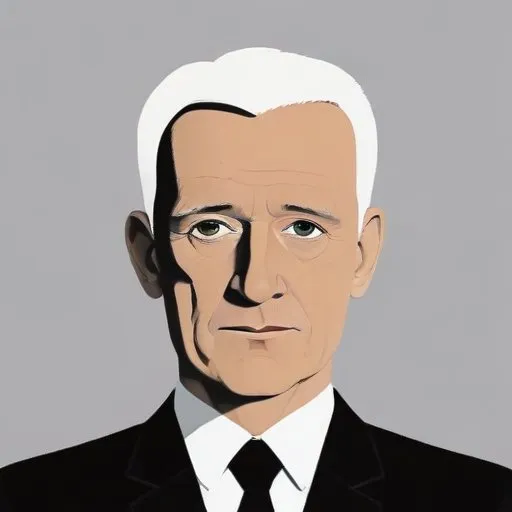
Australian public servant who played a significant role in shaping the country's foreign policy and diplomatic relations, particularly during World War II and the early Cold War era.
Lenox Hewitt, a renowned Australian public servant, is best known for his distinguished career spanning over four decades, during which he held various prominent positions, including Secretary of the Prime Minister's Department and Chairman of Qantas.
Born on May 7, 1917, in St Kilda, Victoria, Hewitt was educated at Scotch College, Melbourne, and later graduated from the University of Melbourne with a Bachelor of Economics, which he completed part-time while employed by BHP on a traineeship.
Hewitt's career in the Commonwealth Public Service began in 1939, and he quickly rose through the ranks, holding positions such as Assistant Secretary to Sir Douglas Copland, Commonwealth Prices Commissioner, and Special Economic Adviser to the Prime Minister.
In 1967, Hewitt was appointed to chair the Australian Universities Commission, and later, in 1968, he became Secretary of the Prime Minister's Department during the Gorton government, a position he held until 1971.
During the Whitlam government, Hewitt served as Secretary of the Department of Minerals and Energy from 1972 to 1975, working closely with Minister Rex Connor. He later served as Chairman of Qantas from 1975 to 1980.
Hewitt's contributions to the Australian public service are undeniable. He played a pivotal role in shaping the country's economic and social policies during a transformative period in Australian history.
His influence extended beyond the public service, as he worked closely with prominent politicians, including Prime Minister John Gorton and Minister Rex Connor, to drive significant reforms and developments in the country.
Through his extensive career, Hewitt demonstrated exceptional leadership, strategic thinking, and a deep understanding of the complexities of public policy, earning him a reputation as one of Australia's most respected and accomplished public servants.
Born in 1894
The 12th Prime Minister of Australia, a lawyer-turned-politician who played a crucial role in shaping the country's post-war economy and foreign policy, and is often credited with establishing the modern Australian identity.
Born in 1885
Led the country through World War II, implementing policies to defend Australia and its economy. He's also known for his leadership during the country's transition from British to American influence.
Born in 1881
Early Hollywood pioneer who directed over 500 films and was a key figure in the development of the film industry. Known for his prolific output and innovative filmmaking techniques.
Born in 1885
Australian engineer and politician who served as the 16th Prime Minister of Australia, implementing significant economic reforms and playing a crucial role in shaping the country's post-war development.
Born in 1894
The 13th Prime Minister of Australia, serving from 1941, known for his brief but significant term during World War II, and his role in shaping the country's economy.
Born in 1890
The 15th Prime Minister of Australia, serving for just eight days in 1945, known for being the shortest-serving prime minister in Australian history. He was also a prominent educator and politician.
