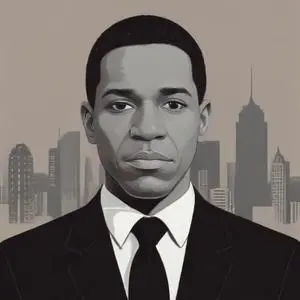
Leon Sullivan: The Champion of Civil Rights and Economic Empowerment
A Life Dedicated to Fighting Racial Prejudice and Promoting Social Justice
Leon Sullivan, a renowned Baptist minister, civil rights leader, and social activist, is best known for his tireless efforts in creating job training opportunities for African Americans and his unwavering stance against apartheid. Throughout his life, Sullivan's work had a profound impact on the lives of millions, and his legacy continues to inspire generations to strive for a more equitable society.
Fighting Racial Prejudice from a Young Age
Born on October 16, 1922, in Charleston, West Virginia, Sullivan's encounter with racial prejudice at the tender age of 12 sparked a fire within him to combat injustice. When a drugstore owner refused to serve him a Coca-Cola, citing "stand on your feet, boy," Sullivan's determination to fight racial prejudice was ignited. This incident, along with the guidance of his grandmother Carrie, instilled in him the importance of faith, self-help, and determination.
A Leader in the Making
Sullivan's early influence was evident in his athletic prowess, earning him scholarships to West Virginia State College, where he was initiated into the Tau chapter of Kappa Alpha Psi fraternity. However, a foot injury forced him to abandon his athletic career, and he went on to work in a steel mill to pay for his education. This setback did not deter Sullivan, who went on to become a Baptist minister at the age of 18.
A Minister, a Civil Rights Leader, and a Corporate Influencer
Sullivan's move to New York City in 1943, at the behest of
Adam Clayton Powell, marked the beginning of his ministry. He attended the Union Theological Seminary (1943-1945) and later earned a Master's in Religion from Columbia University (1947). His leadership and influence soon extended beyond the pulpit, as he became a vocal advocate for civil rights and social justice.
As a member of the General Motors Board, Sullivan used his position to promote diversity and inclusion, spearheading initiatives to create job opportunities for African Americans. His work with the Opportunities Industrialization Centers (OIC) helped train and employ millions of people, providing a pathway to economic empowerment.
Anti-Apartheid Activism and Global Influence
Sullivan's commitment to social justice extended beyond the borders of the United States. He was a vocal critic of apartheid in South Africa, using his influence to pressure corporations to divest from the country. His efforts led to the passage of the Sullivan Principles, a set of guidelines for companies operating in South Africa to end segregation and promote equal opportunities.
Awards and Honors
- Presidential Medal of Freedom (1991)
- NAACP Spingarn Medal (1971)
- Named one of the 100 Most Influential African Americans by Ebony Magazine (1970)
Legacy and Impact
Leon Sullivan's life was a testament to the power of determination and faith. His tireless efforts to combat racial prejudice, promote economic empowerment, and fight against apartheid have left an indelible mark on modern society. As we reflect on his life and legacy, we are reminded of the importance of continued activism and advocacy for social justice.
"The only way to make sense out of change is to plunge into it, move with it, and join the dance."
Leon Sullivan's dance with change continues to inspire generations to strive for a world where equality, justice, and opportunity are available to all.
FAQ
What was Leon Sullivans most notable achievement in civil rights?
Leon Sullivans most notable achievement in civil rights was his work as a minister and activist in the Civil Rights Movement. He was a close ally of Martin Luther King Jr. and played a key role in several major civil rights campaigns, including the Montgomery Bus Boycott and the Selma to Montgomery Marches.
How did Leon Sullivan get started in civil rights?
Leon Sullivan got started in civil rights by becoming involved in the movement through his work as a Baptist minister. He was inspired by the teachings of Martin Luther King Jr. and became a close ally and friend of Kings.
What was Leon Sullivans role in the Montgomery Bus Boycott?
Leon Sullivan played a key role in the Montgomery Bus Boycott, which was a successful campaign to desegregate the public buses in Montgomery, Alabama. He helped to organize the boycott and provided spiritual guidance to the movements leaders.
What was Leon Sullivans view on economic empowerment?
Leon Sullivan believed in the importance of economic empowerment for African Americans, and he worked to promote economic development and self-sufficiency in African American communities. He established the Opportunities Industrialization Centers (OIC) to provide job training and education to African Americans.
How did Leon Sullivans legacy impact the civil rights movement?
Leon Sullivans legacy had a significant impact on the civil rights movement, as he helped to promote nonviolent resistance and economic empowerment as key strategies for achieving social change. He is still remembered and celebrated today as a pioneering figure in the movement.