


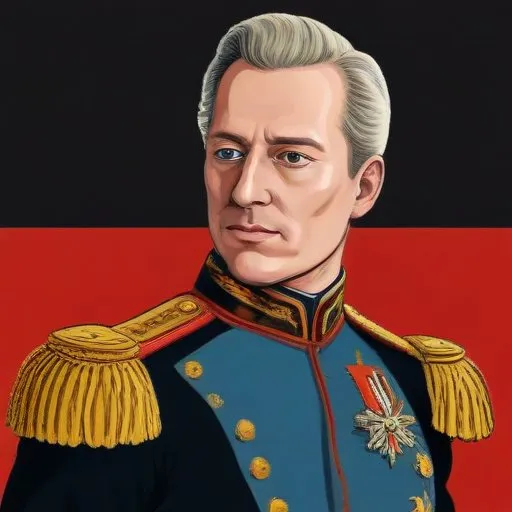
Ruler of Austria from 1298 to 1326, known for his military campaigns and territorial expansions, particularly the acquisition of Carinthia and Carniola.
Leopold I, Duke of Austria, also known as The Glorious, was a prominent figure in Austrian history, renowned for his valiant efforts in defending his territories and his unwavering loyalty to his family. As the Duke of Austria and Styria from 1308 until his death in 1326, Leopold played a crucial role in shaping the destiny of the Habsburg dynasty.
Born around 1290, Leopold was the third son of Albert I of Germany and Elisabeth of Gorizia-Tyrol, a scion of the Meinhardiner dynasty. As a member of the House of Habsburg, Leopold was destined for greatness, and his early life was marked by a strong sense of duty and responsibility to his family.
After the death of his eldest brother, Duke Rudolph III, in 1307, and the assassination of King Albert in 1308, Leopold became the administrator of Further Austria. He launched a retaliation campaign against his father's murderers, demonstrating his courage and determination to protect his family's interests.
Leopold's military prowess was evident in his Italian campaign with King Henry VII, where he helped to suppress a Guelph uprising in Milan and laid siege to the city of Brescia in 1311. He also forged an alliance with the royal House of Luxembourg, further solidifying his family's influence in European politics.
Upon Emperor Henry's death, Leopold strongly supported his brother Frederick's claim to the throne in the 1314 election as King of the Romans. Although their efforts were unsuccessful, Leopold remained committed to his family's cause, even in the face of defeat.
In 1315, Leopold suffered a decisive defeat at the Battle of Morgarten against the Swiss Confederacy. Despite this setback, he continued to fight for his family's interests, eventually entering into negotiations with King Louis IV of Bavaria to secure the release of his brothers, Frederick and Henry, from captivity.
Leopold's unwavering dedication to his family and his territories earned him the respect and admiration of his contemporaries. His legacy as a skilled military leader and a loyal defender of Habsburg interests continues to inspire generations to this day.
Leopold I, Duke of Austria, may have faced his share of defeats, but his unwavering commitment to his family and his territories has earned him a lasting place in history as a true hero of the Habsburg dynasty.
Born in 1290
Ruler of Austria from 1298 to 1326, known for his military campaigns and territorial expansions, particularly the acquisition of Carinthia and Carniola.
Born in 1218
King of the Germans from 1273 to 1291, known for his role in ending the Great Interregnum, a period of imperial instability, and establishing the Habsburg dynasty's power in Europe.
Born in 1397
King of the Romans and Duke of Austria, known for his brief reign and attempts to unify the German states. He was a member of the Habsburg dynasty and played a significant role in European politics during the 14th century.
Born in 1339
A 14th-century Habsburg ruler who expanded Austria's territories and founded the University of Vienna, earning him the nickname "the Founder".
