


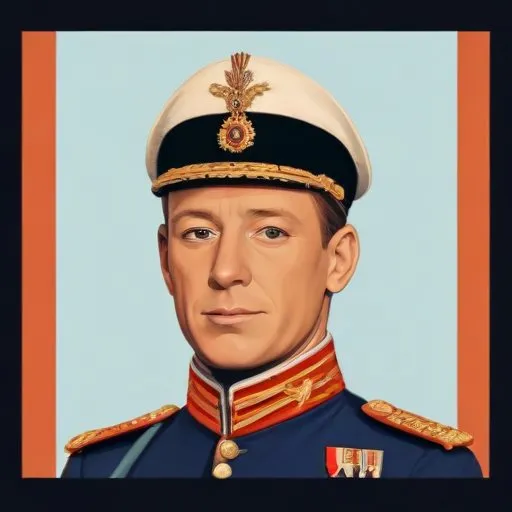
A 13th-century Habsburg duke who ruled Austria and Styria, known for his military campaigns and establishing Vienna as a cultural center. He played a key role in shaping Austria's history and identity.
Leopold III, Duke of Austria, earned the nickname "the Just" for his fair and impartial rule over the Habsburg dominions, but his life was marked by a relentless pursuit of power and influence. As the Duke of Austria from 1365, he expanded the Habsburg territories, solidified his family's legacy, and left an indelible mark on European history.
Born on November 1, 1351, in Vienna, Leopold was the youngest son of Duke Albert II of Austria and Joanna of Pfirt. His family was steeped in nobility, with his grandfather being King Albert I of Germany. Leopold's mother died shortly after giving birth to him, and he was raised alongside his brothers, Rudolf IV and Albert III.
Leopold's older brother, Rudolf IV, initially assumed the rule over the Habsburg dominions after their father's death, but Leopold eventually broke away and forged his own path. In 1368, he defeated a Bavarian incursion into Tirol, bringing the region under Habsburg authority. This military success propelled him to prominence, and he eventually secured control over Tirol, Further Austria, and Carniola through a peace treaty with his brother in 1373.
Leopold's military prowess and diplomatic savvy allowed him to expand Habsburg territories and secure alliances with neighboring regions. He led Habsburg troops in battle, most notably against the Gugler war of 1375, where he faced off against his relative, Enguerrand VII de Coucy. Leopold's diplomatic efforts led to the signing of several crucial treaties, including the 1374 treaty with the Bishop of Trent, which solidified Habsburg control over the region.
Leopold III's reign had a lasting impact on the Habsburg dynasty and European politics. He established the Leopoldian line, which would go on to produce notable figures like Emperor Frederick III. His military conquests and diplomatic efforts expanded Habsburg territories, setting the stage for future generations to build upon. Leopold's legacy is a testament to his ambition, strategic thinking, and commitment to his family's legacy.
Leopold's personal life was marked by significant milestones, including his marriage to Viridis Visconti, which secured an alliance with the powerful Visconti family of Milan. He also had several children, including his son, William, who would go on to become Duke of Austria.
While Leopold III's military conquests and diplomatic efforts are well-documented, his philosophical beliefs and contributions are less well-known. However, it is clear that he believed in the importance of family, loyalty, and strategic thinking. His actions were guided by a strong sense of duty to his family and a desire to secure their legacy.
Leopold III's reign took place during a tumultuous period in European history, marked by the Black Death, the Hundred Years' War, and the rise of powerful city-states. Despite these challenges, Leopold III navigated the complex web of alliances and rivalries with ease, securing his family's position among the European elite. His legacy serves as a testament to the enduring power of the Habsburg dynasty, which would go on to shape European politics for centuries to come.
