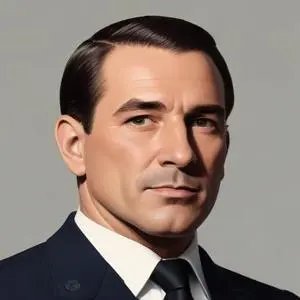
Leslie Groves: The Mastermind Behind the Manhattan Project
The Architect of the Atomic Bomb
Leslie Groves is renowned for overseeing the construction of the Pentagon and directing the Manhattan Project, a top-secret research initiative that developed the atomic bomb during World War II. As the commander of the project, Groves played a pivotal role in shaping the course of modern history, earning his place as one of the most influential figures of the 20th century.
Early Life and Military Career
Born on August 17, 1896, to a U.S. Army chaplain, Groves spent his childhood at various Army posts, instilling in him a sense of discipline and duty. He graduated fourth in his class at the United States Military Academy at West Point in 1918 and was commissioned into the United States Army Corps of Engineers. Groves' early career took him to Nicaragua, where he participated in an expedition to conduct a survey for the InterOceanic Nicaragua Canal and later took over Managua's water supply system after the 1931 earthquake, earning him the Nicaraguan Presidential Medal of Merit.
Rise to Prominence
Groves' reputation as a driven and meticulous officer earned him a spot at the Command and General Staff School at Fort Leavenworth, Kansas, and later at the Army War College. In 1940, he became special assistant for construction to the Quartermaster General, inspecting construction sites and checking on their progress. This experience prepared him for his most notable role: leading the Manhattan Project.
The Manhattan Project
In September 1942, Groves took charge of the Manhattan Project, overseeing the development of the atomic bomb. He was involved in every aspect of the project, from site selection to construction, materials acquisition, and military intelligence. Groves' leadership was instrumental in bringing together a team of brilliant scientists, engineers, and technicians to achieve the impossible.
Key Contributions and Legacy
Groves' contributions to the Manhattan Project were multifaceted:
- Site selection and construction: Groves identified and acquired sites for research and production facilities at Oak Ridge, Tennessee; Los Alamos, New Mexico; and Hanford, Washington.
- Isotope separation: He made critical decisions on the various methods of isotope separation, a crucial step in the development of the atomic bomb.
- Materials acquisition: Groves secured raw materials necessary for the project, often using unconventional means.
- Military intelligence: He directed the collection of military intelligence on the German nuclear energy project, providing valuable insights to the Allied effort.
- Target selection: Groves played a role in selecting the Japanese cities that would ultimately be targeted by the atomic bombs.
Groves' leadership and vision not only helped bring an end to World War II but also paved the way for the development of nuclear energy and the modern nuclear industry.
Groves passed away on July 13, 1970, leaving behind a legacy that continues to shape our understanding of science, technology, and global politics. His unique blend of military discipline, technical expertise, and leadership skills made him an ideal candidate to lead the Manhattan Project.
Today, Leslie Groves is remembered as a towering figure in American history, whose contributions continue to inspire new generations of scientists, engineers, and policymakers.
FAQ
What was Leslie Groves role in the Manhattan Project?
Leslie Groves was a key figure in the Manhattan Project, serving as the director of the project from 1942 to 1946. He oversaw the development of the atomic bomb and played a crucial role in its successful deployment.
What were Leslie Groves contributions to the US Army Corps of Engineers?
Leslie Groves was a distinguished engineer and officer in the US Army Corps of Engineers, where he worked on various projects, including the construction of the Pentagon and the development of the atomic bomb. His expertise in engineering and project management was instrumental in the success of these projects.
How did Leslie Groves manage the construction of the Pentagon?
Leslie Groves was responsible for managing the construction of the Pentagon, which was completed in 1943. He ensured that the project was finished on time and within budget, despite the challenges posed by the war effort.
What were Leslie Groves accomplishments as a military officer?
Leslie Groves was a decorated military officer who rose to the rank of lieutenant general. He served in various roles, including as the chief of the US Army Corps of Engineers Manhattan District, and was awarded numerous honors for his service, including the Distinguished Service Medal.
What is Leslie Groves legacy in the history of nuclear energy?
Leslie Groves legacy in the history of nuclear energy is that of a pioneering figure who played a crucial role in the development of atomic energy. His work on the Manhattan Project laid the foundation for the development of nuclear power and its applications in various fields.